Yuhan Wang SS27 ‘Sweet Nightmare’
LONDON FASHION WEEK
22.09.26
WORDS BY VICKY MADZAK
PHOTOGRAPHY BY HELENA STAPLETON
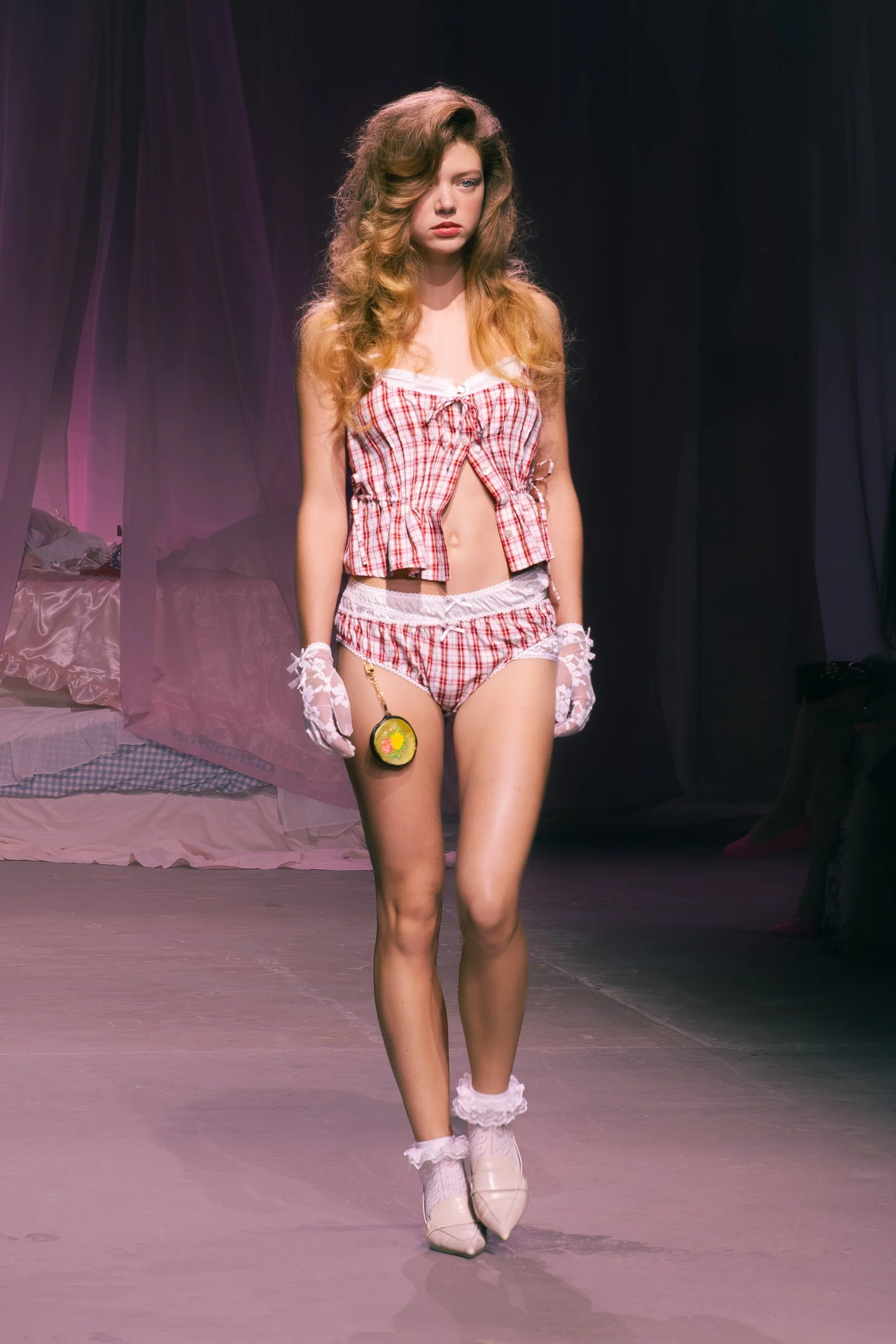
Walking into Yuhan Wang’s Spring/Summer 2027 show felt less like arriving at a runway and more like stepping into a young woman’s bedroom. The room was dimly lit, with long pink curtains pooling messily onto the floor. In the middle sat a bed piled high with mattresses, layers of satin and ruffles spilling over one another. It was girly, slightly chaotic and strangely intimate, like whoever slept there had just left the room moments before. Around it gathered a predominantly young crowd of fashion obsessives and creatives; some had clearly treated getting dressed for Wang as part of the show itself. The girl sitting next to me told me she transformed one of the designer’s skirts into a dress, held in place by a black sequinned gilet. Before a single model appeared, Wang’s world had already started bleeding into the audience.
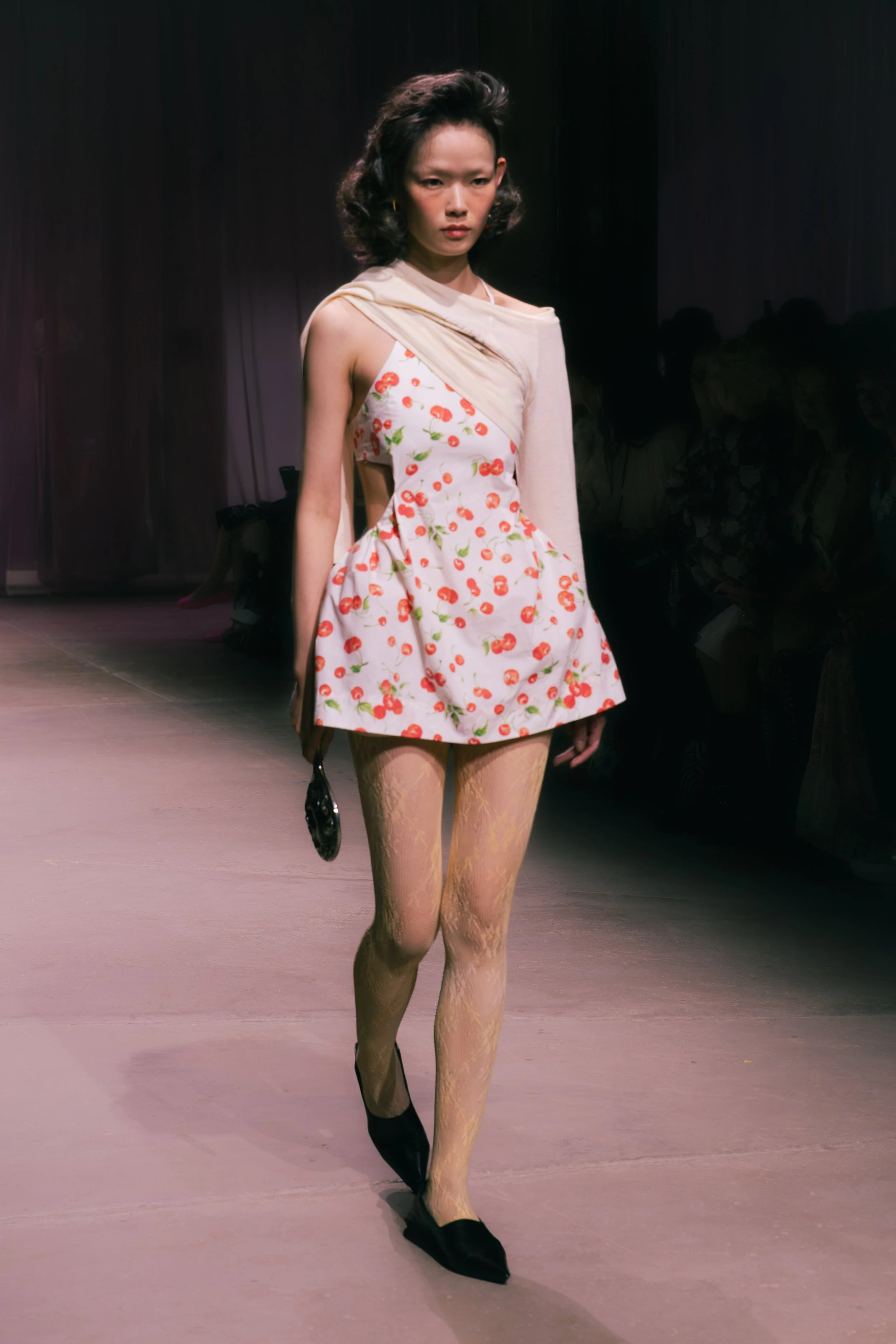
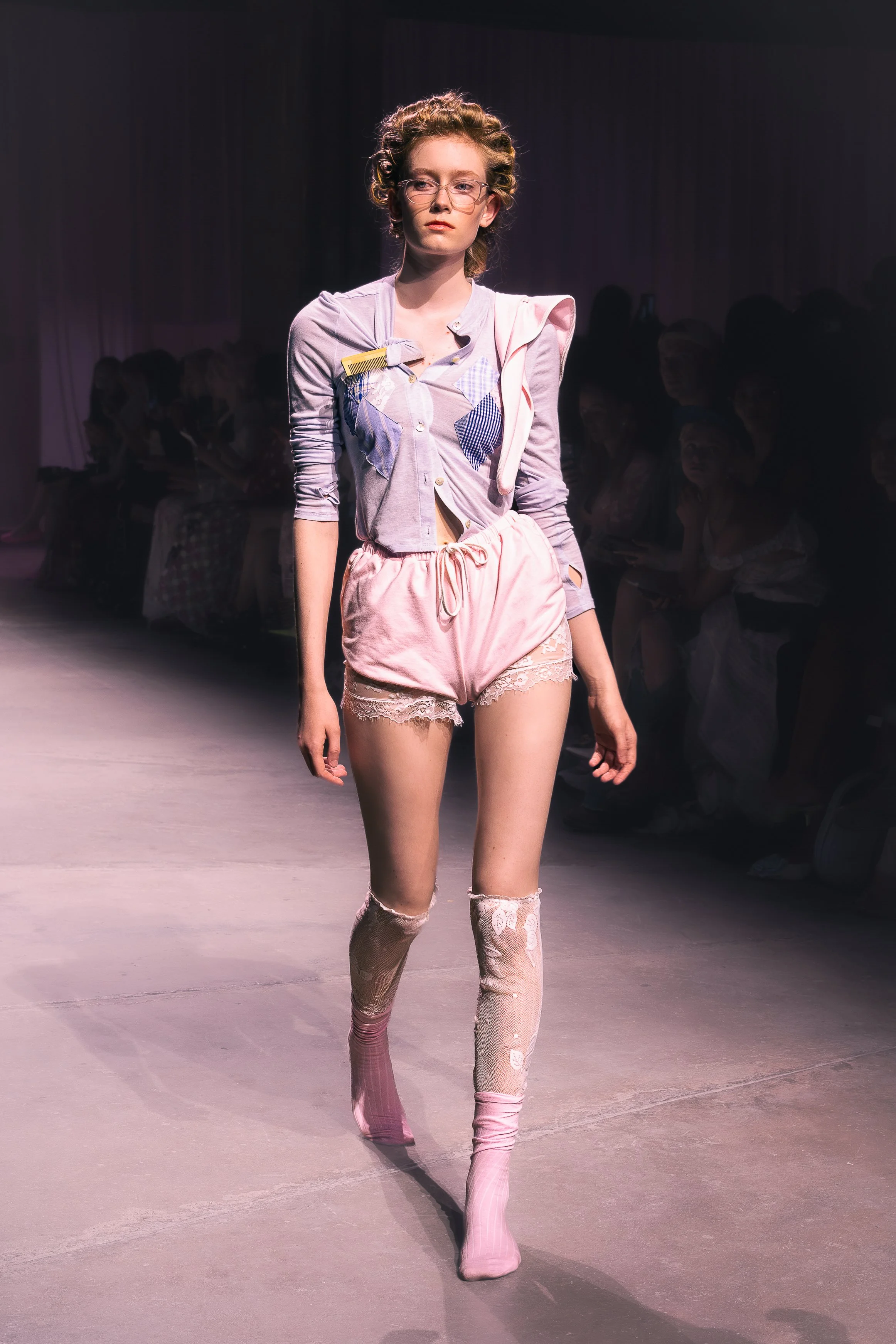
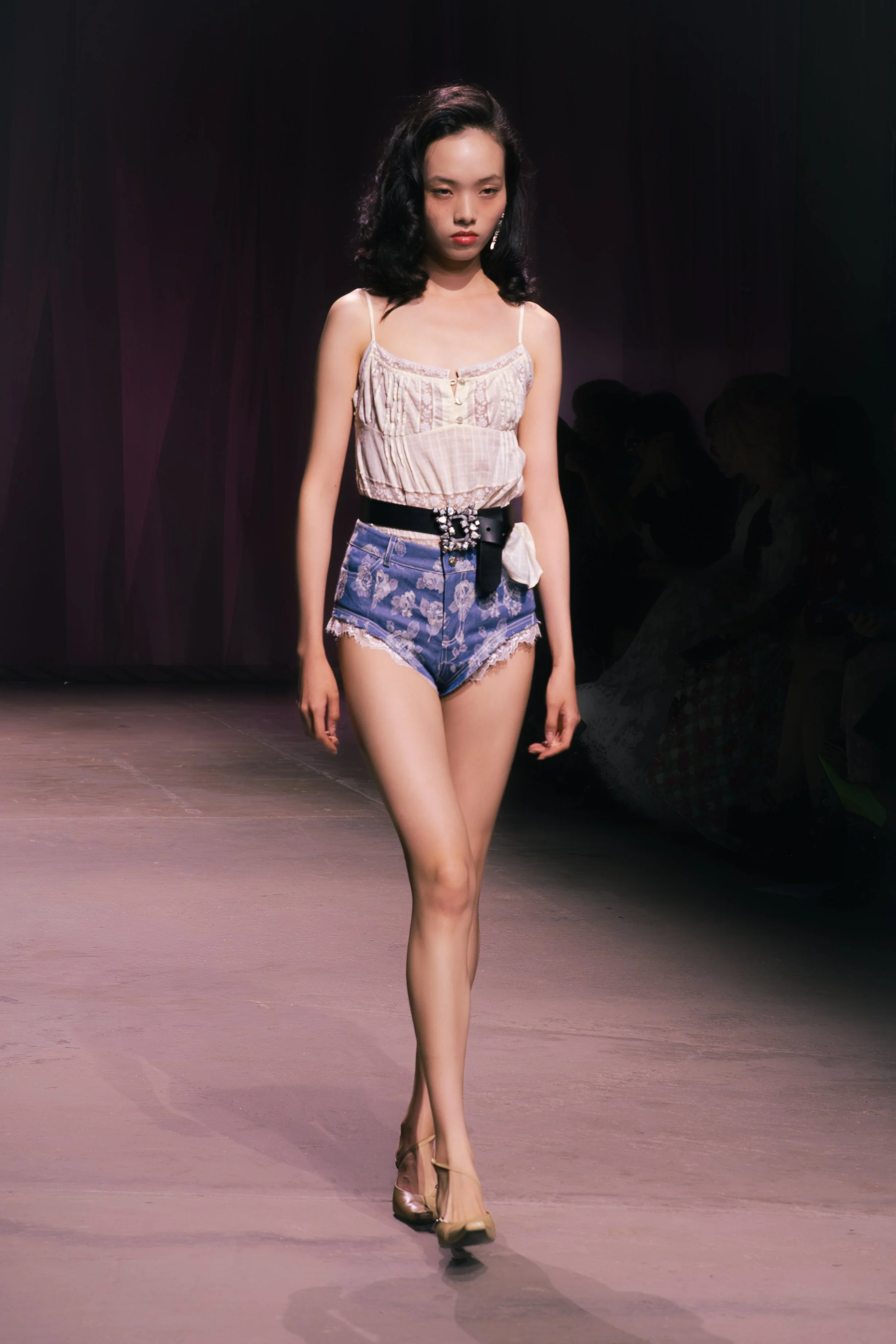
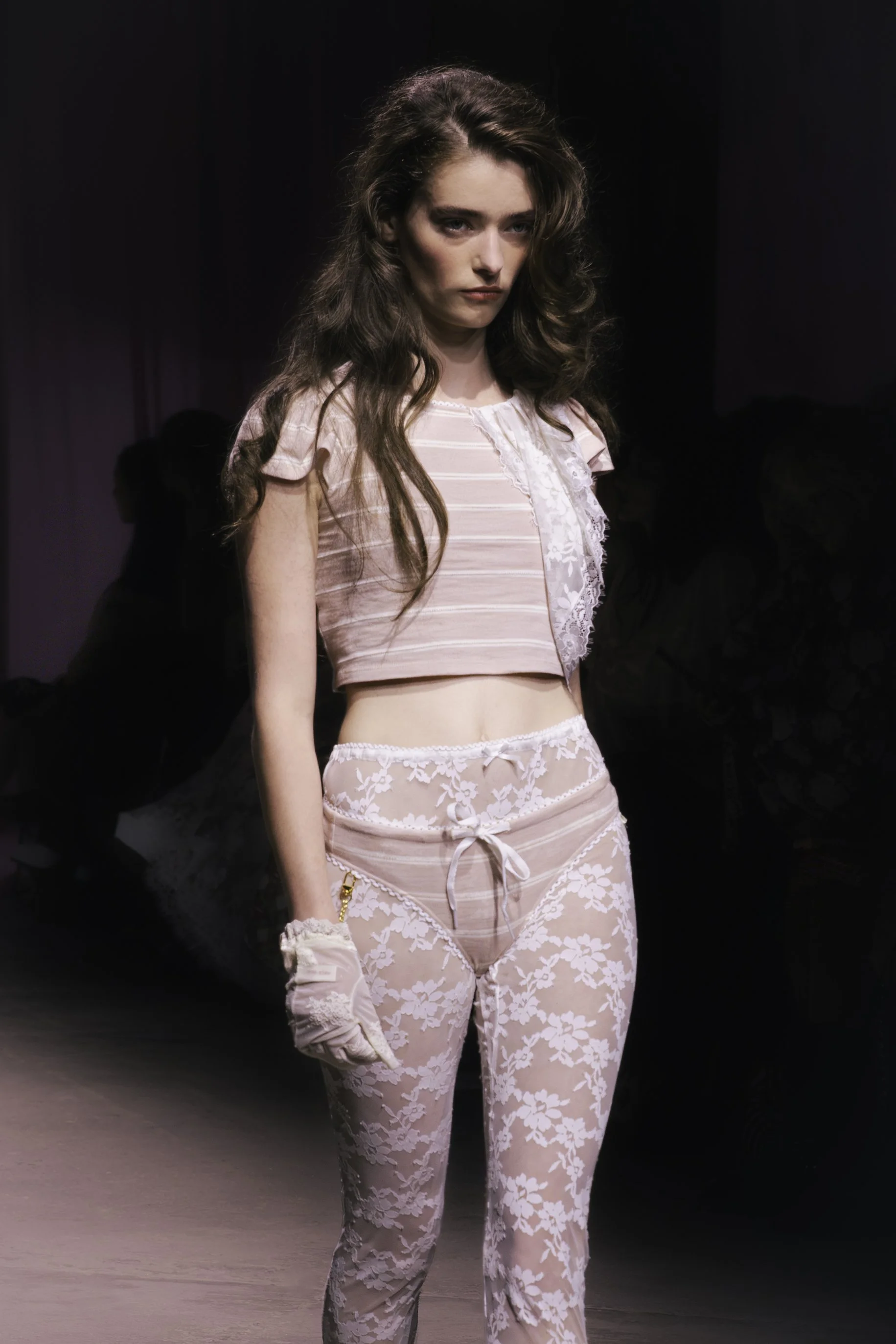
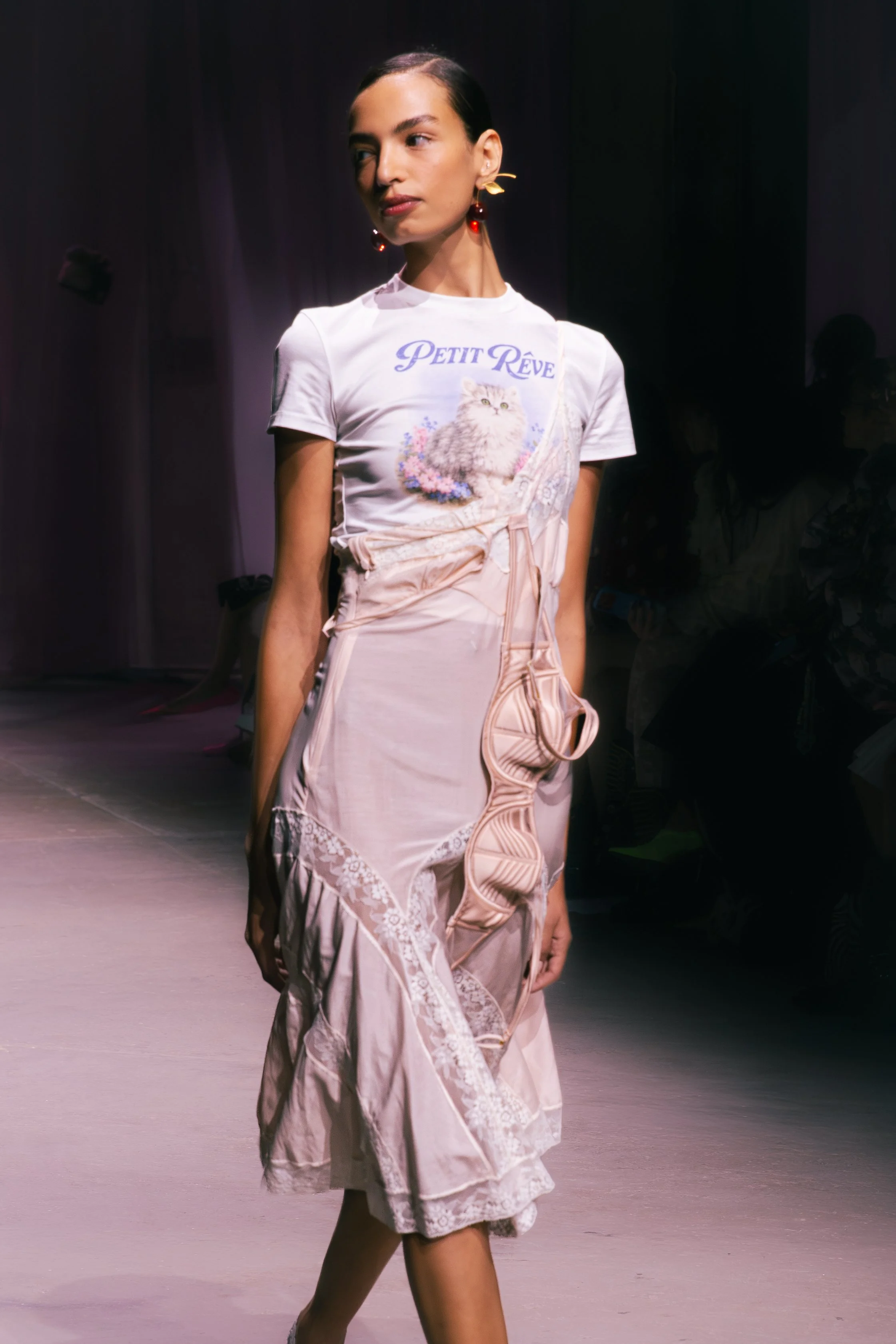
Then the room quietened. Soft, dreamy instrumentals began to play, interrupted every so often by the sound of a woman yawning, sighing and stirring in her sleep. “The woman in Yuhan Wang’s bedroom might be asleep, getting ready to go out, just coming home, having a tea by herself, or somewhere between all of these moments,” read the letter accompanying the show. On the runway, those moments began to blur together. Lace and satin met denim and leather. Nightwear became outerwear; private objects became decoration. One model appeared in a brown leather dress constructed with drawers, silk chiffon scarves spilling carelessly from them as though she had been rummaging through her dresser five minutes earlier and never bothered putting anything back. That messiness ran throughout the whole collection, but nothing about it felt accidental. Wang exaggerated the female silhouette with small waists and wide, almost Renaissance-like hips. There was something deeply feminine about it all, but never a polished, perfectly put-together version of femininity - Wang’s woman is raw and real.
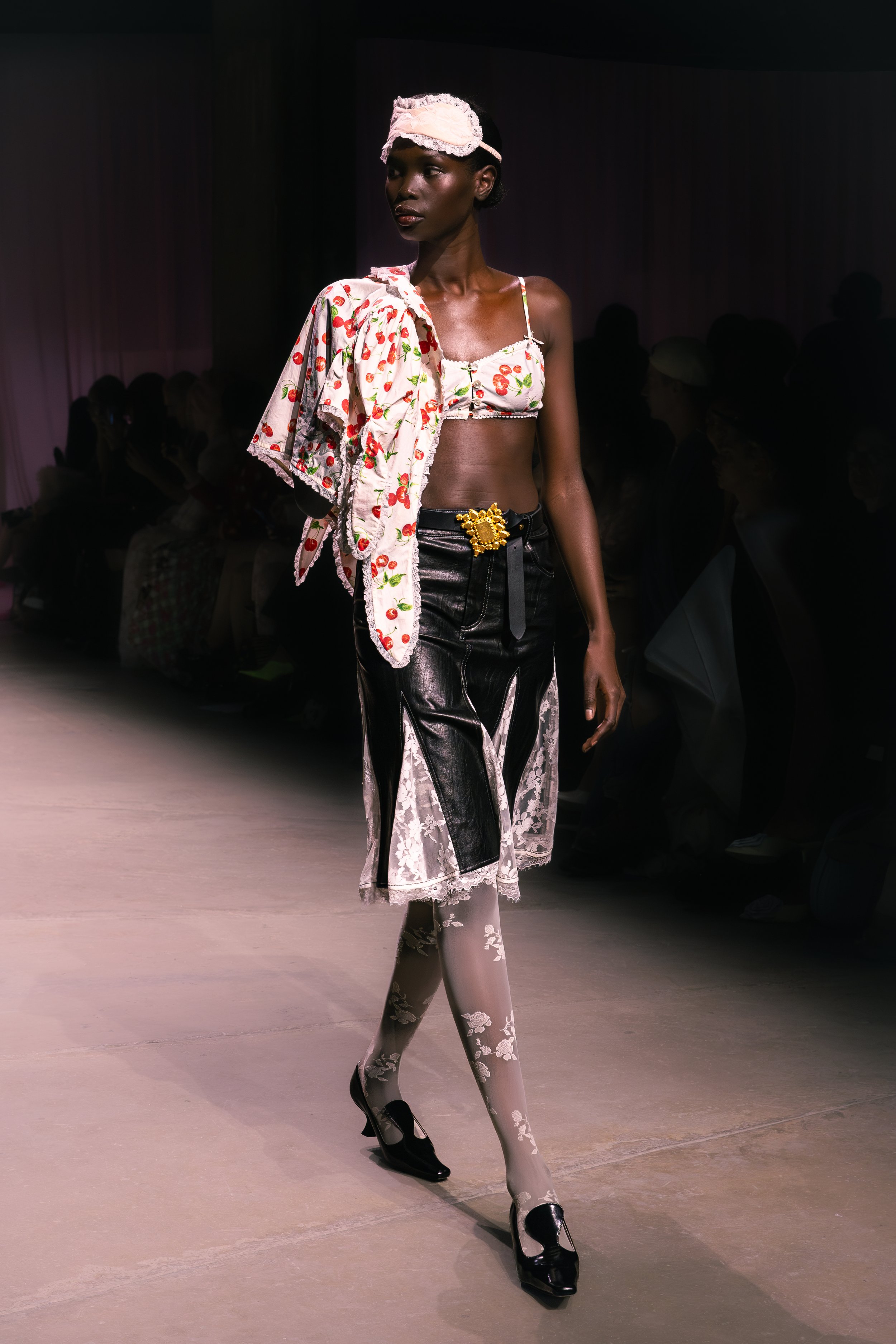
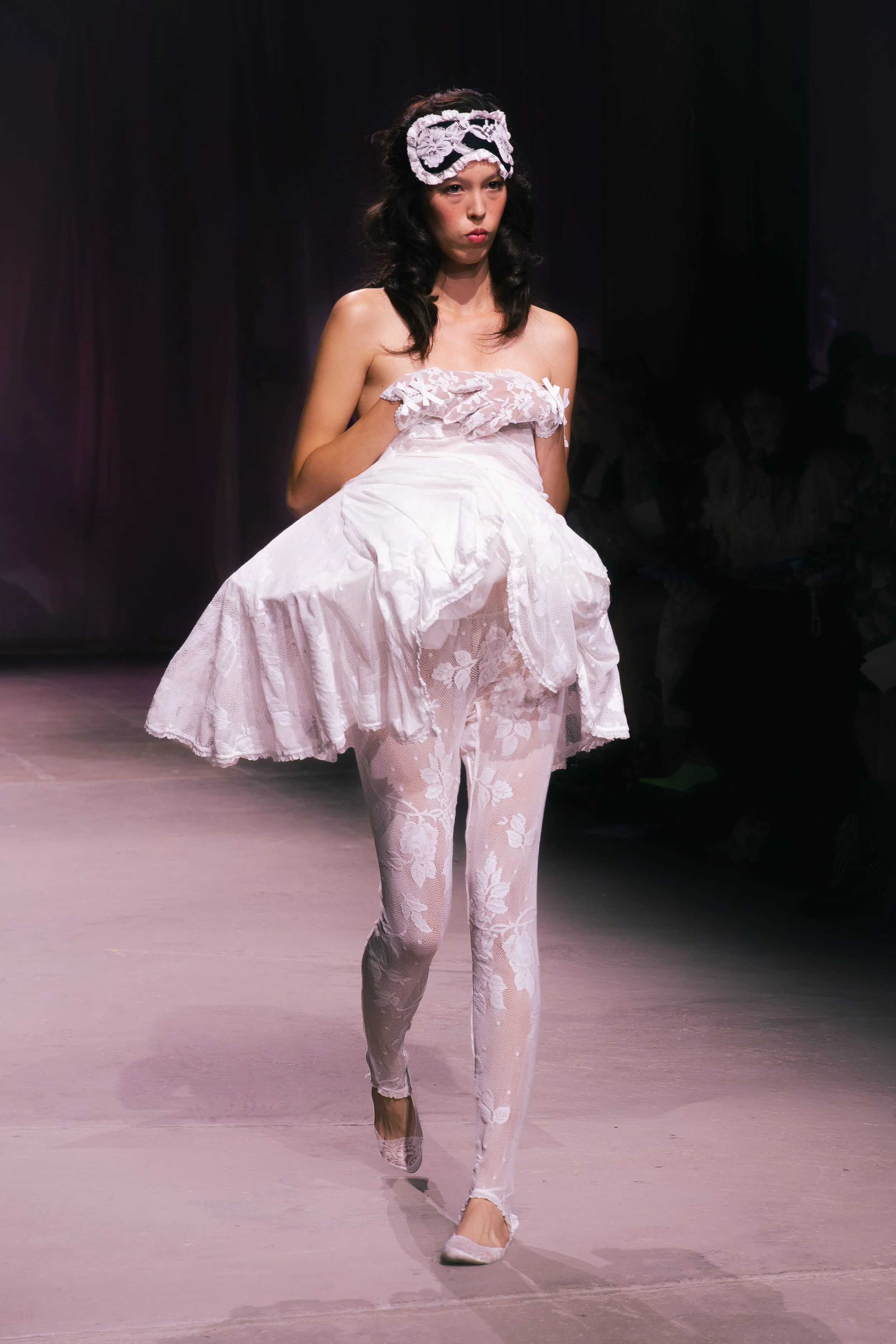
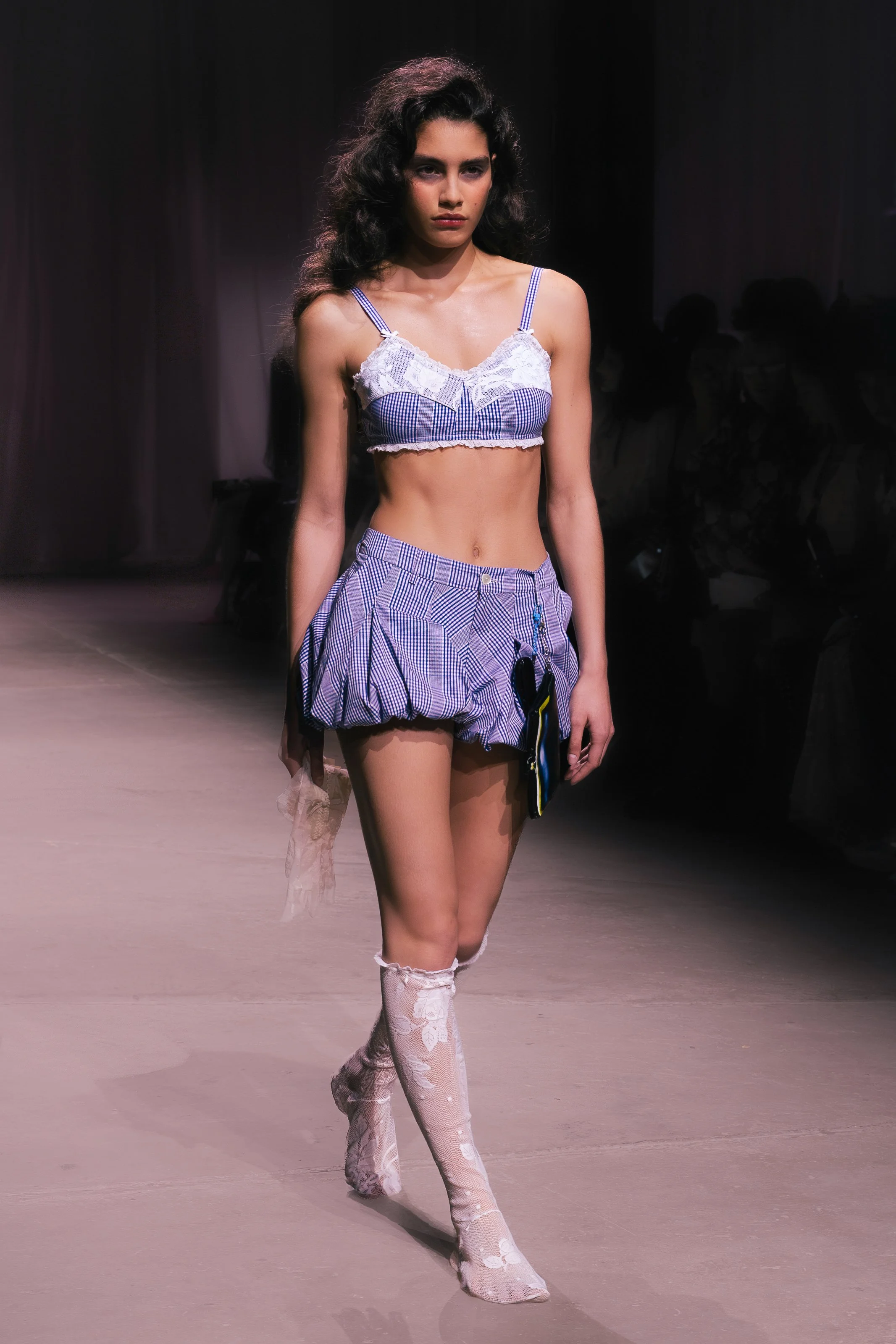
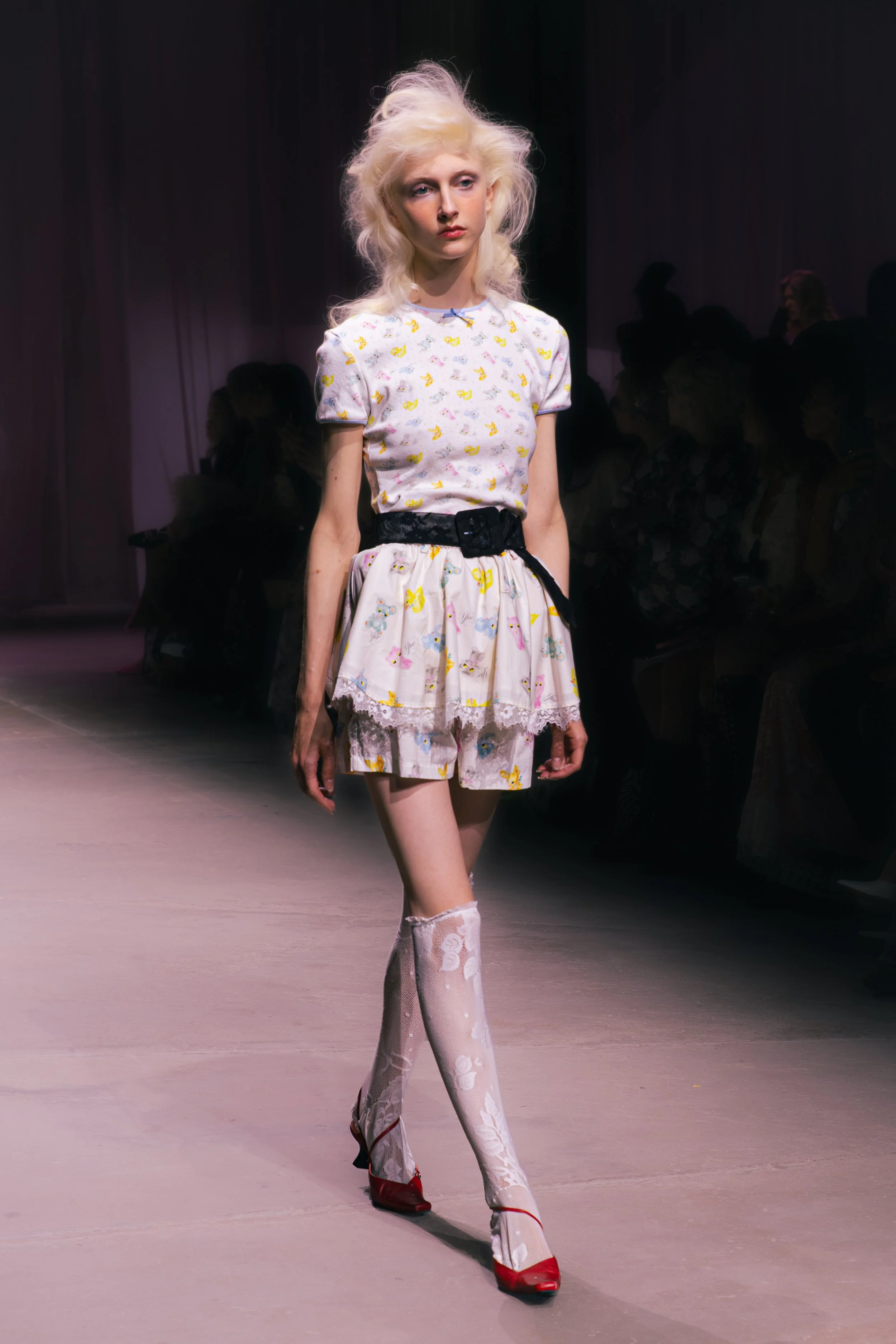
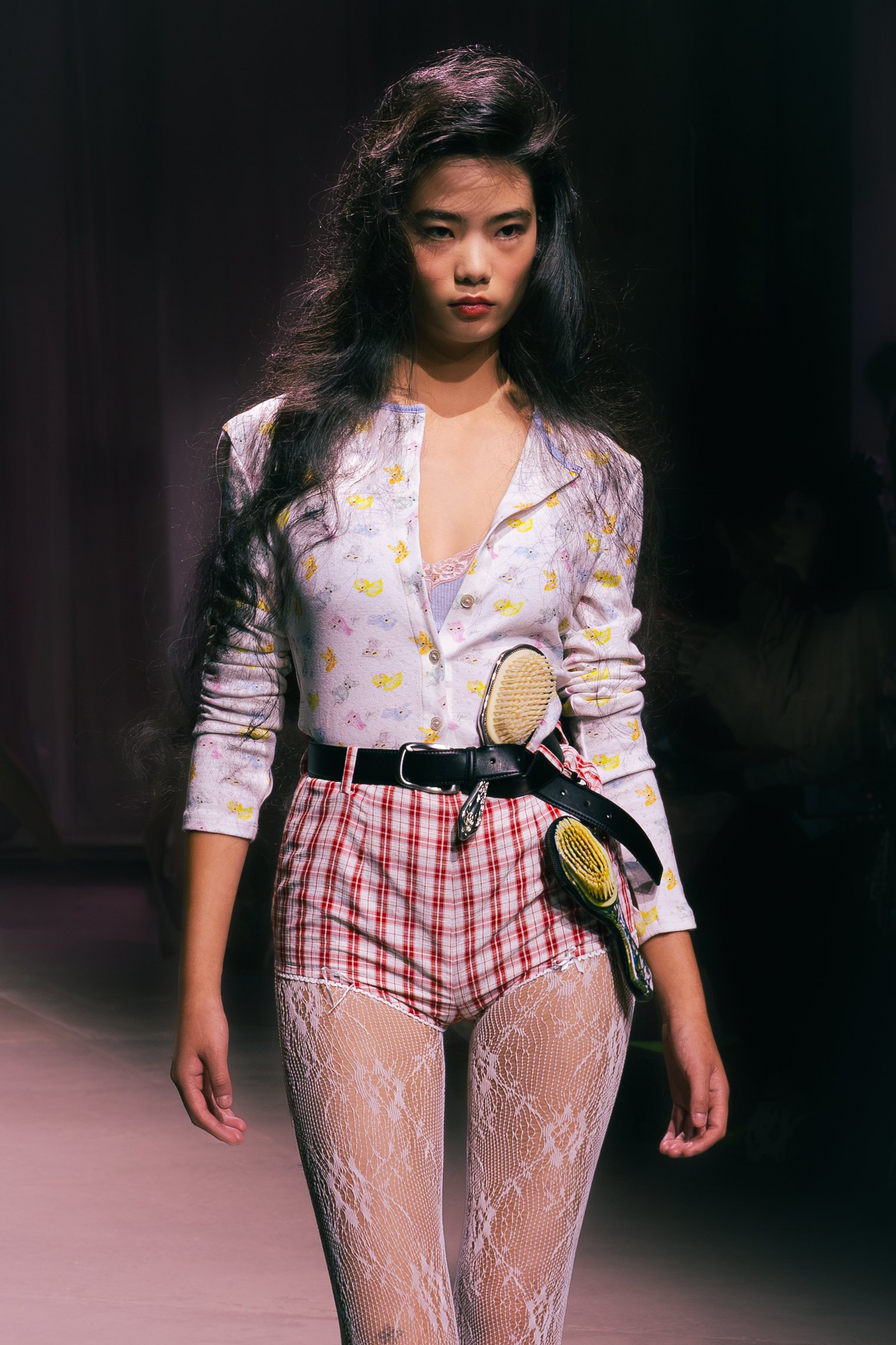
Teacups, hairbrushes, mirrors and sleep masks accompanied the models down the runway. Sometimes they were carried; elsewhere they became part of the clothes themselves, dangling from belts or appearing as brooches. On their feet were ballet flats, ballet slippers and delicate lace or nylon socklets, as if they hadn’t decided if they were ready to go out yet. Their faces belonged to the same half-awake/half-ready world: skin was dewy and glowing, cheeks and lips rosy, freckles left visible. Their hair appeared almost undone in loose curls, messy updos, and bangs that looked as though they had only just been freed from rollers.
Wang’s bride was my personal highlight. She appeared in a strapless white lace nightgown, its silhouette expanding dramatically at the hips, holding the fabric in her hands as she walked. A black-and-white lace sleep mask sat tangled in her hair. She looked simultaneously like a bride, a woman who had just woken up, and someone still trapped inside her own dream. She was the perfect conclusion to a collection that had spent the evening refusing to distinguish between any of the three.
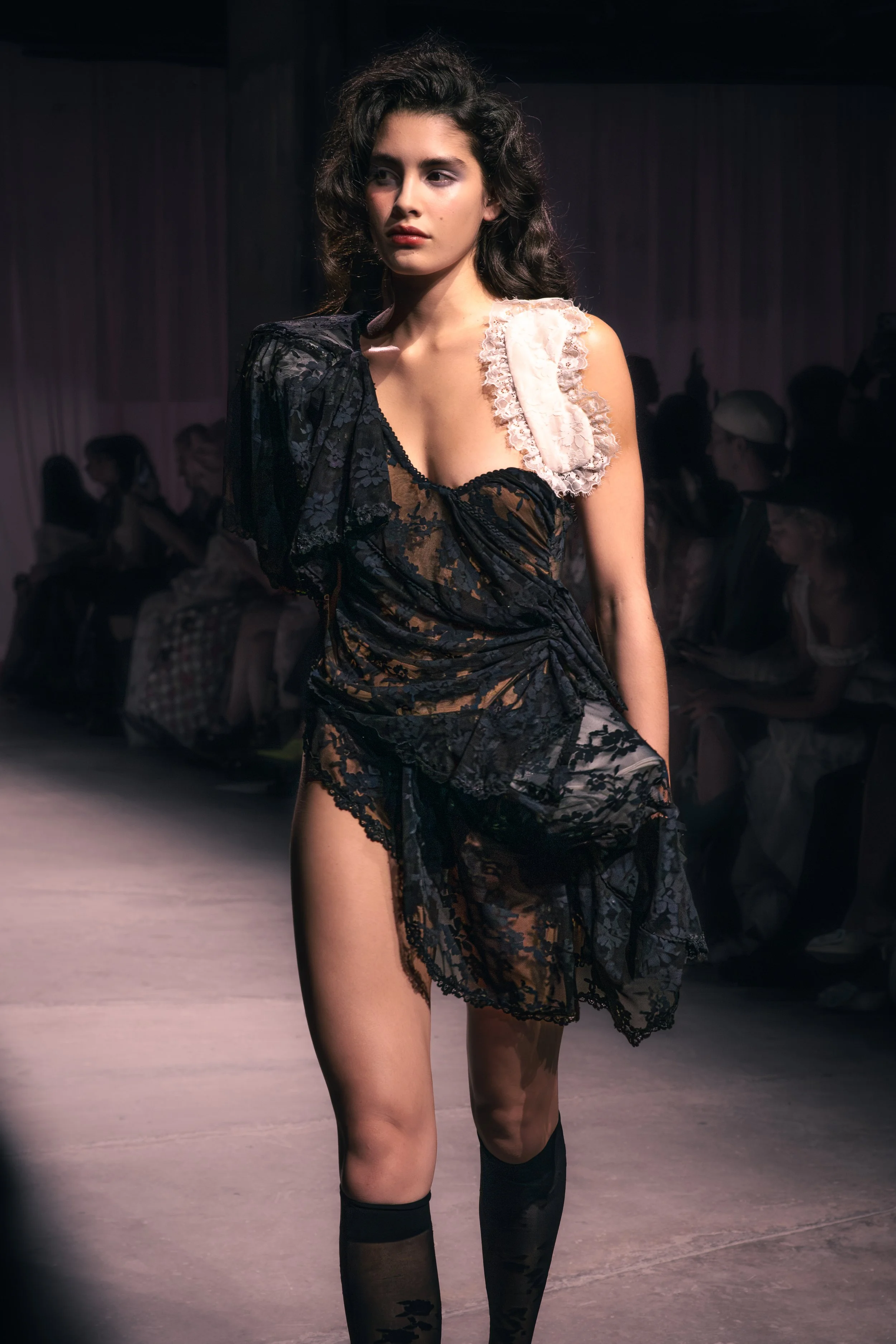
That ambiguity is what made ‘Sweet Nightmare’ so compelling. Wang didn't create the pristine, “clean-girl” version of a woman's bedroom. Hers was lived-in, honest and non-performative. Drawers were left open, clothes all over the place, hair wasn't finished, teacups hadn't been taken back to the kitchen. She might be getting ready to go out, crawling into bed or arriving home at four in the morning. It felt like I spent the evening inside a woman's bedroom, and inside her mind too. Dreamy, feminine, intimate and wonderfully messy, ‘Sweet Nightmare’ turned all those private little rituals of girlhood into something worth putting on a runway. And then - just like waking up from a particularly beautiful dream - the lights turned on, and it was over.