Matt Hope
F R A G M E N T S
01.10.26
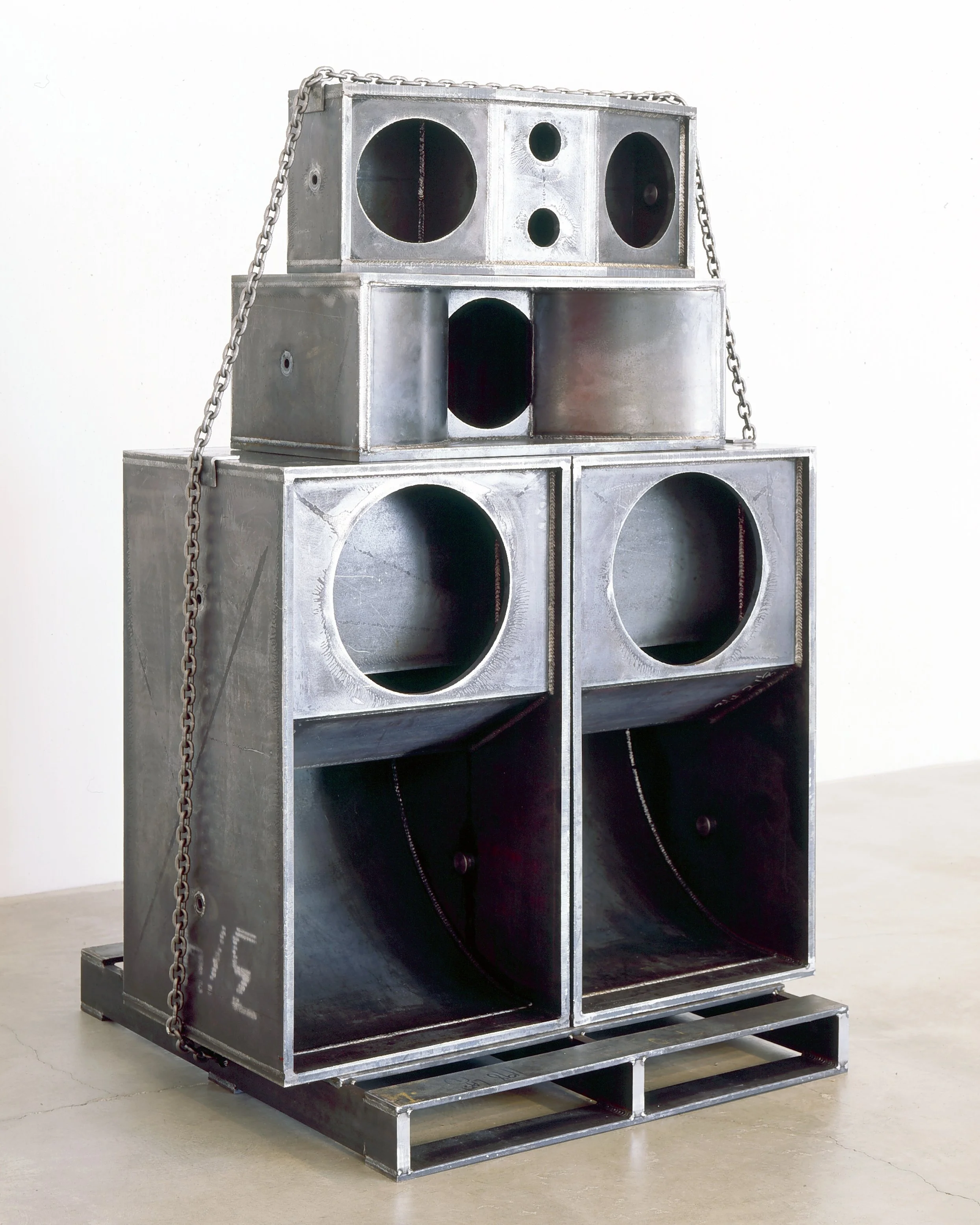
Matt Hope is an artist from London, now working in Guangzhou, China. Matt centres his practice around elaborate kinetic art and sound art constructions. His work is currently on show in ‘Echoes of Form’ with Singchan Design in Shanghai, where what look like empty speaker cabinets ring like church bells.
For our readers encountering your work for the first time, please take us through your background.
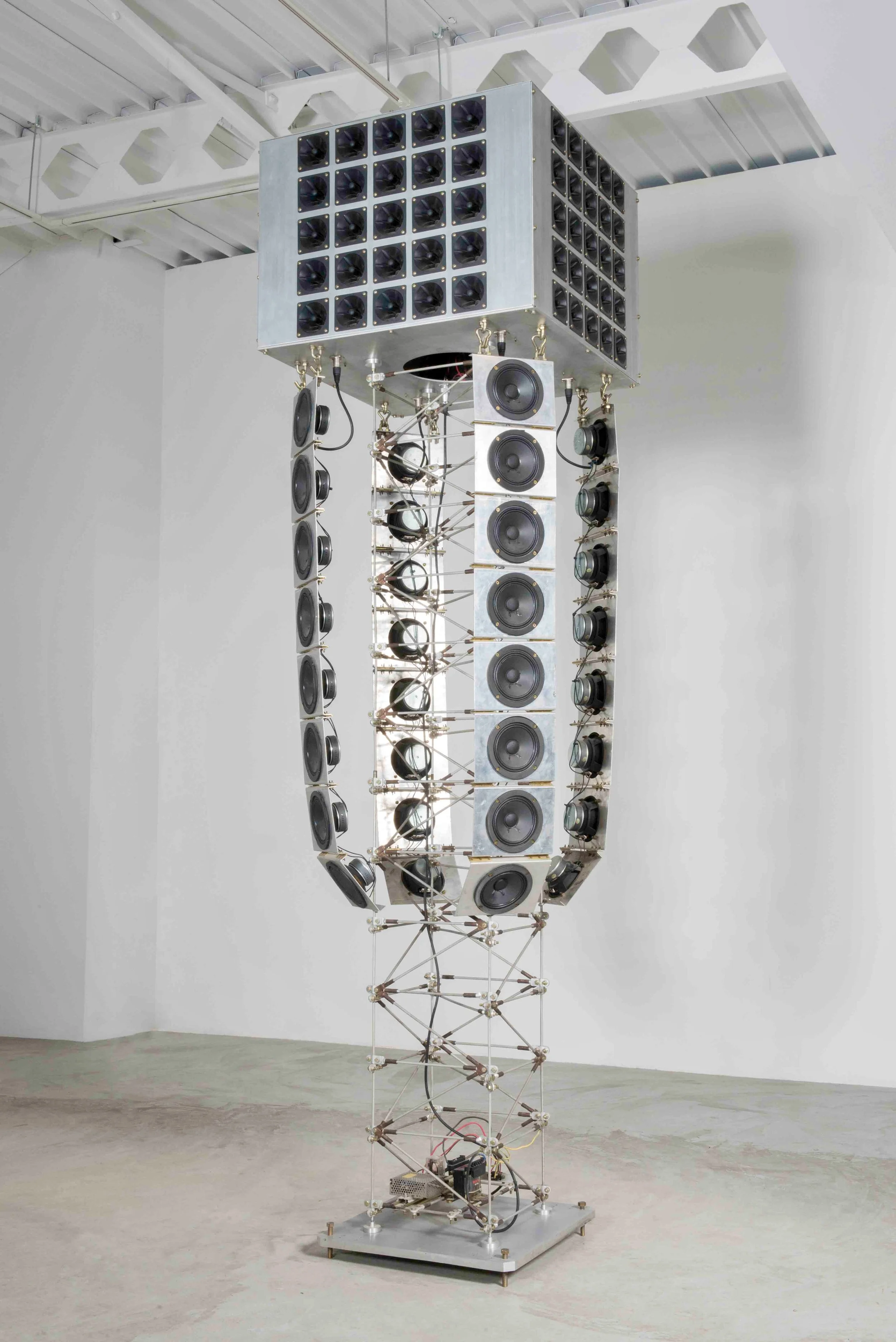
I grew up in west London, spent my youth drawing, building and digging, wandering empty warehouses. In 1992 we went to Castlemorton Rave, I had an experience in front of a speaker and knew I had to build my own sound system, a year later with help from friends we did just that. This led to the free party scene doing underground raves travelling all over to France and beyond with Vox populi sound system, in the mix with Virus, Jibba, Desert storm, Spiral Tribe & Bedlam. Collaboration was a necessity in order to make things happen.
In 1994 I attended Art school at Chelsea, my life doing sound systems conflicted with the silence of the Art stuff. I found myself awkwardly in both places, later becoming more driven to create louder and more complex things, whilst grappling to understand conceptual art, acoustics and structures.
Disillusioned by Art school I spent 2 years doing industrial experience becoming a full time welder, learning much needed skills to do more advanced projects later, we worked high up climbing steel beams in all-weather getting showered in sparks. I returned to Art school to put my know how to use building a massive steel horn at UCSD. After Art school I got signed to this Art gallery, we burned through cash like crazy making some giant stuff. It was completely different to the Free rave of the 1990s, it didn’t feel right and wasn’t me. I maxed it out to the full, figuring it was necessary stage.
MH
Where do you draw inspiration from?
When I was kid we were up on this mountain, below in the valley I saw a land rover cross a cattle grid, I heard the sound a few seconds after seeing it, because of the sound light discrepancy. Moments like this are a huge source of inspiration. Today I draw inspiration from the natural world & physical phenomena and industry, things I notice. like the strength of a leaf or how sound coalesces in corners or dissipation of heat. I spend much time searching industrial zones for materials and suppliers instead of looking online.
MH
Your portfolio impresses with an array of experimental ‘kinetic art’ and ‘sound art’. Which piece(s) of yours are you most proud of, and which were the most challenging to construct?
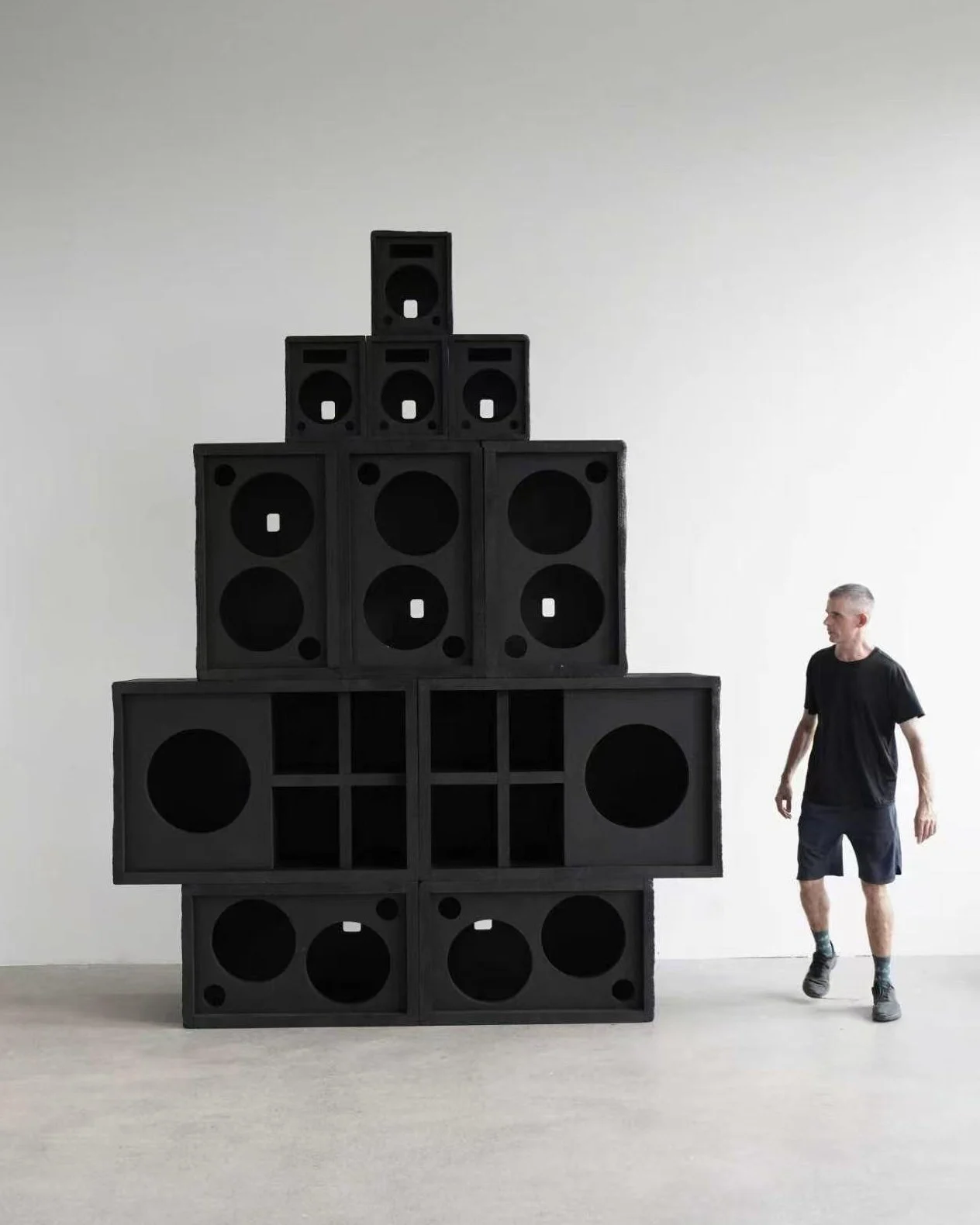
Last year I created a new type of low frequency speaker using sculpted foam, very experimental but a delight to discover that it worked well. This required asking much deeper questions about material science than I had before, and sensing your own limitations.
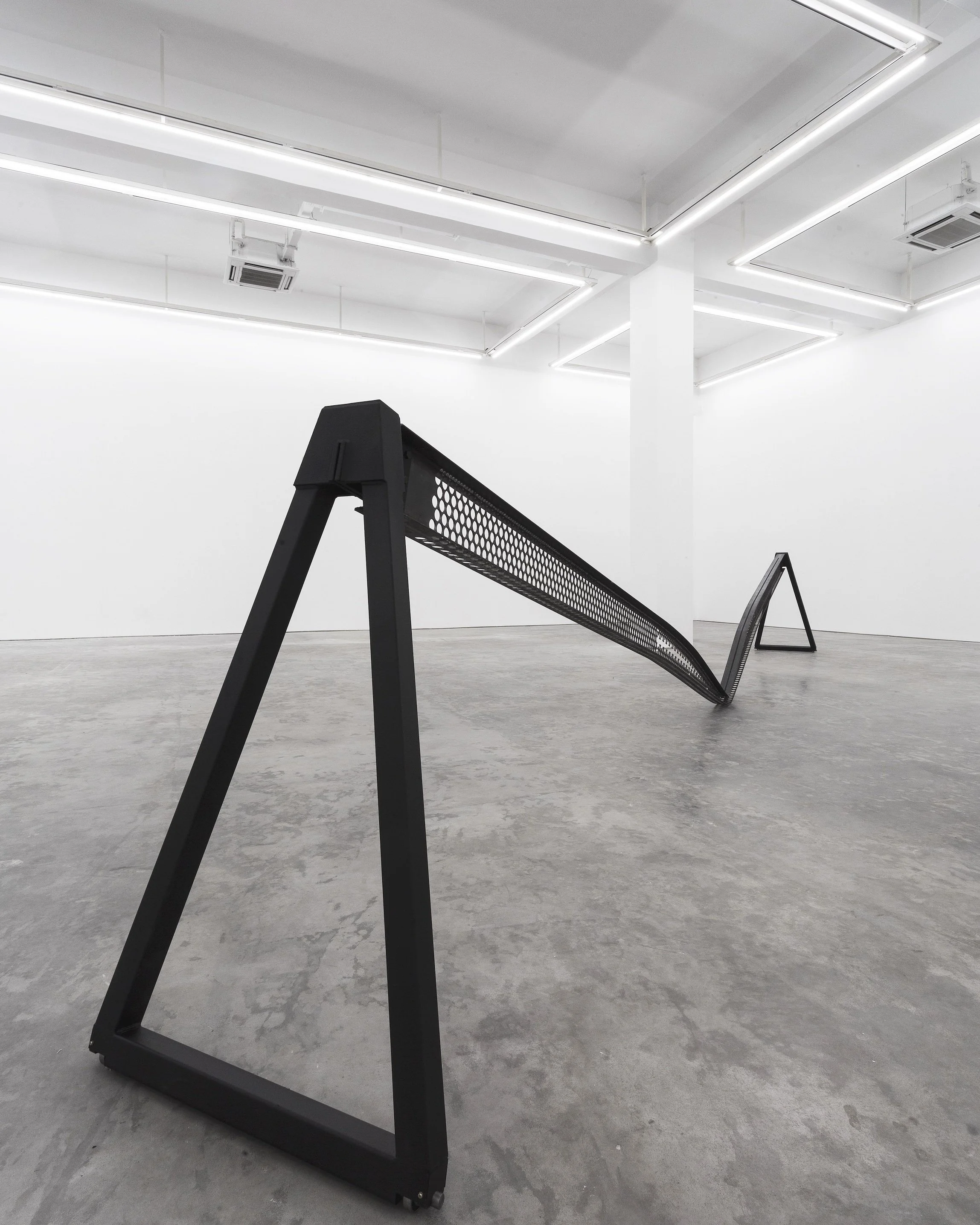
Large things look more impressive generally because more is at stake. Building the Horn in 2003 was a major milestone, as it combined everything at once. Speaker obscura (2023) a large parabolic listening device took 17 years to finish, nearly killed me, The massive black Outer Ear listening installation was very effective and used no electricity but had nightmarish geometry with a zero chance of error for the parts to connect, I remember looking out of the plane window at the curvature of the earth wondering if my project violated Euclidian geometry.
MH
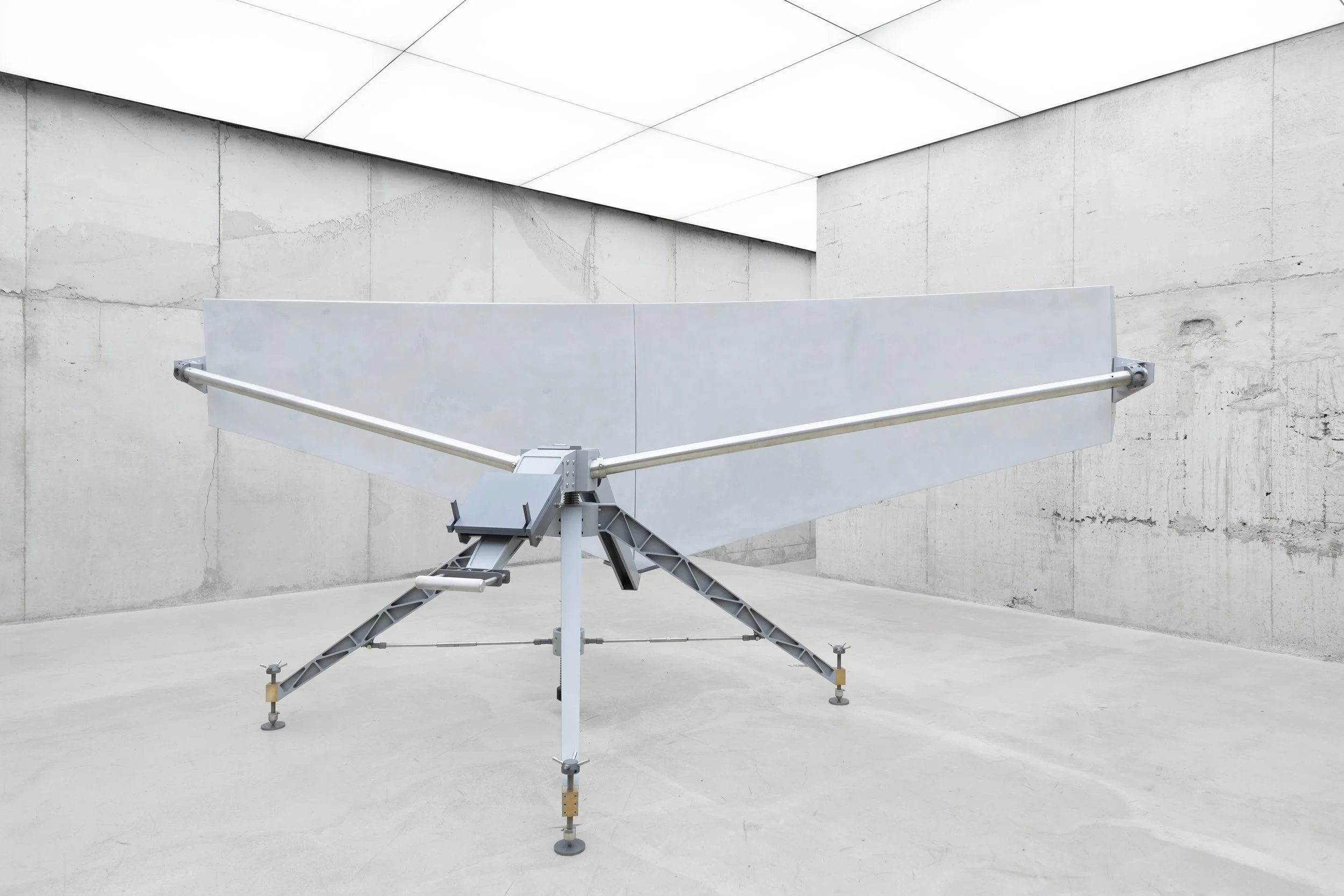
You’re currently displaying your work at the ‘Echoes of Form’ exhibition, with Singchan Design in Shanghai. Can you tell us more about this exhibition?
The exhibition focuses on a brew of various outputs, themed around mass lightness & darkness. I made this large sound installation, what looks like empty speaker cabinets work as acoustic resonators, where the cabinet itself makes the sound like a church bell, ringing low frequency.
MH
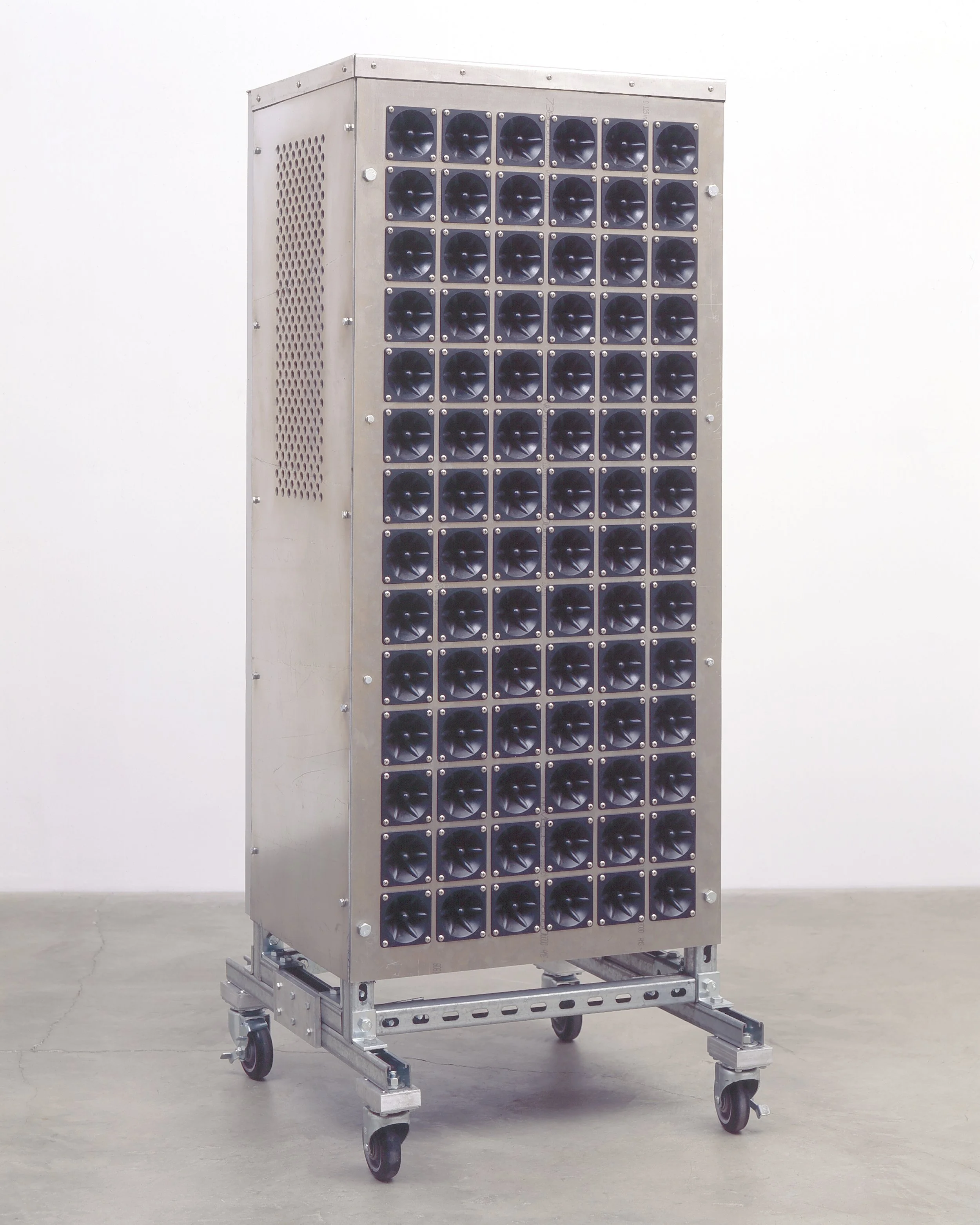
You have studied around the UK and in America, and are now based in China. How has working around the world influenced your artistic practice?
By living & working in many different places you recognise patterns and similarities rather than focus on the differences, cultural or geographical, why the world has become the way it is. The shifting of people culture & industry. The climate in these different places and attempting to adjust has been very challenging too, always wondering where or what is next.
MH