Magdalena Lazar
IN CONVERSATION
10.08.26
F R A G M E N T S
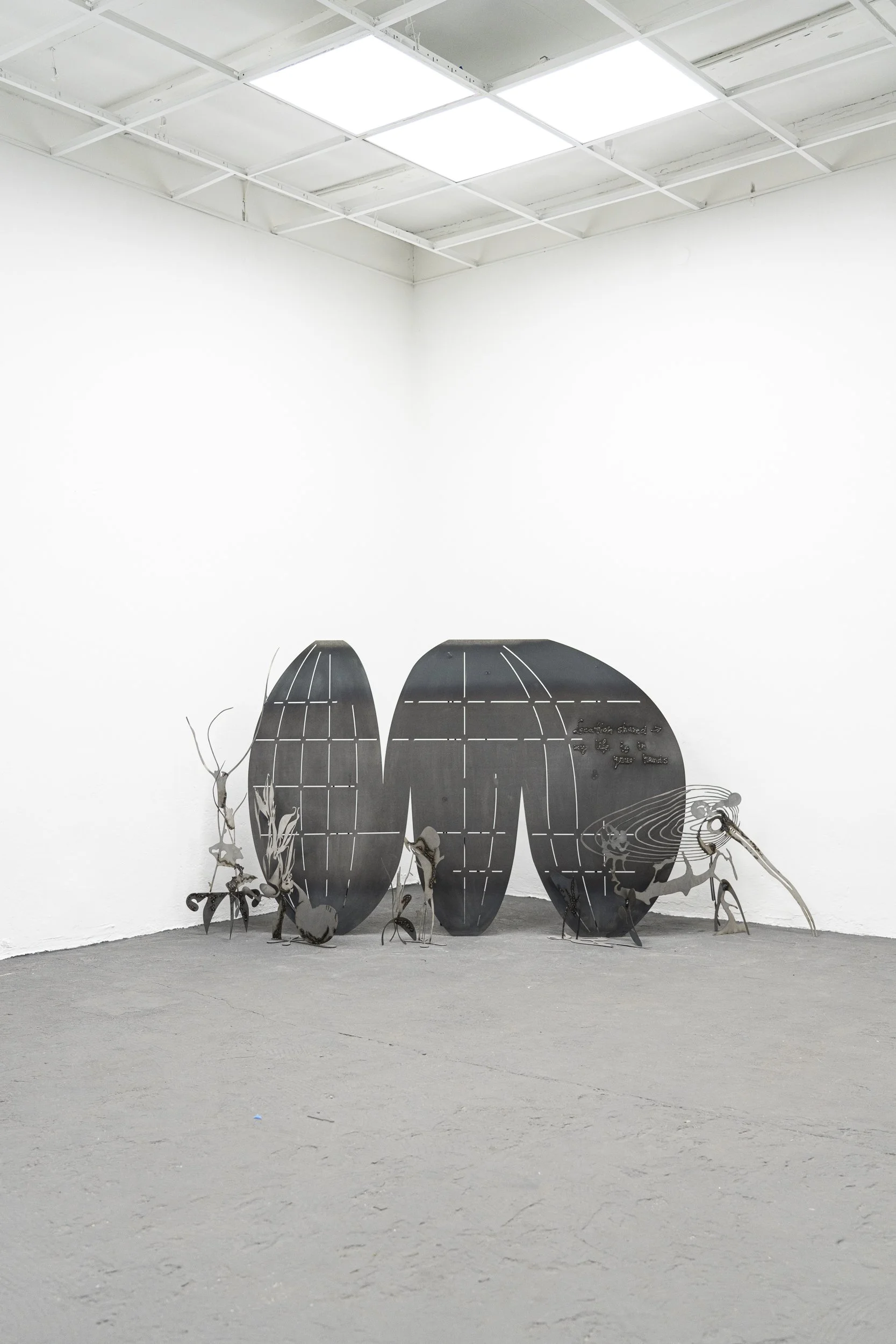
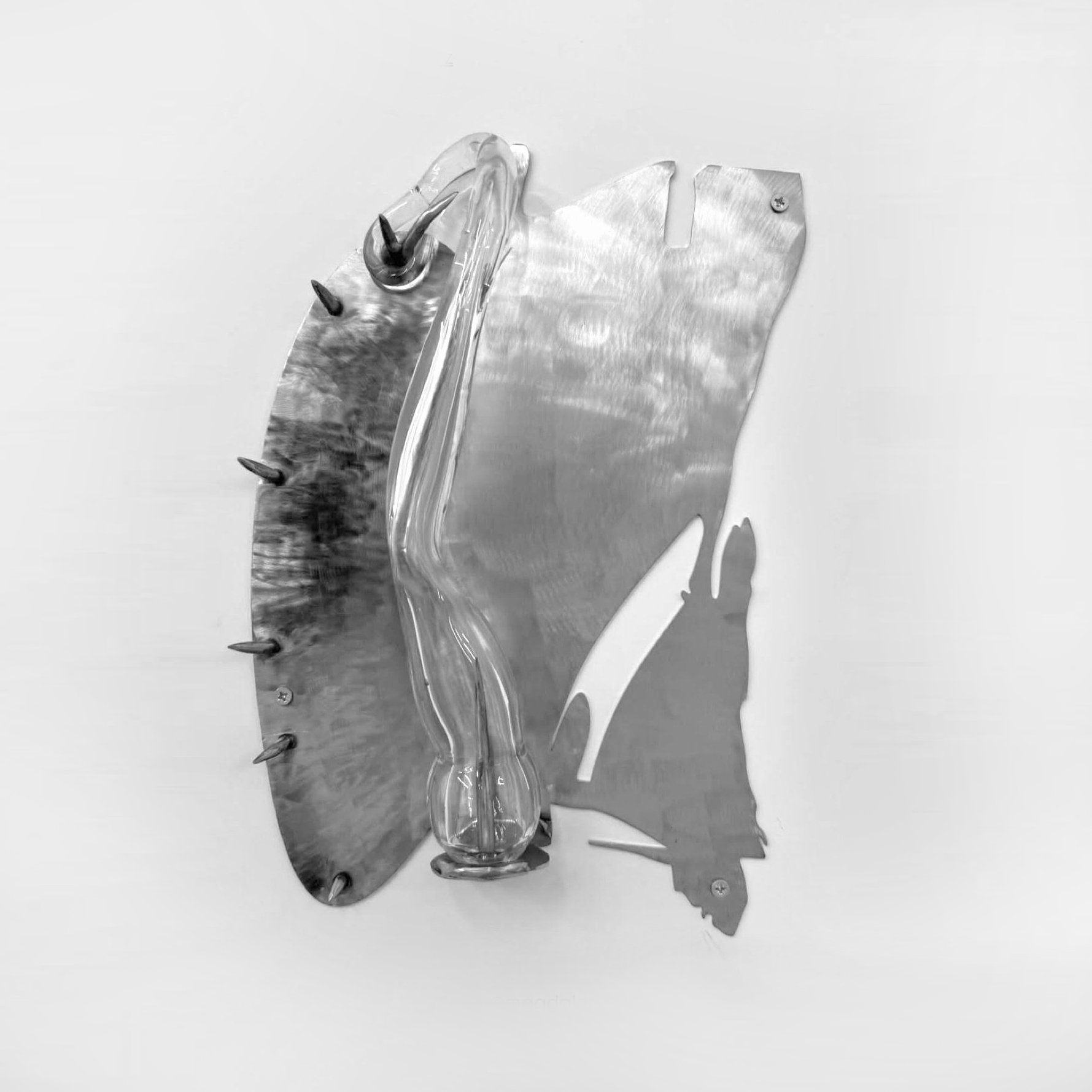
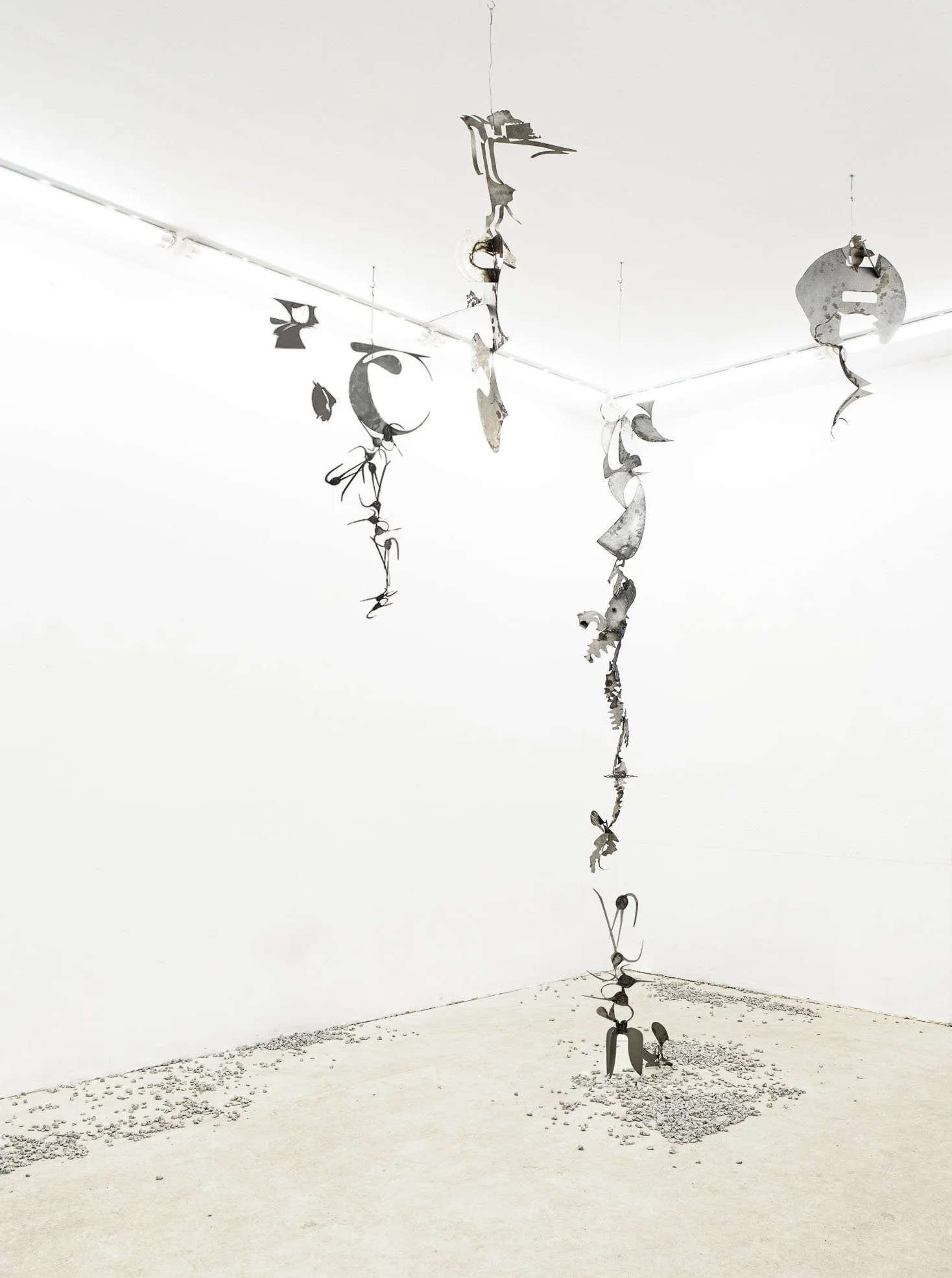
Magdalena Lazar is a sculptor rooted in Upper Silesia, an industrial region she describes as shaped equally by coal mines and mysticism. Her sculptures are built on the coexistence of opposing qualities, tenderness and brutality, beauty and toxicity. Alongside her own practice she curates exhibitions such as 'Soft Smiths' which centred on women working with metal from across Europe.
For our readers encountering your work for the first time, please take us through your background.
I was born and raised in Upper Silesia, in southern Poland, a borderland whose identity has been shaped by centuries of shifting borders between Poland and Germany. That layered history left traces not only in the region's architecture and family stories, but also in its language and cultural identity. I grew up at a time when the heavy industry that had defined the region for generations was gradually collapsing. Coal mines and steelworks were closing, unemployment was rising, and communities built around industry were forced to redefine themselves.
One of my strongest childhood memories is our family home shaking from mining tremors as the ground beneath us subsided. That sense of living on unstable ground, both literally and metaphorically, has stayed with me ever since. At the same time, Upper Silesia has another, less obvious face. Alongside mines and factories, it has a remarkable tradition of spirituality and visionary art. The Janów Group, centred around the Wieczorek coal mine, included self-taught artists such as Teofil Ociepka, whose paintings drew on Christian mysticism, esoteric philosophy and folklore, creating worlds inhabited by angels, dragons and mythical creatures. Another important figure was Urszula Broll, a painter and co-founder of the Oneiron group; an interdisciplinary circle of artists and writers who explored Jungian psychology, Eastern philosophy and spirituality as an alternative to the constraints of communist reality. Their work revealed that even in the shadow of industry, imagination and inner life could flourish. This coexistence of industrial reality and mystical imagination is what makes Upper Silesia so unique, and it continues to shape the way I think about art.
I studied metal arts at the Secondary School of Fine Arts in Katowice before moving to Kraków to study Graphic Design, which at the time seemed like a more practical career path. After graduating, I worked for several advertising agencies. During the pandemic, I bought a welding machine and returned to working with metal. That decision felt less like a career change than a return to something that had always been part of me.
ML
You are currently exhibiting your sculpture, “Hey, hi, hello, yo, what’s up”, at the Contemporary Art Centre (CAC) in Lithuania. Can you talk us through the intention behind this piece and the process of creating it?
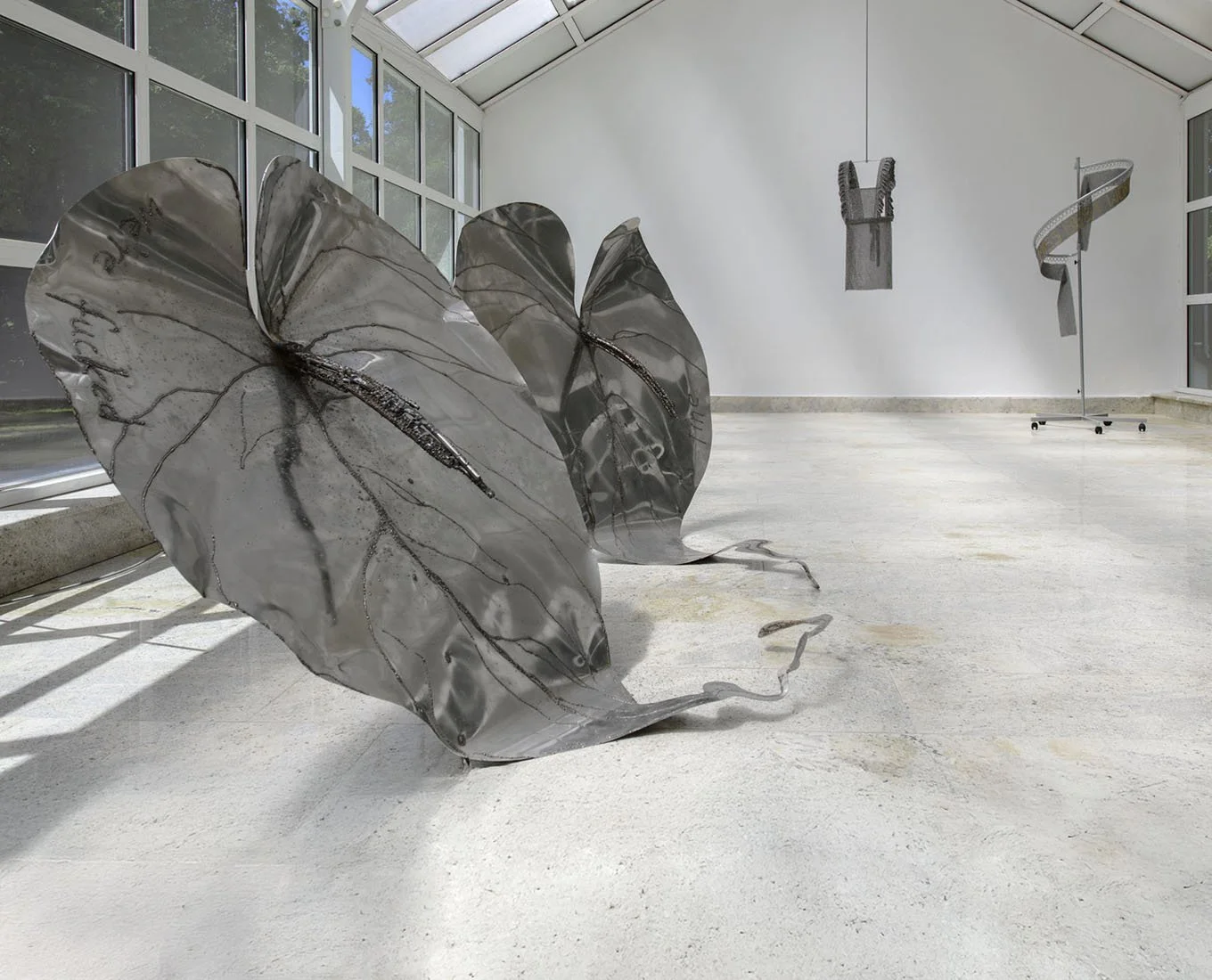
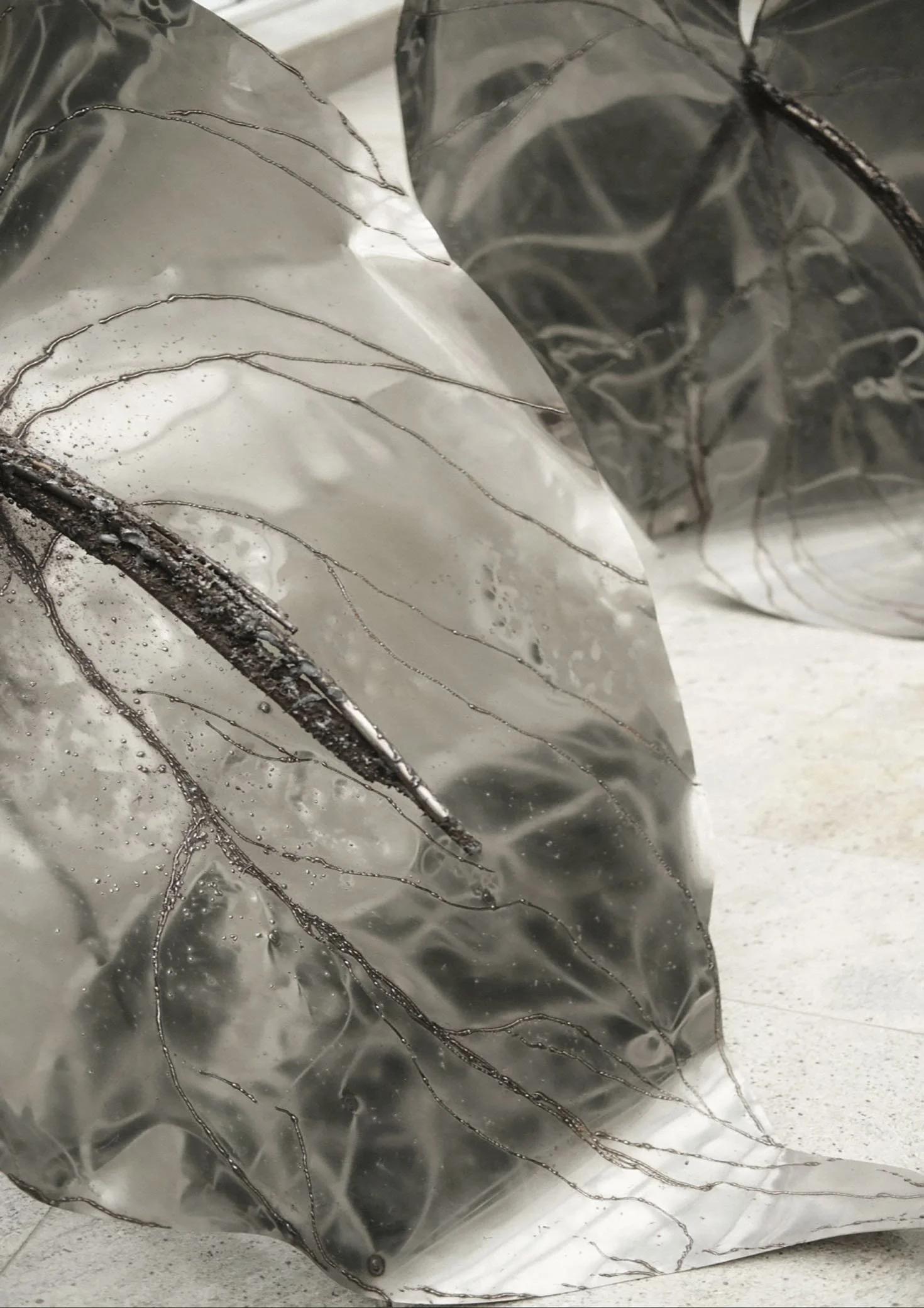
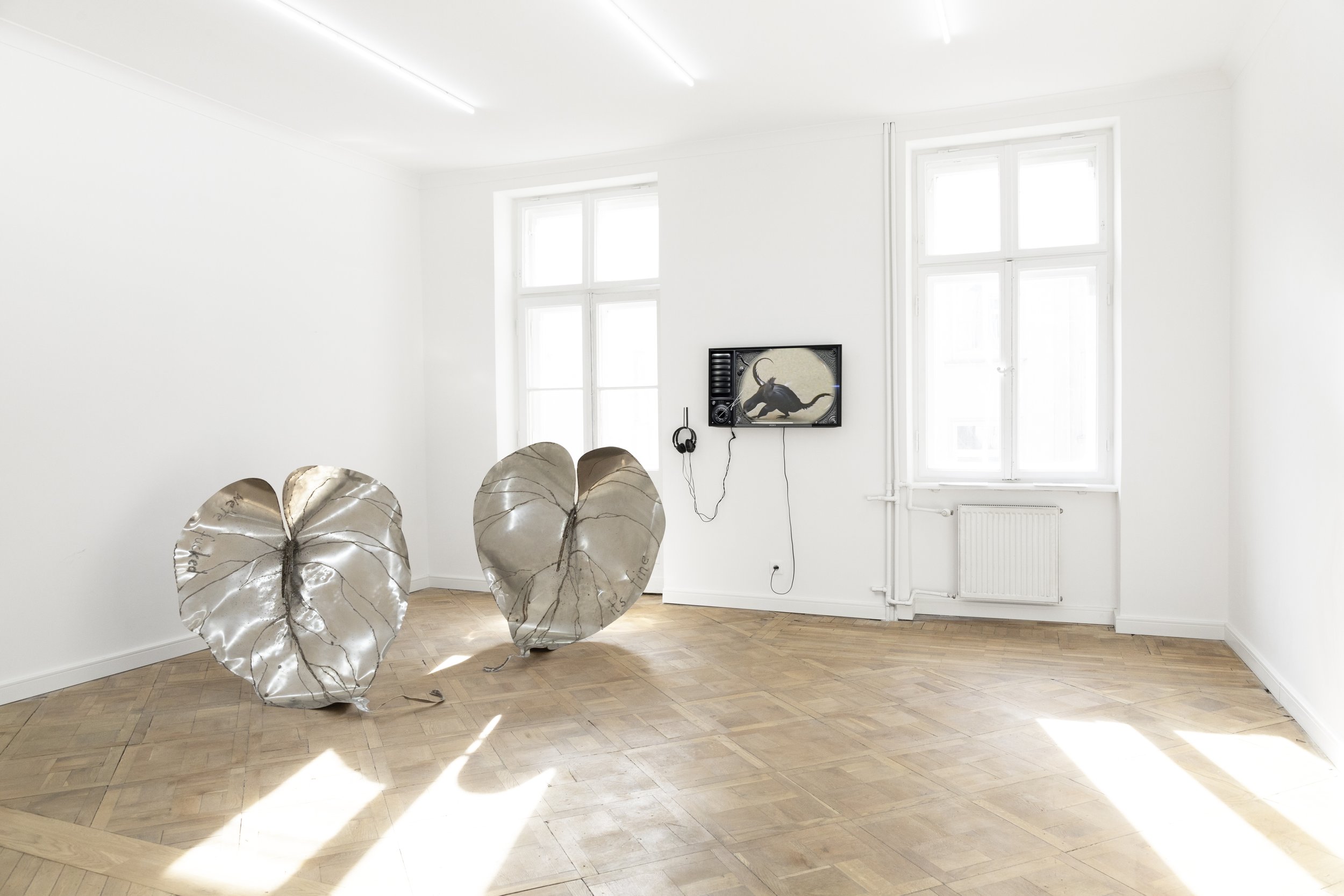
Hey, hi, hello, yo, what’s up was created during my residency at the Polish Sculpture Center in Orońsko. I hadn't planned to make this work - it wasn't part of the project I was there to develop. It emerged unexpectedly, out of a personal need to process a very intense period in my life. At that time, I was experiencing two seemingly opposite emotions simultaneously: grief after a loss and the feeling of being in love. Those two extreme states - deep sorrow and an intense desire for life and closeness - began to intertwine. I realised that, despite appearing contradictory, they share a surprising emotional intensity. This work became an attempt to hold both of them at once. I chose the anthurium because it is a plant full of contradictions. Many people perceive it as artificial, excessive, even kitschy. In several South American countries, red anthuriums are given as Valentine's gifts in the belief that they will make the recipient return one's feelings. At the same time, they are also commonly used in funeral wreaths to express grief and mourning. Their form feels shameless, emotional, almost chatty. They are associated with sexuality, but also with death - a duality reinforced by the fact that, despite their beauty, they are poisonous. While making the work, I also found myself thinking about how difficult it has become for us to talk openly about emotions or to truly support one another. It often feels as though conversations about grief, vulnerability, or intimacy have been outsourced to therapists' offices, while our everyday interactions are reduced to brief, reassuring phrases. That's why I burned the words "We are fucked" into one flower and "It's fine" into the other using a welding torch. They function both as an attempt at consolation and as an expression of helplessness in the face of another person's emotions. The title, Hey, hi, hello, yo, what's up, also points to the superficiality of contemporary communication - how we constantly initiate contact but rarely move beyond polite exchanges into genuine conversation. The sculpture's form mirrors these tensions. The steel is deliberately rough and visibly welded, while the soft outlines of the flowers were precisely laser-cut from sheet metal. I'm interested in the coexistence of opposing qualities: tenderness and brutality, precision and intuition, beauty and toxicity, love and loss. Rather than resolving these contradictions, I wanted the sculpture to hold them together.
ML
You also recently curated the ‘Dark Paradise: Inner Tales’ Exhibition at the BWA, Wrocław. Can you tell us more about this exhibition and your curating process?
From time to time, I expand my artistic practice through curatorial work. I began by organizing exhibitions in independent spaces - basements, alternative galleries, and artist-run initiatives. What interests me most about curating is the way different artistic practices can intersect and create shared narratives around themes that feel present in the air - subjects that demand attention and reflection. I particularly enjoy working on exhibitions in dialogue with others, either as a duo or within a larger group. Collaboration allows me to confront different perspectives and prevents me from becoming too enclosed in my own way of thinking - which is something I often experience when working alone in my studio. One of the most rewarding aspects of curating is the opportunity to meet artists whose work I deeply appreciate and to learn more about their practices, motivations, and ways of seeing the world.
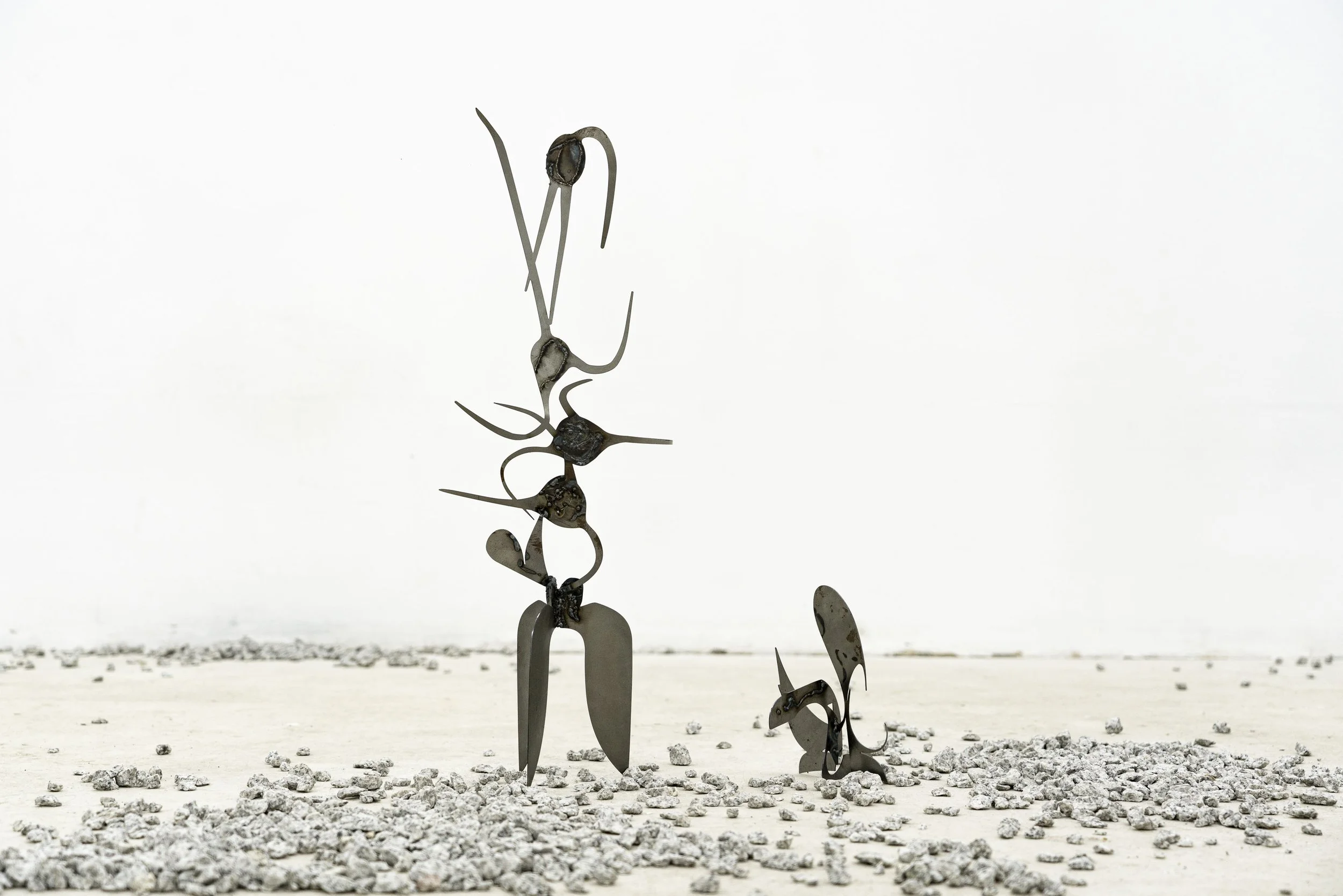
Dark Paradise: Inner Tales, which I curated together with curator and art theorist Katarzyna Oczkowska at BWA Wrocław, was conceived as a contemporary dark garden - a space where fascination and fear, beauty and discomfort could coexist. The exhibition revolved around the ambiguous category of monstrosity and explored the body, its materiality, and its boundaries: what happens when corporeality escapes the systems that attempt to discipline, categorise, and normalise it. Throughout history, monsters, hybrids, and figures that exist outside established social or visual norms have been both fascinating and frightening. They have been treated as warnings, prophecies, objects of study, spectacles, or things to be hidden from view. Yet monstrosity cannot be fully erased - it continually returns in new forms, revealing what has been suppressed, controlled, or excluded. For us, the monster became not a symbol of something threatening, but rather a figure of visibility and transformation. The Latin word monstrum is connected to demonstrare - to show, to reveal, to make visible. In this sense, monstrosity becomes an act of claiming space: a way of challenging dominant narratives and questioning who is allowed to be seen, who is allowed to speak, and whose experiences are considered legitimate. The exhibition approached these ideas through contemporary artistic practices, focusing not only on identity and representation, but also on embodiment and affect - the physical and emotional ways in which we experience ourselves and the world around us. Dark Paradise was an invitation to look more closely at what is often rejected or pushed aside and to recognise its potential for transformation, resistance, and new forms of expression.
An important context for the exhibition was also the unique space in which it was presented. BWA Wrocław is located inside a neo-Gothic railway station building - a place with a very specific atmosphere, far removed from the traditional, isolated white-cube gallery model. Every day, people pass through this space: travellers, commuters, and accidental visitors who may not have planned to encounter contemporary art. I find this situation particularly meaningful because it allows the exhibition to move beyond the circle of people already engaged with art and enter into an unexpected dialogue with a much broader audience. In a way, the railway station also reinforces the themes of the exhibition itself. It is a place of transition, movement, and transformation. Similarly, monstrosity, as understood in Dark Paradise, is not something fixed or contained - it is something that reveals itself, crosses boundaries, and demands to be noticed.
ML
Where do you draw inspiration from?
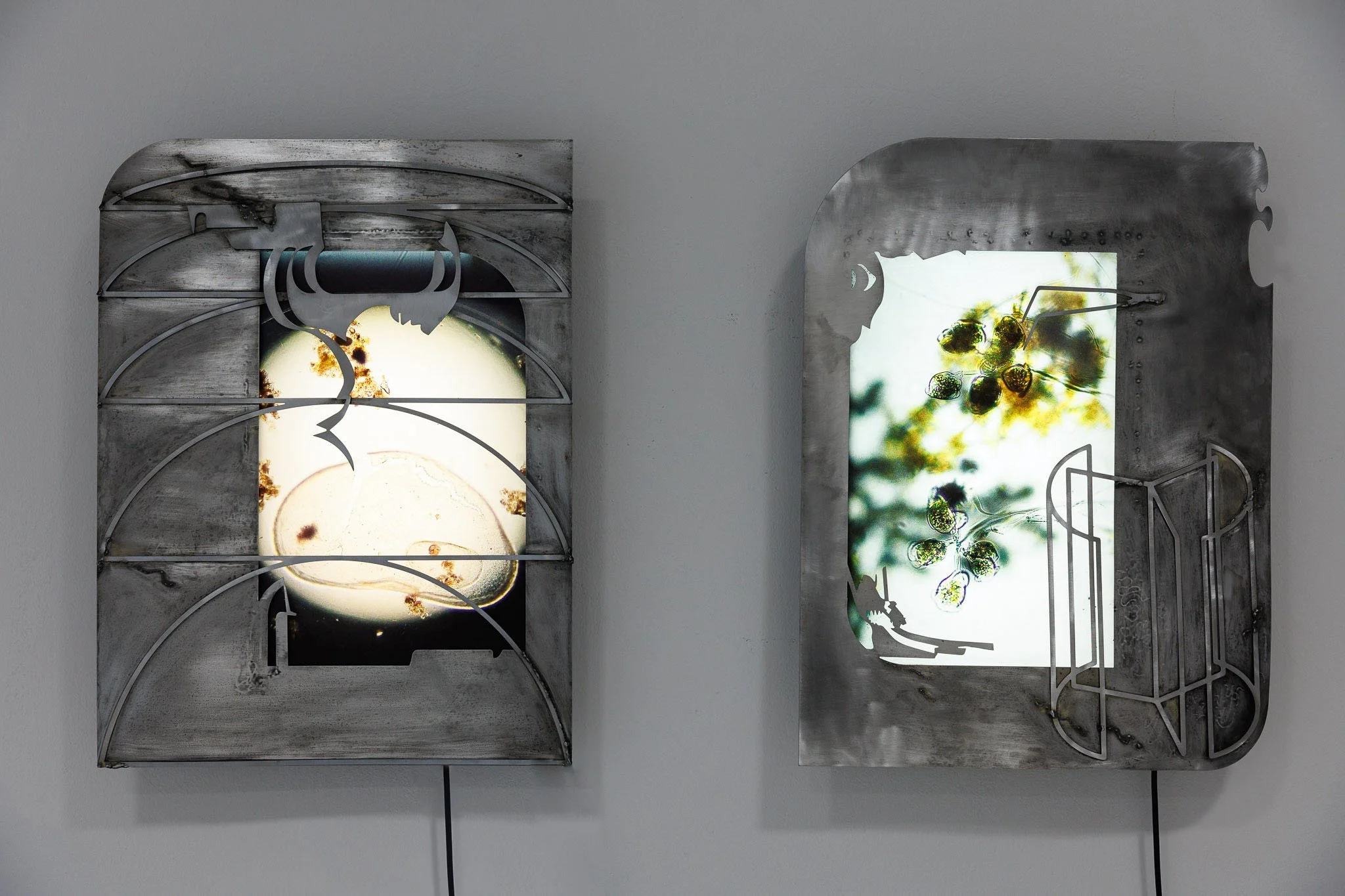
From everywhere - quite literally. Recently, I even found the title of one of my works in a second-hand shop; it was a phrase embroidered on a baseball cap. I'm inspired by poetry, movies, music, travels, memes, strange everyday feelings, and online marketplaces where you can find absolutely anything. I try to stay open and absorb ideas from all directions. I’m especially curious about the things we usually overlook in daily life. Once, I even took samples from urban puddles to a lab, expecting it to be a quiet, almost meditative experience - but it turned out to be an action movie starring single-celled organisms. It is fascinating to discover unexpected worlds hiding in ordinary places.
ML
What piece/s of yours are you most proud of?
I don't have one single piece that I am most proud of. I usually view my work as a process, and there are pieces that are hard to part with - though I always feel like I could improve something or do it differently next time.
I am probably most proud of the international exhibition of women working with metal, "Soft Smiths," which I co-curated with Michalina Sablik. It was a true dream come true. As part of this exhibition, we were able to invite artists from various corners of Europe to the Center of Polish Sculpture in Orońsko for a few days. We had more time for each other, so we talked not just while setting up the show or during the opening. We walked around the park together, gathered around a campfire, and shared our experiences over meals. I felt that we share similar struggles and that working with fire and metal has an emancipatory dimension for many people. A publication on this topic was also released, published by the Sculpture Center.
ML
What’s next for Magdalena Lazar?
A solo exhibition is currently in progress, set to be presented in mid-September at Bliss Gallery as part of Warsaw Gallery Weekend. The exhibition is being developed together with curator Eva Slabá. The show explores themes of roots and matter that never truly disappears - it simply transforms into another state. It will be somewhat sentimental, reflecting on memory and connection, but hopefully also carry a touch of humor and playfulness.
ML