
Abi Joy Samuel
IN CONVERSATION
19.08.26
F R A G M E N T S
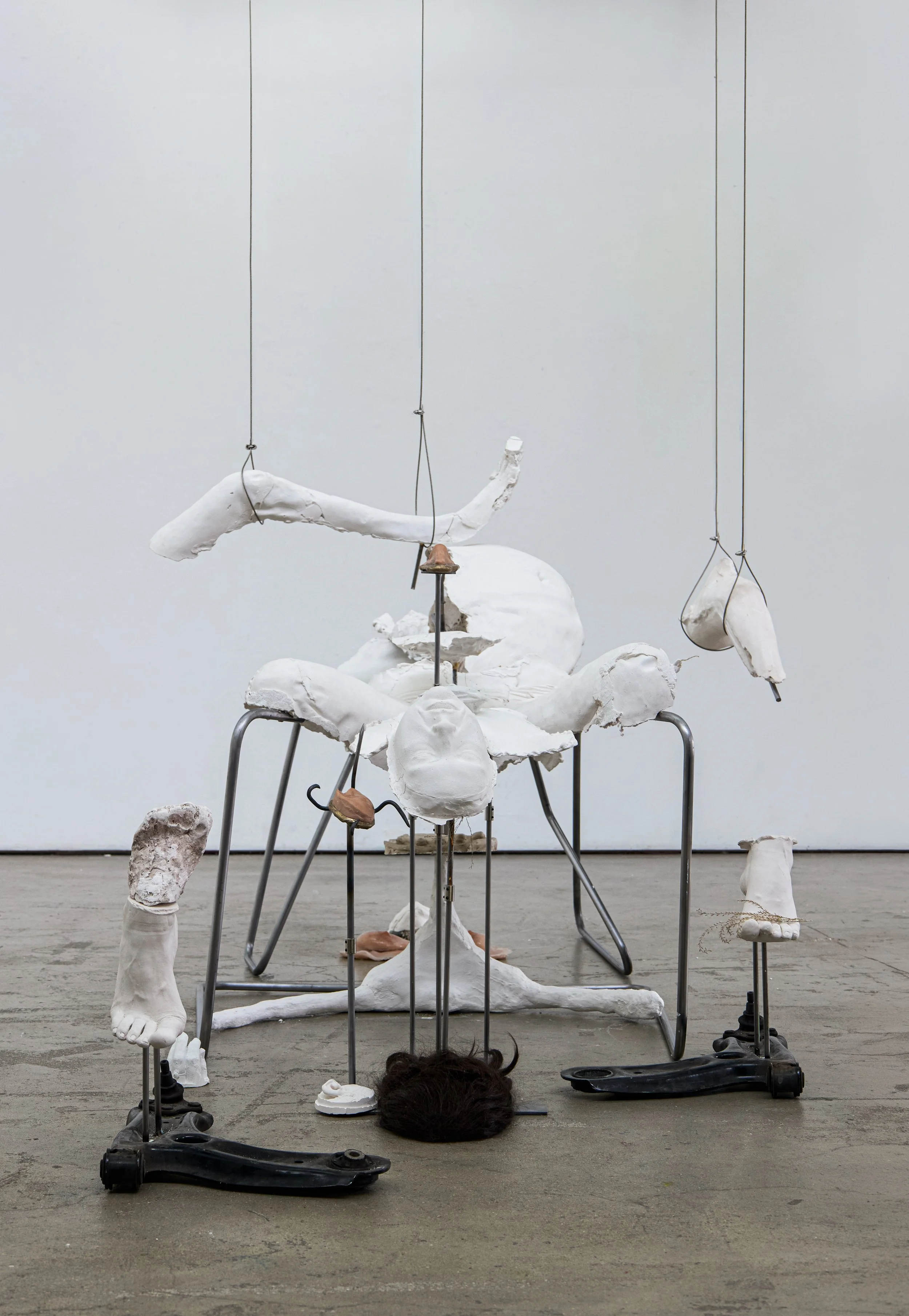
Abi Joy Samuel studied fashion design before moving into sculpture at the Royal College of Art. Through her practice, the human body is reconfigured into something she describes as simultaneously monstrous and liberating. Layers, repetition, doubling and fragmentation, almost like looking into a refracted mirror.
For our readers encountering your work for the first time, please take us through your background.
I grew up just on the outskirts of London, in a place called Watford. At school, I took my studies seriously, especially the subjects of art, photography, and psychology. Eventually, I moved to London and did a Foundation at Central Saint Martins, where I ended up specialising in Fashion Design. I completed a BA in Fashion Design at the University of Westminster, graduating in 2017, and worked for various designers, including McQ Alexander McQueen.
Whilst the fashion industry itself wasn't for me, I was always taken by the theatricality of the runway show and couture. The idea of building a character through makeup, clothing, hair, even down to the way the model moves down the catwalk, the lighting, stage set, and music. The ability to convey a sense of mood.
It took me a while to pluck up the courage to apply for art school, but eventually I did and was fortunate enough to be offered a place at the Royal College of Art. I am now coming to the end of a Master's in Sculpture at the RCA, supported by the Leverhulme Scholarship.
I found myself collecting objects from the street and dragging them back to the studio, dissecting them, and making new things out of them. It felt like pattern cutting in some strange way.
AS
What is your process behind an installation like 'Not So Very Far Off Lie, More Ruins'?
Firstly, I draw extensively. I'm always with a black marker in hand, drawing these monstrous, archetypal beings. I've always drawn that way, where you don't know which way the front or back is. With multiple faces, multiple hands, and animalistic postures.
I watch a lot of films. I also read a lot, which massively affects my artwork; Germaine Greer, Audre Lorde, Carolee Schneemann's Imaging Her Erotics, and Art Monsters by Lauren Elkin.
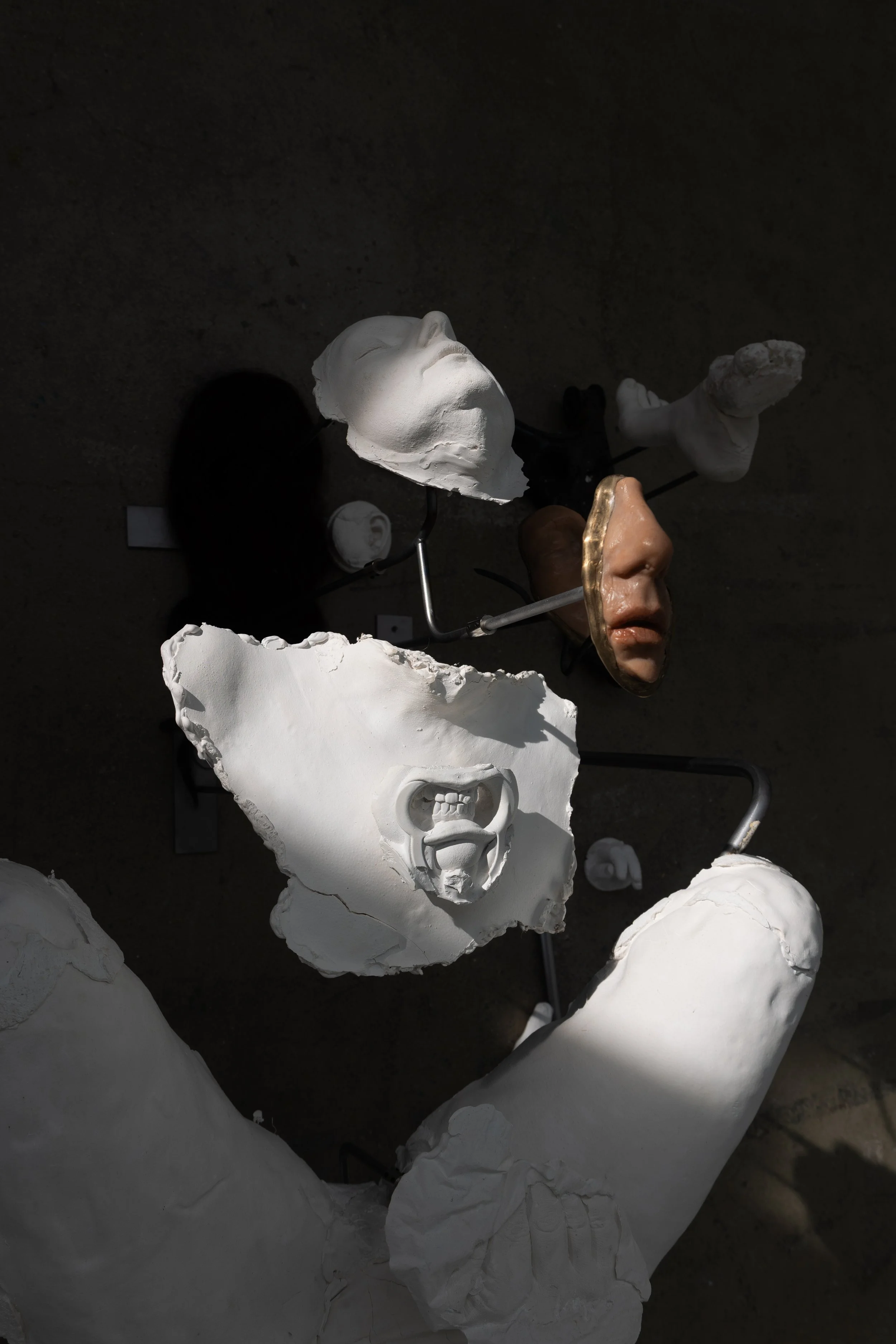
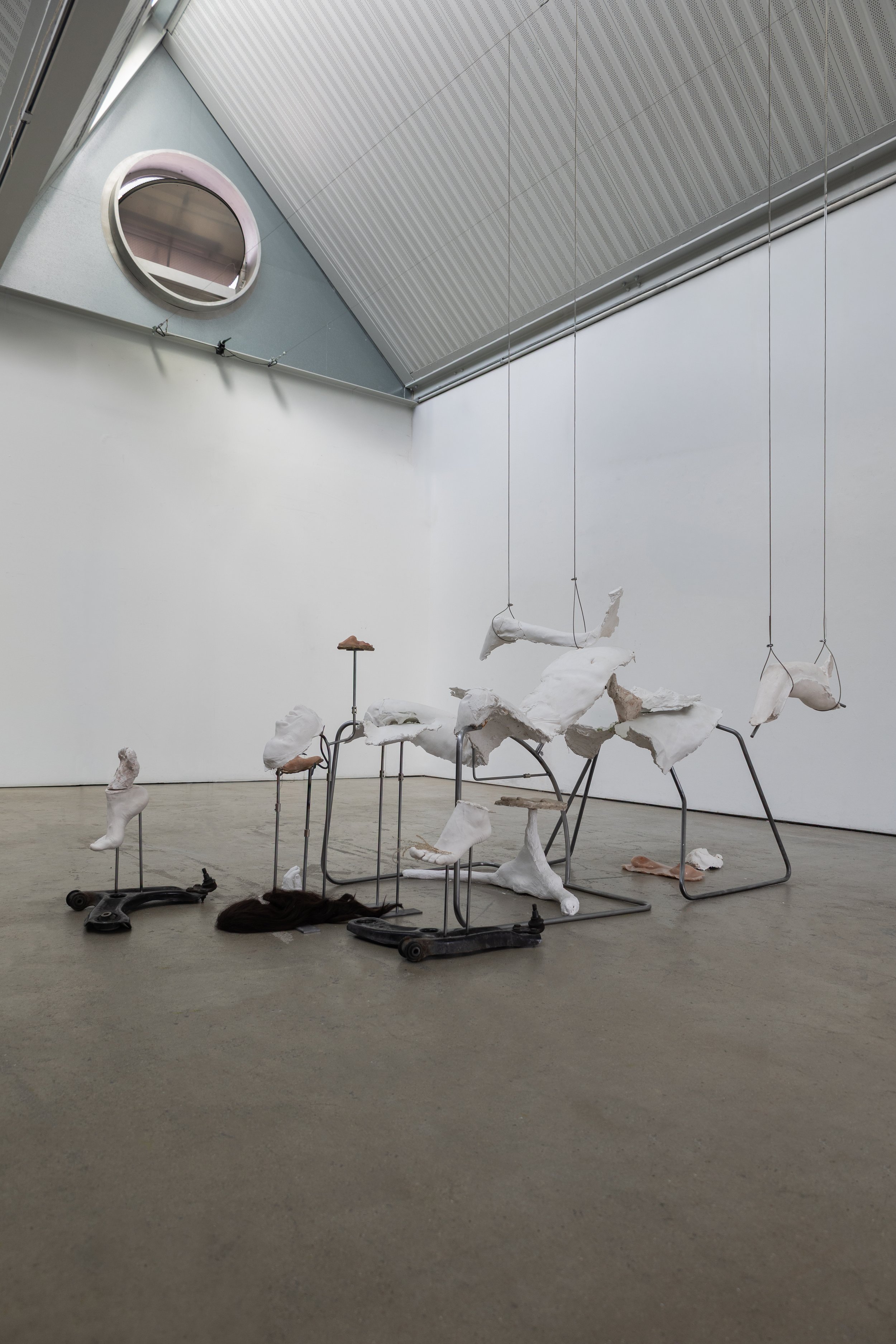
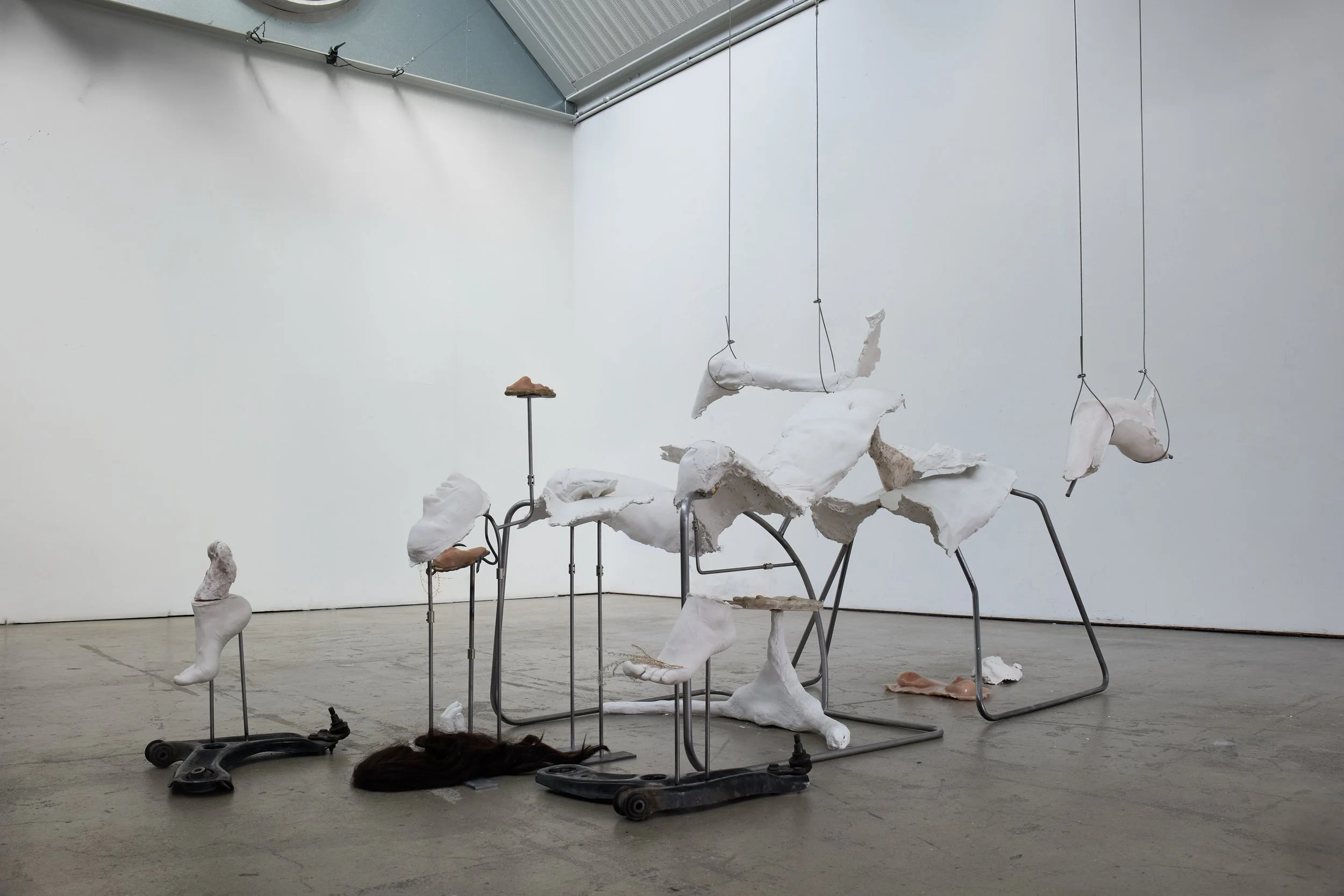
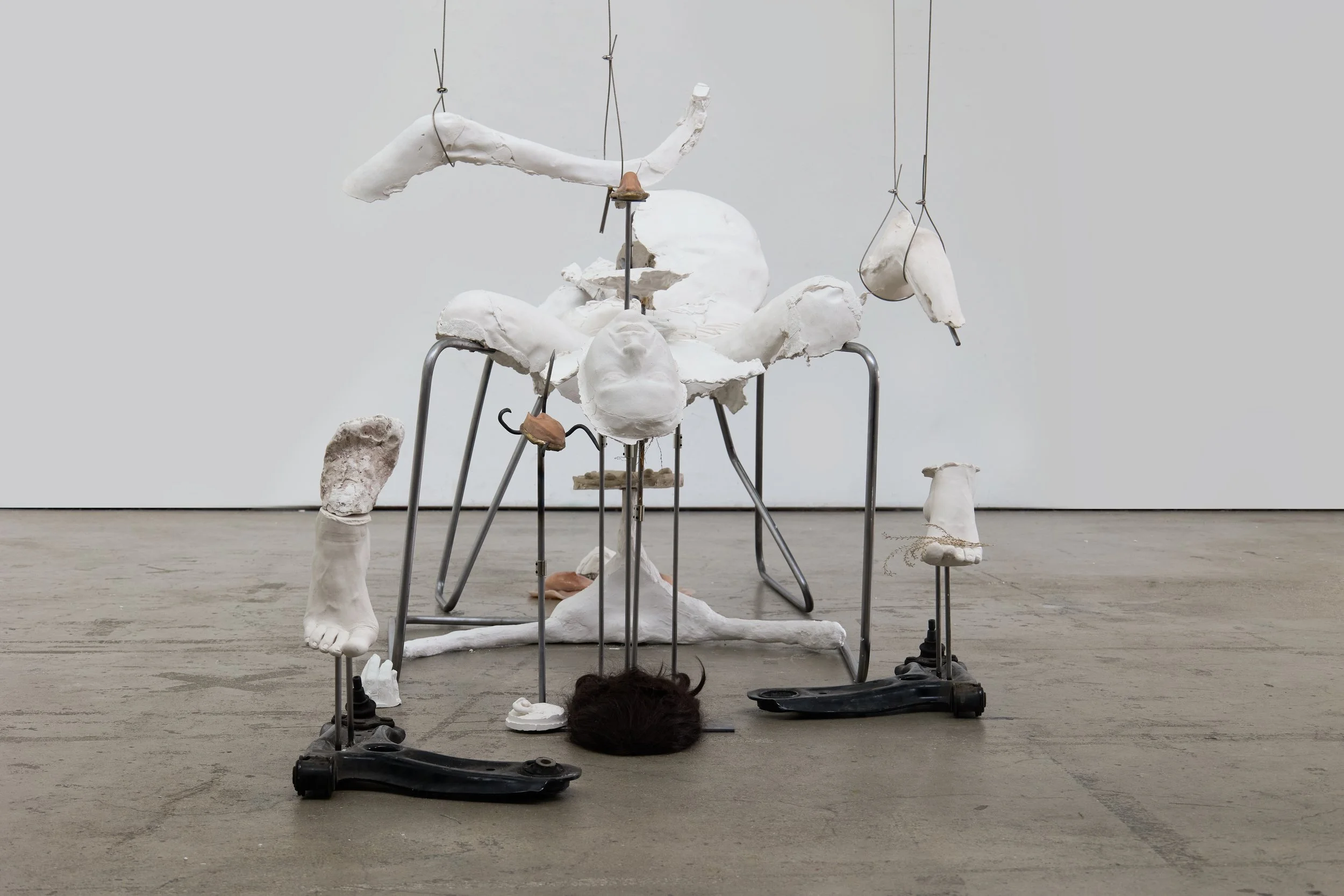
When I made Not So Very Far Off, Lie More Ruins, I began making casts of various body parts in different ways — of myself, friends, and family — just trusting my intuition. I decided that every single body part should be independent, yet contribute to the whole. This meant that once everything was on a stand, I could play around with the composition.
The one I landed on wasn't dissimilar to some of the sketches I had made. I also later realised that the composition I chose, with the chest and face emerging from the open leg cast, appeared as though I was giving birth to myself. The work had become self-generative, the ultimate form of agency.
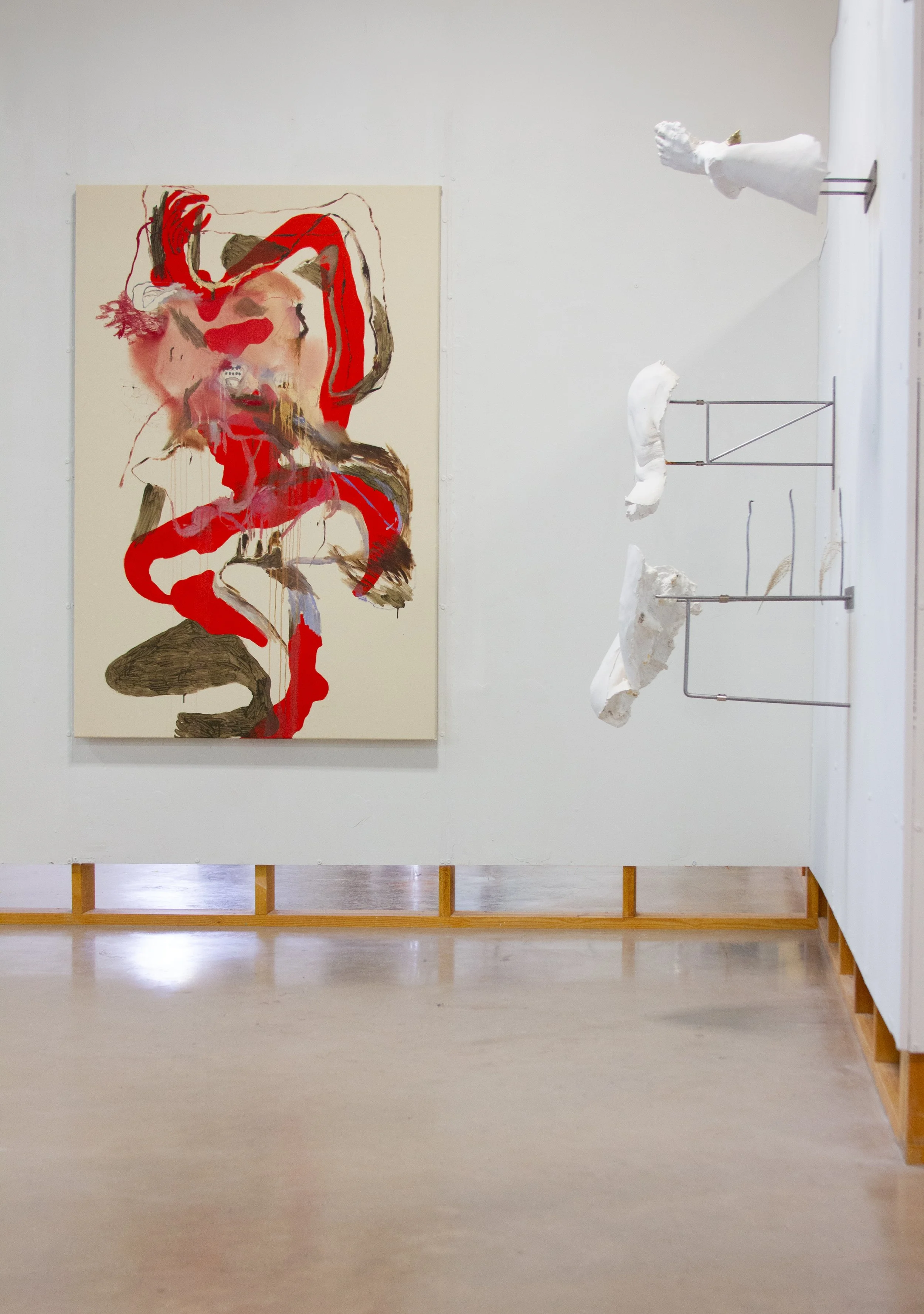
The modular quality of the work saved me. It enables a continuous state of play, so it's always in flux. It's very similar to the way I paint, which is intuitive, and where the final composition surprises me, tapping into subconscious parts of myself.
AS
With 'Exercises In Authority' you also brought performance art into it. Can you tell us more about that?
Performance art was something I really wanted to understand when coming onto the Master's programme. Things changed when I did performance workshops with Whiskey Chow and Anat Ben-David. They taught me how to take up space with my body and my voice.
I found myself doing a catwalk, walking like a 1980s model. Then, the moment I turned the corner, I began doing a catwalk like a man in a really exaggerated fashion. I kept repeating this over and over again, one side like a woman, then the next side like a man. I loved the repetition and the play with gender stereotypes. I couldn't believe I was using my body in this way.
It is radical, totally disruptive and anti-capitalist in many ways because it's hard to commodify. It taps into the part of me that is a bit of a rebel.
Performance allowed me to work with strong visual cues and to move my body in a way that juxtaposed military precision with animalistic and seductive poses. I'd like to bring some of this monstrosity and fearlessness into my sculptural work.
AS
What are the key themes you're drawing on in the work you're making now?
My sculptural and painting work has become a kind of internal inquiry into feelings of fragmentation and displacement. I think of the work as being self-generative, almost like giving birth to myself. I'm not necessarily interested in trying to resolve those experiences, but more making them visible and making them beautiful.
During my Master's, that inquiry into fragmentation began to shift towards the idea of monstrosity. Instead of seeing fragmentation as something to overcome, I became interested in revelling in it. Monstrosity appears in my work through twisted limbs and anthropomorphic forms. I'm interested in presenting my body in slightly animalistic ways. Animals are able to lean into their primitive rage more freely than humans are allowed to, particularly women.
Ultimately, my work is searching for forms of agency beyond the male gaze. Rather than presenting the body as something to be looked at, I'm interested in what happens when it reconstructs itself on its own terms.
AS
You started in fashion design before moving into sculpture. Do those worlds interact?