Lisa Meinesz
F R A G M E N T S
15.06.26
IN CONVERSATION
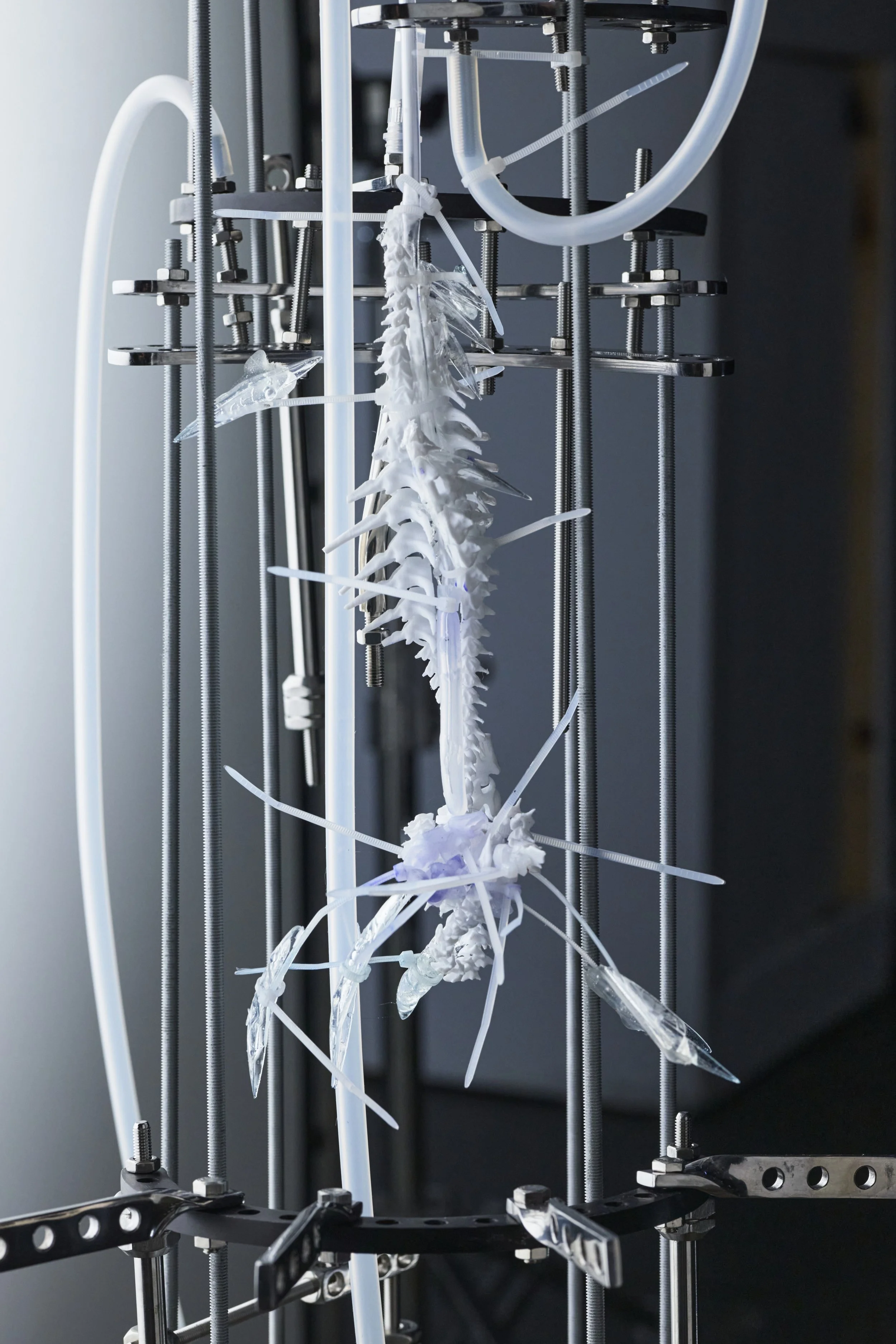
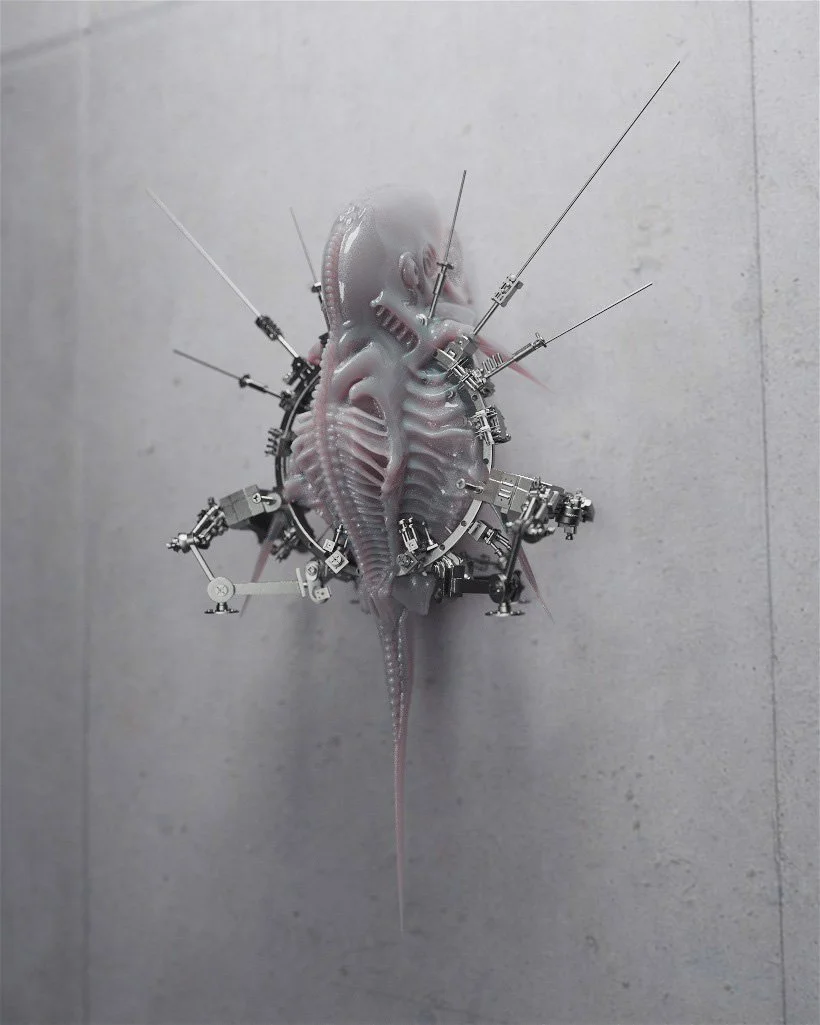
Synthetic life forms, shaped by the systems built to correct or control the body. Lisa Meinesz sculpts them digitally. The ones with enough presence to demand a physical form are then cast into the real world.
For our readers encountering your work for the first time, please take us through your background.
I'm an artist working across digital sculpture and physical fabrication. I also work full time as a CGI artist / art director across the film & music industry. My personal work is driven by a fascination with speculative biology, synthetic life, and the systems that shape how organisms evolve.
LM
It feels like a futuristic world with synthetic life forms. Where do you draw inspiration from, and how do you picture it?
A lot of the inspiration comes from medical hardware. Orthodontic devices, external fixation frames, prosthetics, surgical implants, things designed to support, correct, or control the body. I'm interested in what happens when those design languages become evolutionary pressures of their own.
If a species evolved alongside those systems for thousands of years, what would it start to look like? Many of the recent forms I create are attempts to answer that question.
LM
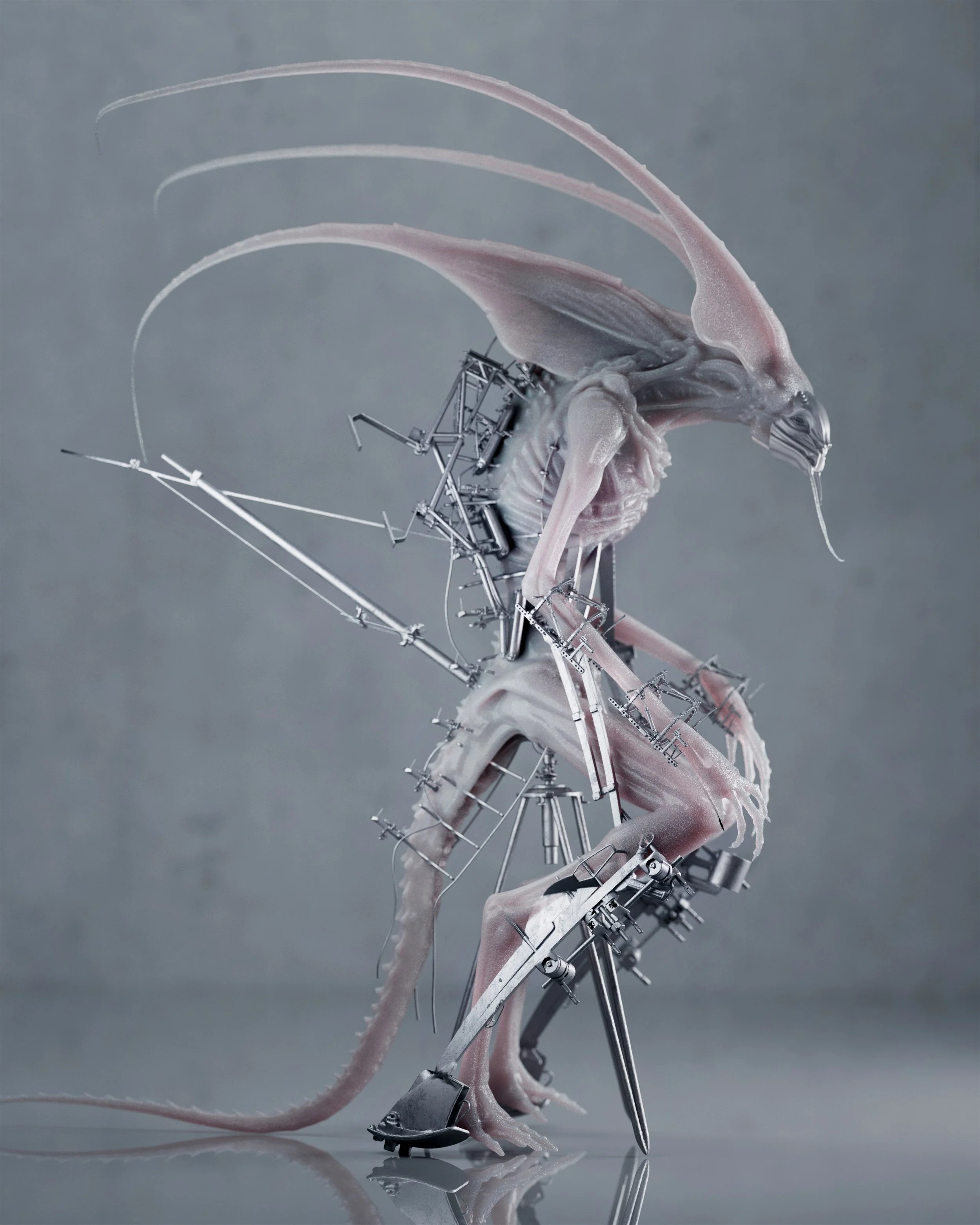
Is there a piece you made or a material experiment you're particularly drawn to right now?
For the last few years I've been obsessed with soft robotics, though I've only recently had the capacity outside of paid work to really delve into it. Recently I've been creating moulds of my creatures and casting them in low-tensile silicone with embedded air chambers, allowing them to expand, contract, and breathe. Seeing these forms transition from static sculptures into something that looks alive has been a really exciting direction for me. I think it's the closest I've come to creating objects that genuinely feel like living organisms.
LM
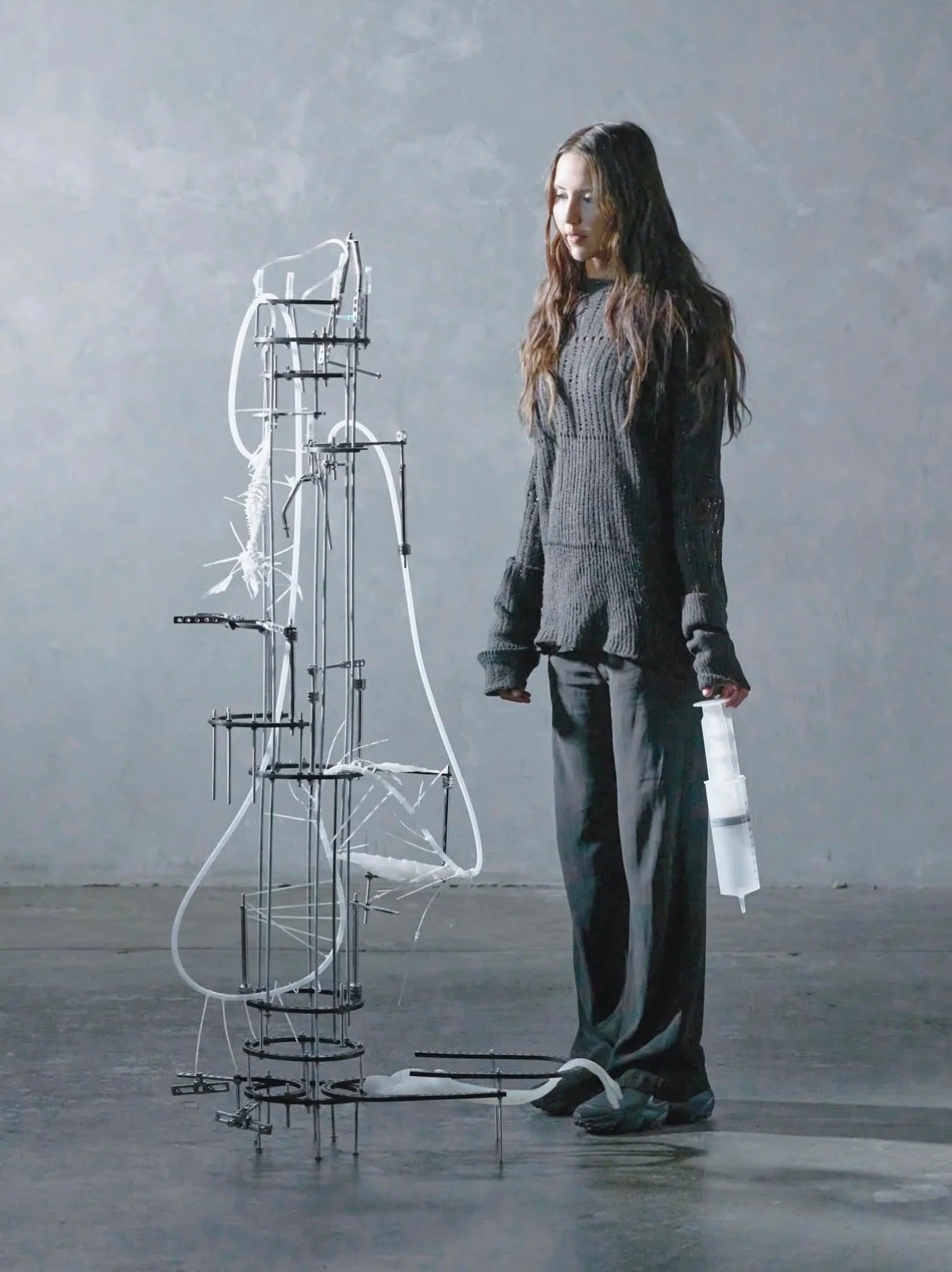
You work across digital and physical - how do you decide when one of these entities needs to leave the digital space and take physical form?
It's usually my attachment to it. Sometimes I'll sculpt a creature digitally and become strangely invested in it. After spending weeks or months with a form, it can start to feel like it wants to exist beyond the screen. The digital world has become a kind of testing ground where I discover which entities have enough presence to demand a physical body. Those are usually the ones I end up bringing into the real world.
LM
With AI everywhere now, do you get asked whether your work is AI-generated? It's striking that these forms actually exist in real life. How do you sit with that conversation?
Not that often, to be honest. Most of my work is shared within communities that are very familiar with CGI. I also share a lot of behind-the-scenes content and sculpting process, which probably helps negate it.
Most people encounter my work first as images online, so seeing the objects physically can be uncanny. Seeing their reactions to the physical pieces, whether that's a laugh or a shriek, is one of the most rewarding parts of the process.
LM