
Johannes Thiel
F R A G M E N T S
29.06.26
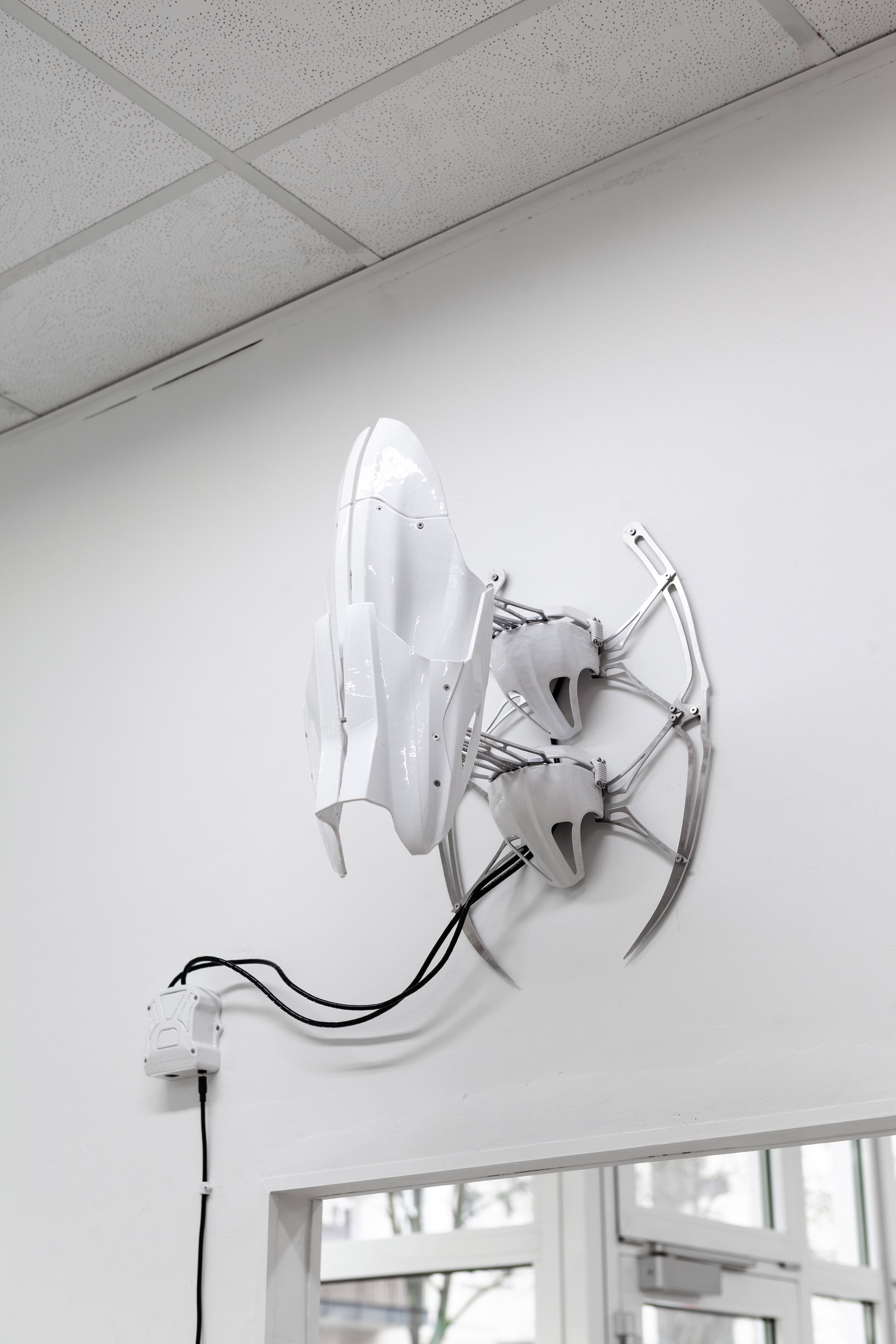
Johannes Thiel builds hybrid objects and installations that treat technology and organic form as overlapping territories. The surfaces are smooth and sterile, almost without a human hand, but underneath there is a strange vitality. He treats them as technoid relics that speculate on a posthuman presence that is already unfolding in the present.
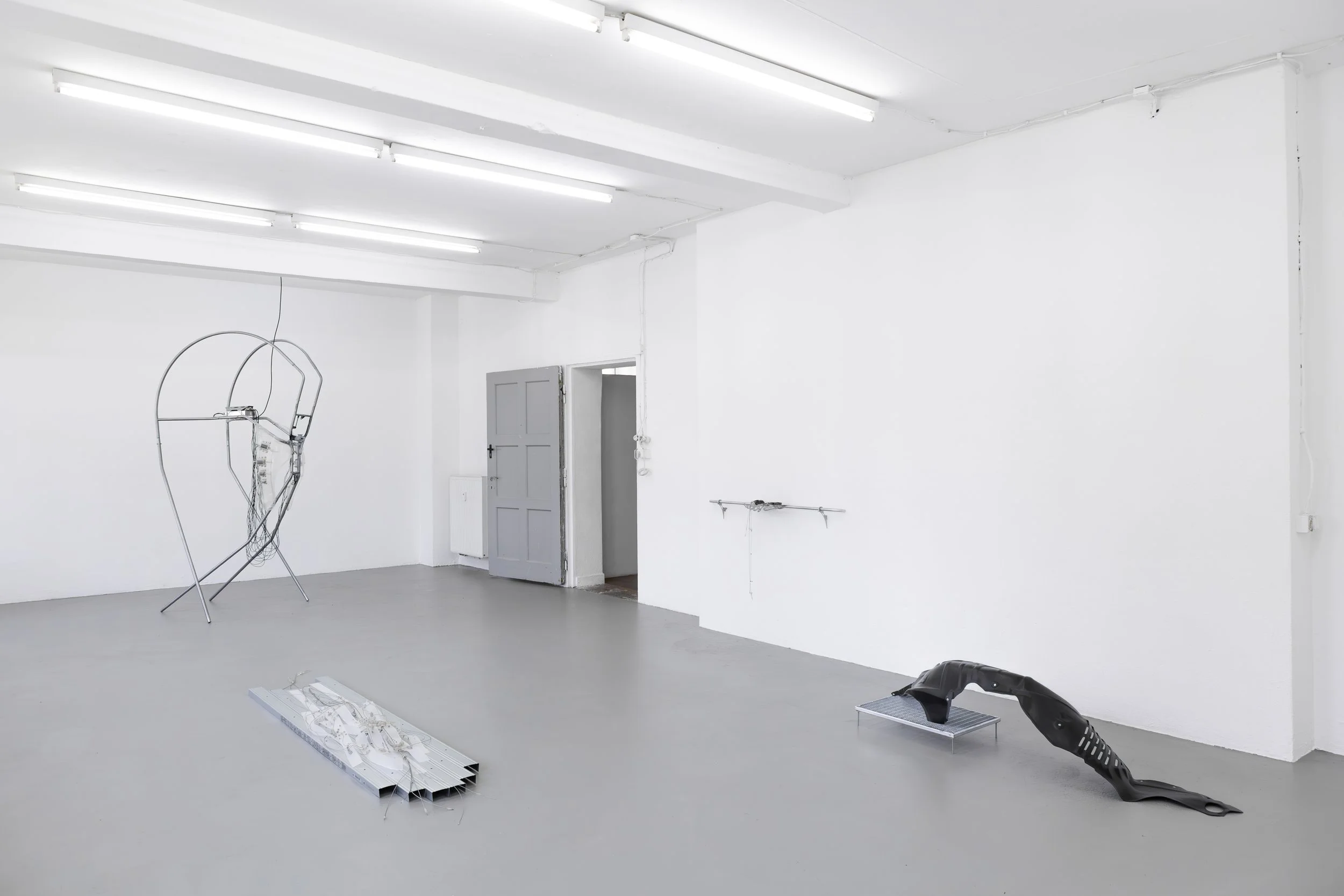
SOLO EXHIBITION, FÖRDERVEREIN AKTUELLE KUNS,2026
For our readers encountering your work for the first time, please take us through your background.
I’m Johannes Thiel, born 1999 in Germany, based in Berlin, where I’m studying Fine Arts at the UdK under Karsten Konrad. I came into sculpture from the digital side 3D, communication design, fabrication and never really left it behind. I build hybrid objects and installations that treat technology and organic form as overlapping territories rather than opposites. Most pieces start as algorithmic sketches and end up as physical structures: 3D-printed, laser-cut, CNC-milled, wired. The surfaces are smooth and sterile, almost without a human hand, but underneath there’s a strange vitality they twitch, shift, seem to breathe. I think of them as technoid relics that speculate on a posthuman presence that’s already unfolding in the present. The work has moved through group shows, club spaces, online platforms and institutions, and right now it’s arriving in my first solo show.
JT

DAISY CHAIN, 2025
It feels like the word Shield comes up across a few of your works in different forms — AeroSHIELD, ConvexSHIELD. Can you tell us more about the concept behind it?
Shields do two things for me at once. On the construction side, a shield is a way to build a whole volume purely out of curved, flowing surfaces body-like panels that only become a coherent body when they align. The shapes come from car and motorcycle fairings; once you fragment that aerodynamic logic and take it out of context, it turns hyper-functional and weirdly useless at the same time, because the vehicle it belonged to is gone. On the concept side, a shield is a shell, something that protects a fragile inner organism from physical forces. Out of the automotive context these plates start to feel insectoid, like an exoskeleton that opens and closes and reveals an inner structure, the way a beetle shifts its wings and armor. Convex and Aero are variations on that same logic: different ways of letting surfaces choreograph into a body.
JT
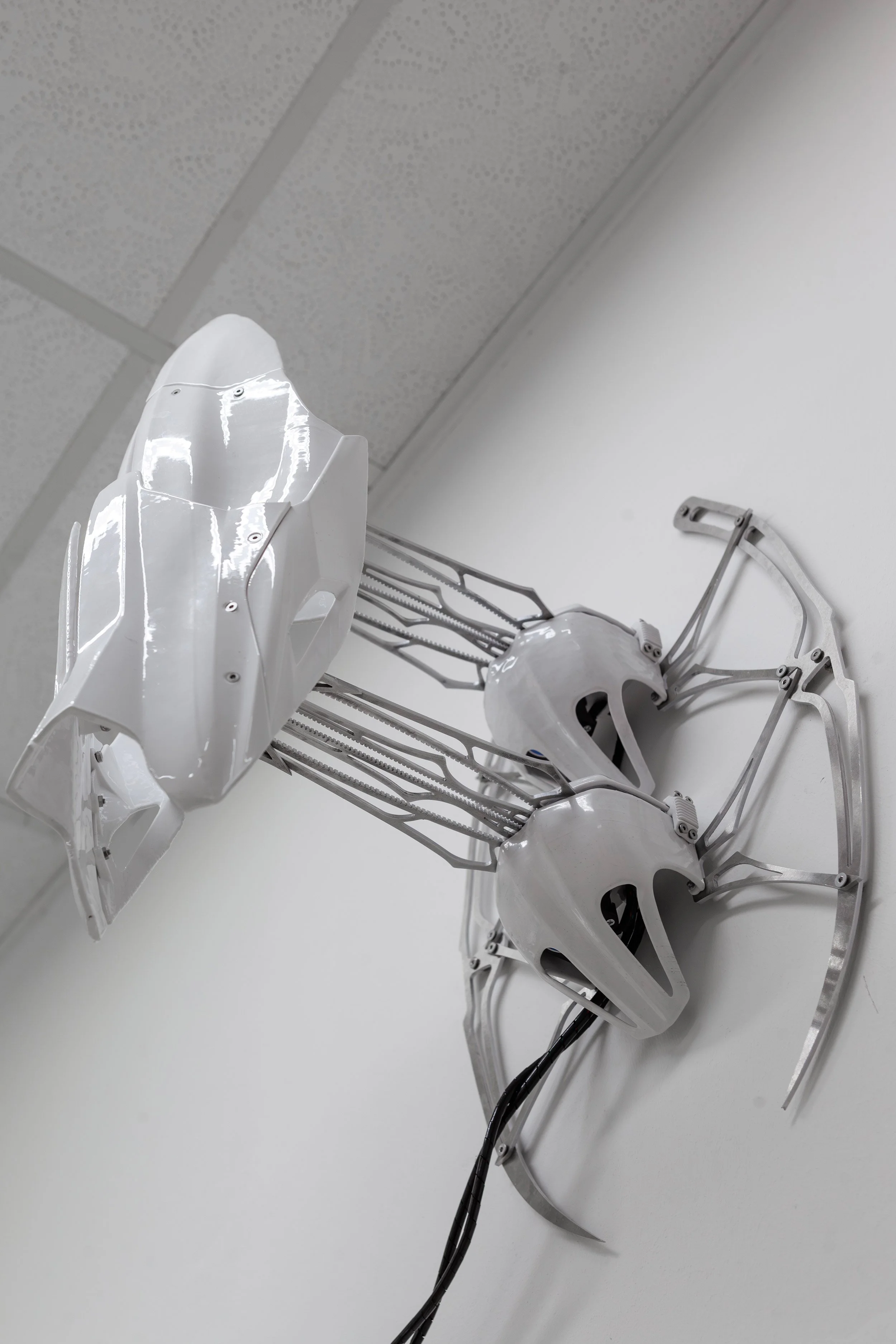
CONVEX SHIELD, 2024
Where do you draw inspiration from?
From two worlds that I don’t really see as separate anymore: engineering and industrial design on one side, the biology and anatomy of insects, reptiles and amphibians on the other. There are huge overlaps in how we build artificial structures and how nature grows them computers let you generate form through growth algorithms and physics, which sits surprisingly close to how an organism actually develops.
Beyond that: car and motorcycle bodies, infrastructure, the texture of industrial materials. Among artists I look at Giulia Cenci, Isabelle Andriessen, Mire Lee, Yngve Holen, Pakui Hardware. I actually don’t consume much sci-fi I haven’t even watched Alien. Reality has become science fiction, and we’re right in the middle of it; that’s usually enough material. For concepts and ideas I find myself drawn towards meme and internet culture more often. It surrounds me in my everyday life and influences my thinking for sure.
JT
Have you always lived in Berlin? Do you feel the city comes through in your work in some way?
I moved here right after finishing school. Berlin definitely comes through in my works, mostly through texture and infrastructure. A lot of my early showing happened in the city’s off-space and club context bunkers, project rooms, temporary spaces and that left a mark. A lot of exciting art and design is happening in this city also, I feel like I'm in the right place for the stuff I'm making.
JT
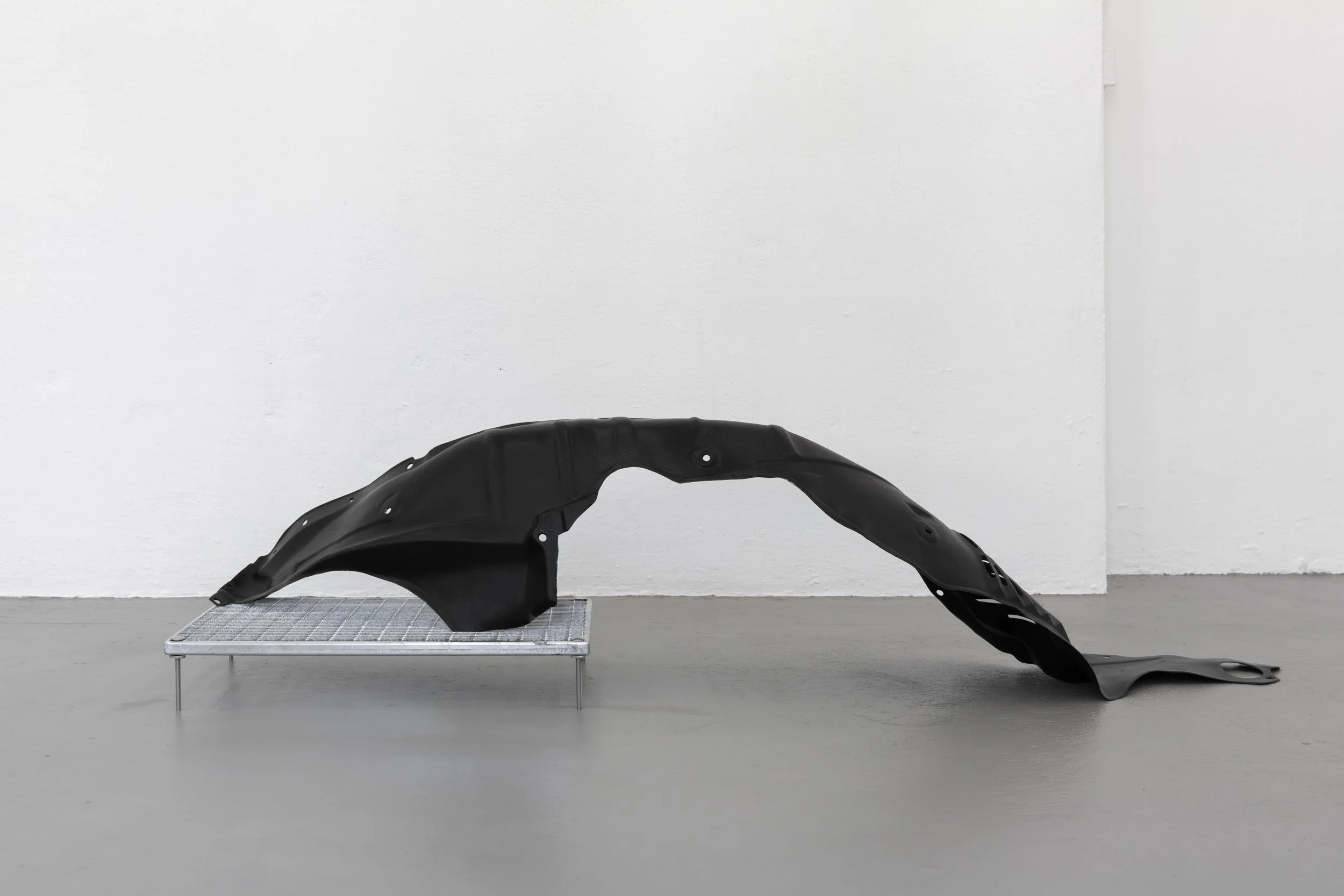
STATING THE OBVIOUS, 2026
Is there a piece you made that you’re particularly drawn to right now?
Right now it’s ON-OFF STATE, the centerpiece of my solo show. It’s the biggest and most physical thing I’ve built so far roughly 320×180×120 cm, a polished steel body grown around a motorcycle frame, with aluminium, resin and fiberglass parts, solenoid actuators and a 700 W supply. It’s also where a shift in my practice became obvious: I work more and more with found materials, and I construct forms less than I reproduce them for this one I cast fiberglass parts directly off car body panels instead of modelling them from scratch.
The electronics are built around binary on/off solenoids, but through software and PWM you can actually coax very organic movement out of something that brutal. Easing curves are the key: instead of a symmetrical, hard click between on and off, the piece slides into a strange, uneven dynamic. It moves through phases: excitement, tension, a restless back and forth and gets surprisingly close to an emotional creature. That’s also why it’s the piece I’m most attached to: it sits right on the line I keep circling, clearly a machine, but behaving as if it had a will. Getting the electronics right was genuinely hard. I tried to keep it simple and it got way more complicated than planned.
JT
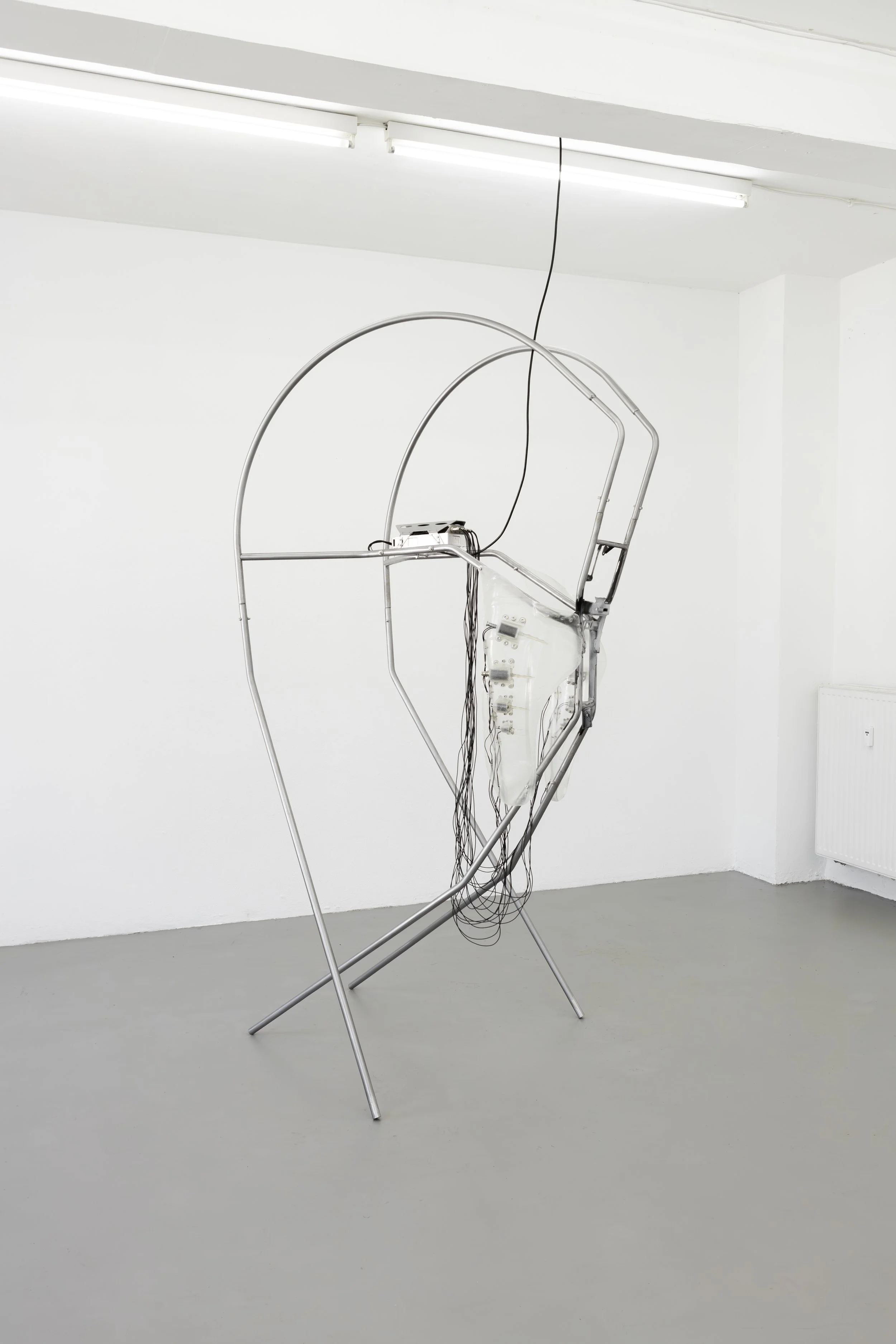
ON-OFF STATE, 2026
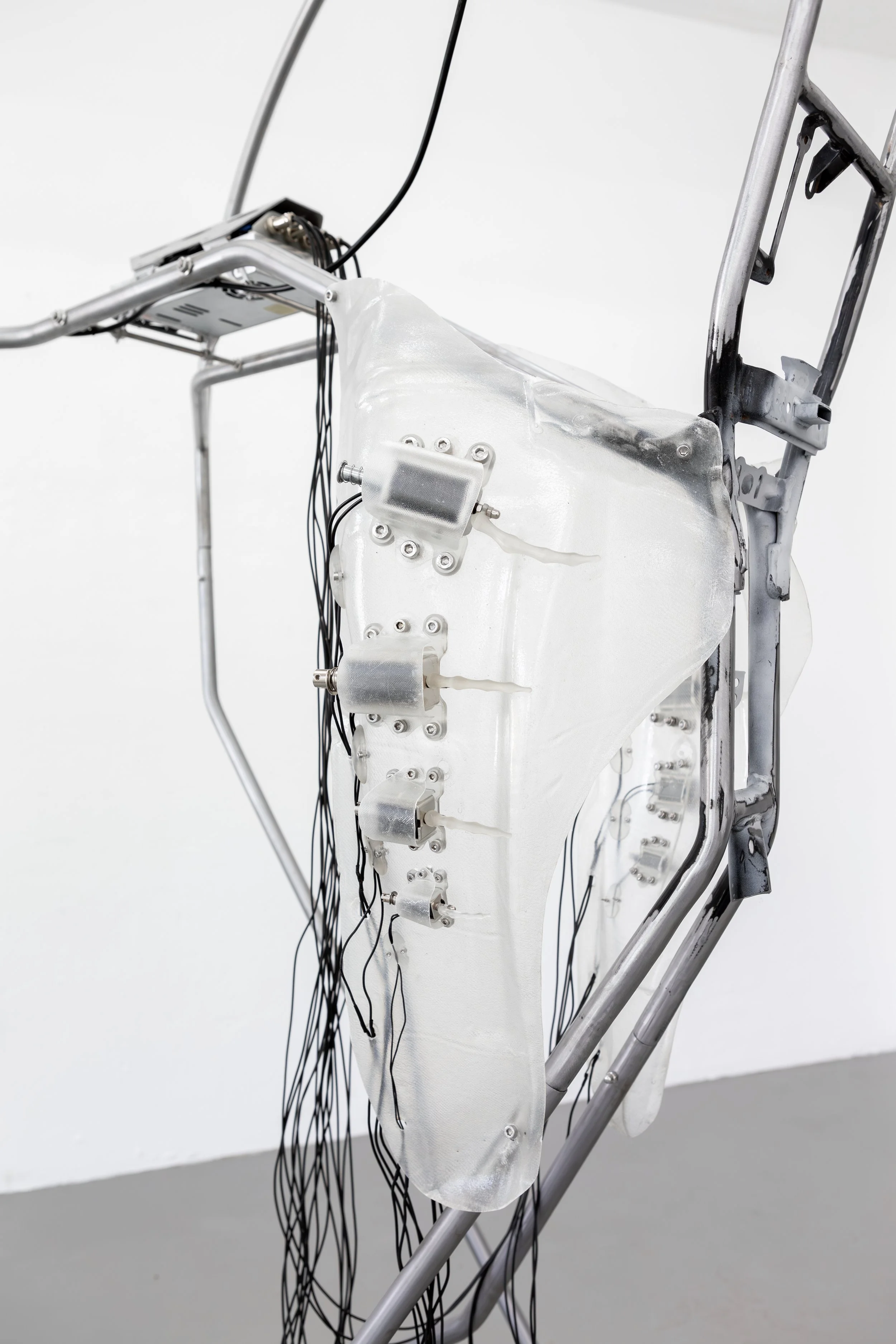
ON-OFF STATE, 2026