Lena Becerra
F R A G M E N T S
02.07.26
IN CONVERSATION
Lena Becerra builds installations as gestational ecosystems. These organisms appear simultaneously familiar and alien, suspended somewhere between roots and organs, flowers and machines.
COAGVLA
For our readers encountering your work for the first time, please take us through your background.
I am an Italo-argentinian artist and researcher currently based between Berlin, Buenos Aires and Melbourne. My practice unfolds through installation, sculpture, moving image, and experimental fabrication, combining materials such as glass, steel, silicone, water systems, textiles, and organic matter. I approach these mediums as components of living environments where each material participates in a larger ecological system.
I studied Visual Arts at the National University of La Plata and sculpture, installation and new media at SRISA in Italy, where I became interested in the intersections between artistic practice, philosophy, biology, and technology. Since then, my work has developed through residencies and collaborations that have allowed me to experiment with fabrication techniques ranging from glass blowing to casting, metalwork and kinetic systems.
Across my projects I investigate what I call speculative prosthetic ecologies: environments inhabited by hybrid organisms that blur distinctions between the biological and the technological, the natural and the artificial. I am not imagining dystopian futures, but instead interested in forms of coexistence, adaptation, and transformation. My installations function as ecosystems where objects appear to grow, mutate, communicate, or metabolize, inviting viewers to inhabit worlds in which life is understood as relational, fluid, and constantly becoming.
LB
"Gestational ecosystems for the delight of prosthetic engineering", can you expand more on what this means to you?
The phrase emerged as a way of describing the conceptual territory my work occupies. I imagine ecosystems that are not given by nature but continuously generated through processes of care, mutation, repair, and technological mediation. "Gestational" refers to environments that are always in formation: spaces where bodies, materials, and ideas are constantly emerging and not existing as fixed entities.
The notion of prosthetic engineering is equally important. I don't think of prostheses simply as devices that compensate for a lack. Instead, they become instruments for imagining alternative forms of embodiment and expanded relationships between organisms and their surroundings. A prosthesis can be biological, technological, architectural, emotional, or ecological. It transforms both the body that receives it and the environment that makes it possible.
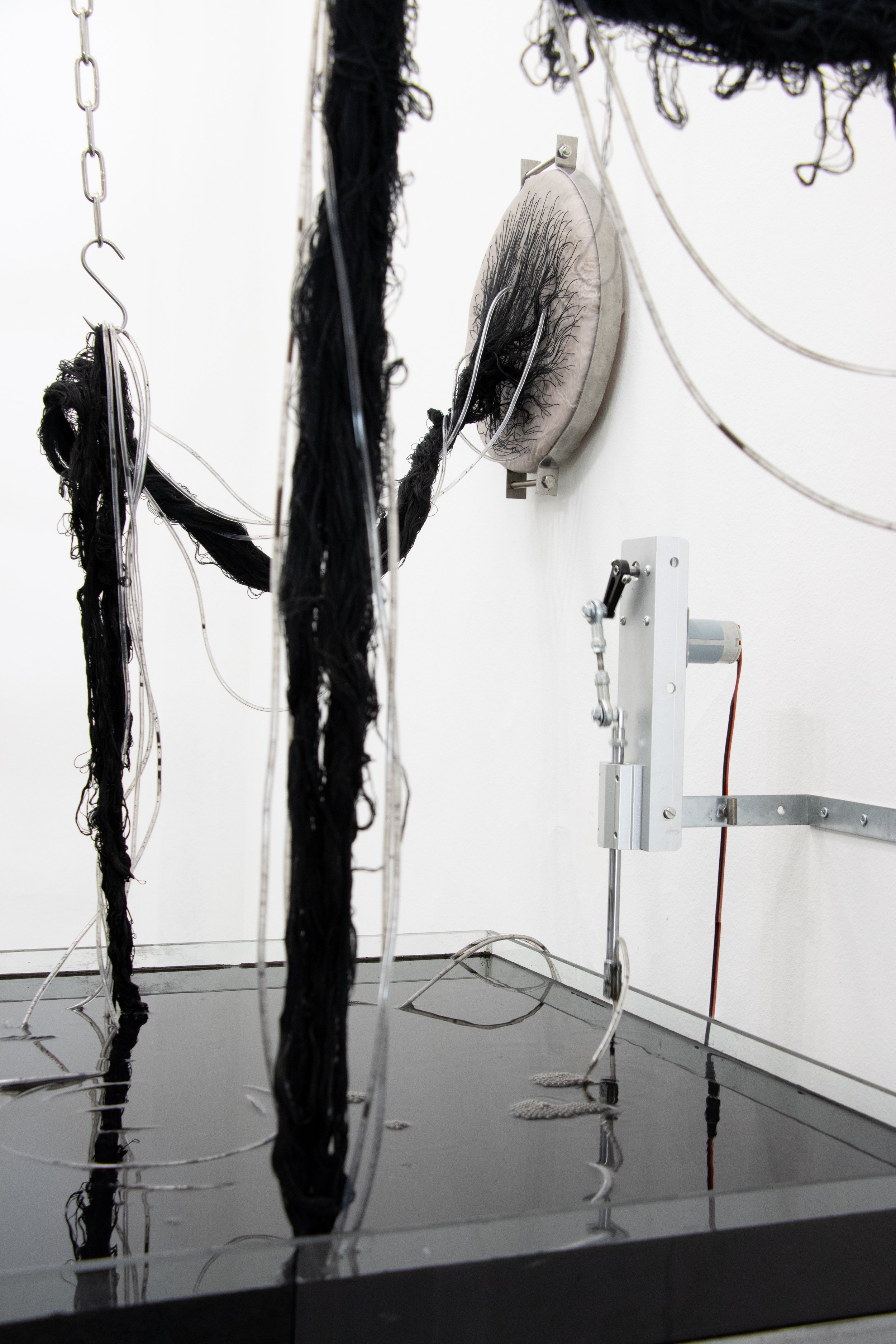
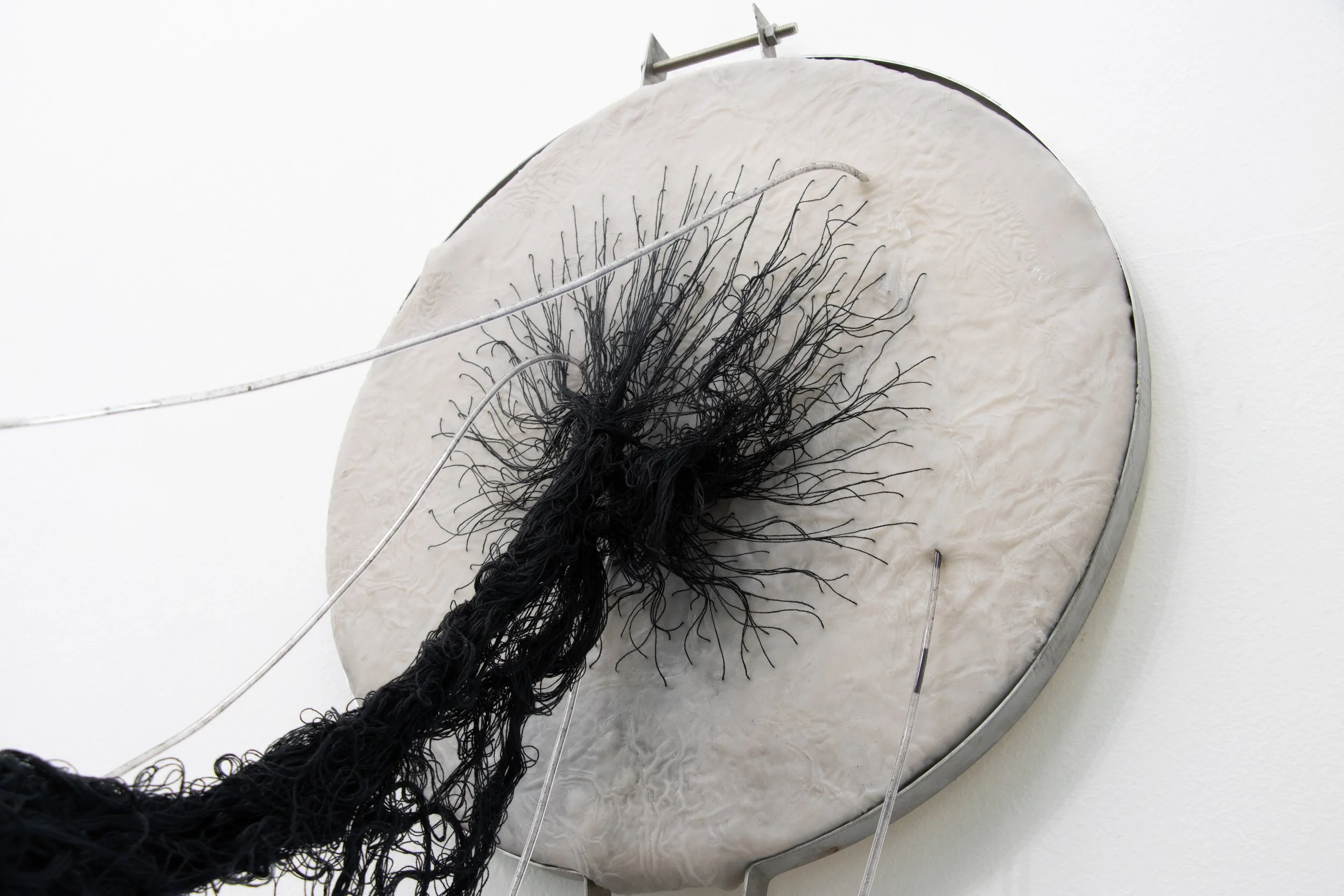
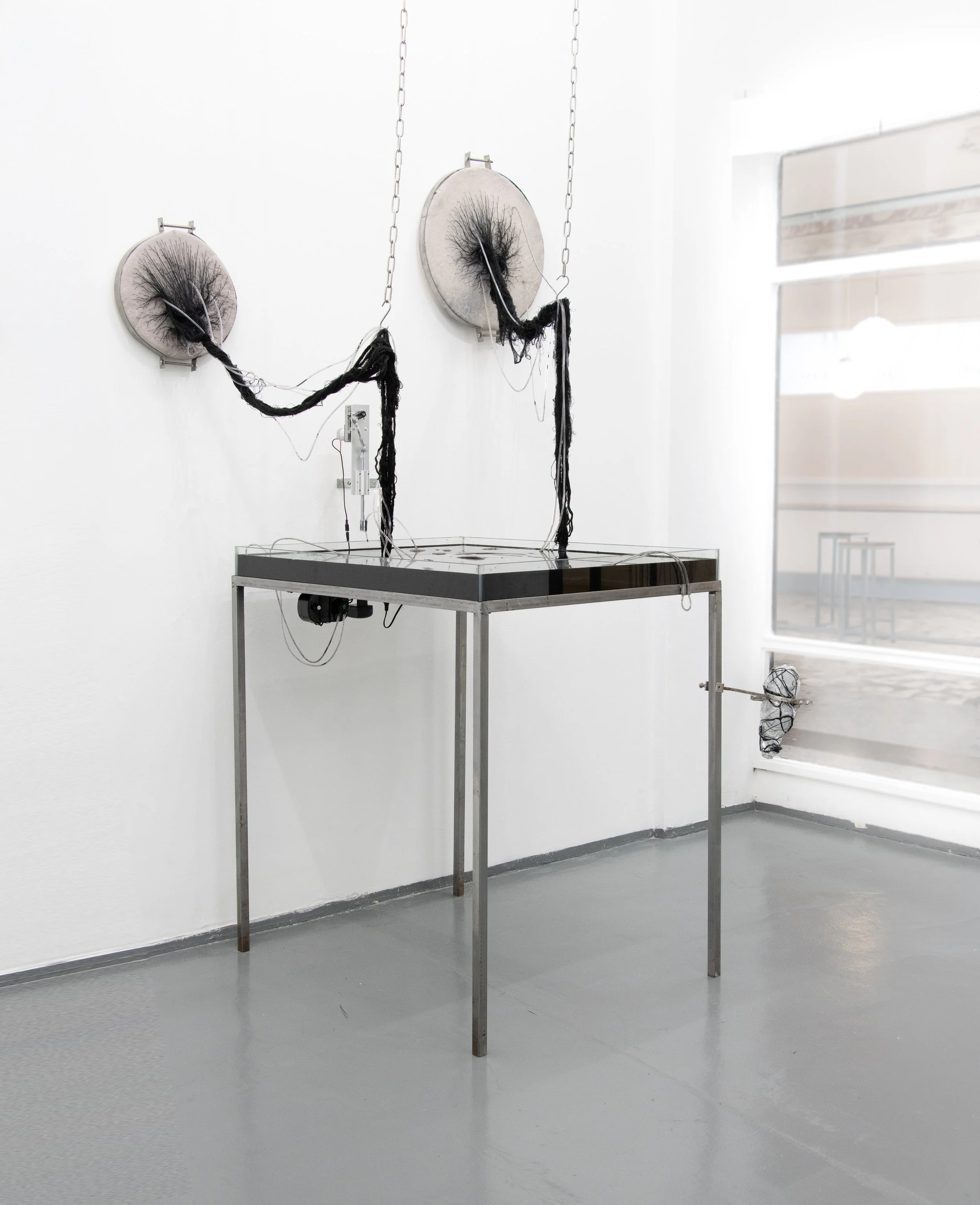
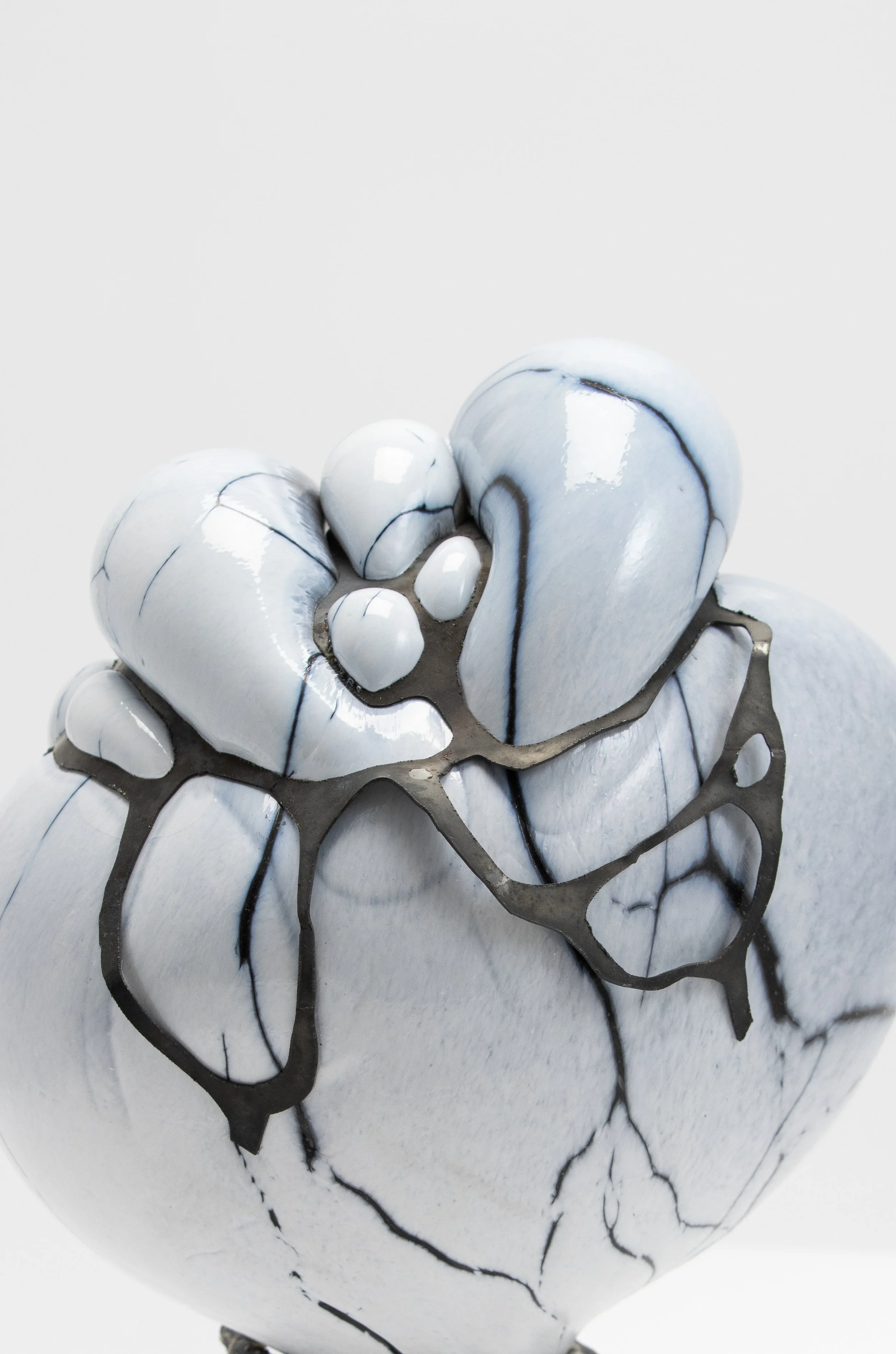
My installations often resemble laboratories, greenhouses, aquariums, or speculative nurseries. Tubes circulate water like vascular systems, blown glass evokes organs or seeds, steel structures support fragile membranes, and kinetic mechanisms suggest metabolic processes. These elements don't illustrate scientific ideas; they speculate on possible futures where technologies participate in the continuous gestation of new forms of life.
Ultimately, I see gestation not only as a biological process but as a political and philosophical one: a way of thinking about how worlds are collectively produced, maintained, and transformed.
LB
We keep coming back to the title of one of your works, Xenobotany. Can you tell us more about it?
Xenobotany imagines a speculative branch of botany dedicated to organisms that do not yet exist or perhaps have always existed outside our current systems of classification. The title combines xeno, meaning foreign or strange, with botany, suggesting forms of plant life that emerge through encounters between biology, technology, migration, and artificial environments.
This is not related to "designing futuristic plants"; I am interested in questioning the categories through which we define life. In my installations, botanical forms become intertwined with prosthetic structures, hydraulic systems, synthetic membranes, and blown glass vessels. These organisms appear simultaneously familiar and alien, suspended somewhere between roots and organs, flowers and machines.
Migration has also shaped this project in subtle ways. Living and working between different countries has made me increasingly aware that ideas of belonging, adaptation, and ecological integration are never stable. Xenobotany proposes that foreignness is not an exception but a productive condition through which new ecologies can emerge.
I hope these organisms invite viewers to suspend the impulse to immediately classify what they see. Instead of asking whether something is natural or artificial, alive or technological, I hope they begin asking what kinds of relationships these new forms make possible.
LB
Where do you draw inspiration from?
My research moves between many disciplines. I read philosophy, feminist science studies, biology, posthuman theory, ecology, speculative fiction, and the history of science alongside technical manuals and scientific imagery. Thinkers such as Donna Haraway, Karen Barad, Emanuele Coccia, Laura Tripaldi, Bifo Berardi (amongst others) have profoundly influenced how I think about relationality, symbiosis, and more-than-human worlds.
But inspiration also comes directly from materials. Working with blown glass, steel, silicone, water, or living matter constantly changes the direction of my thinking. Often the behavior of a material suggests conceptual possibilities that I couldn't have anticipated beforehand.
I also spend a great deal of time observing biological structures: seeds, fungi, roots, vascular systems, coral formations, embryonic development, and microscopic organisms. I'm interested in the intelligence embedded in these forms and in how they organize themselves through cooperation.
Ultimately, my practice develops through a dialogue between theory and making. Research generates questions, but materials answer them in unexpected ways.
LB
Is there a piece you've made recently that you're particularly drawn to right now?
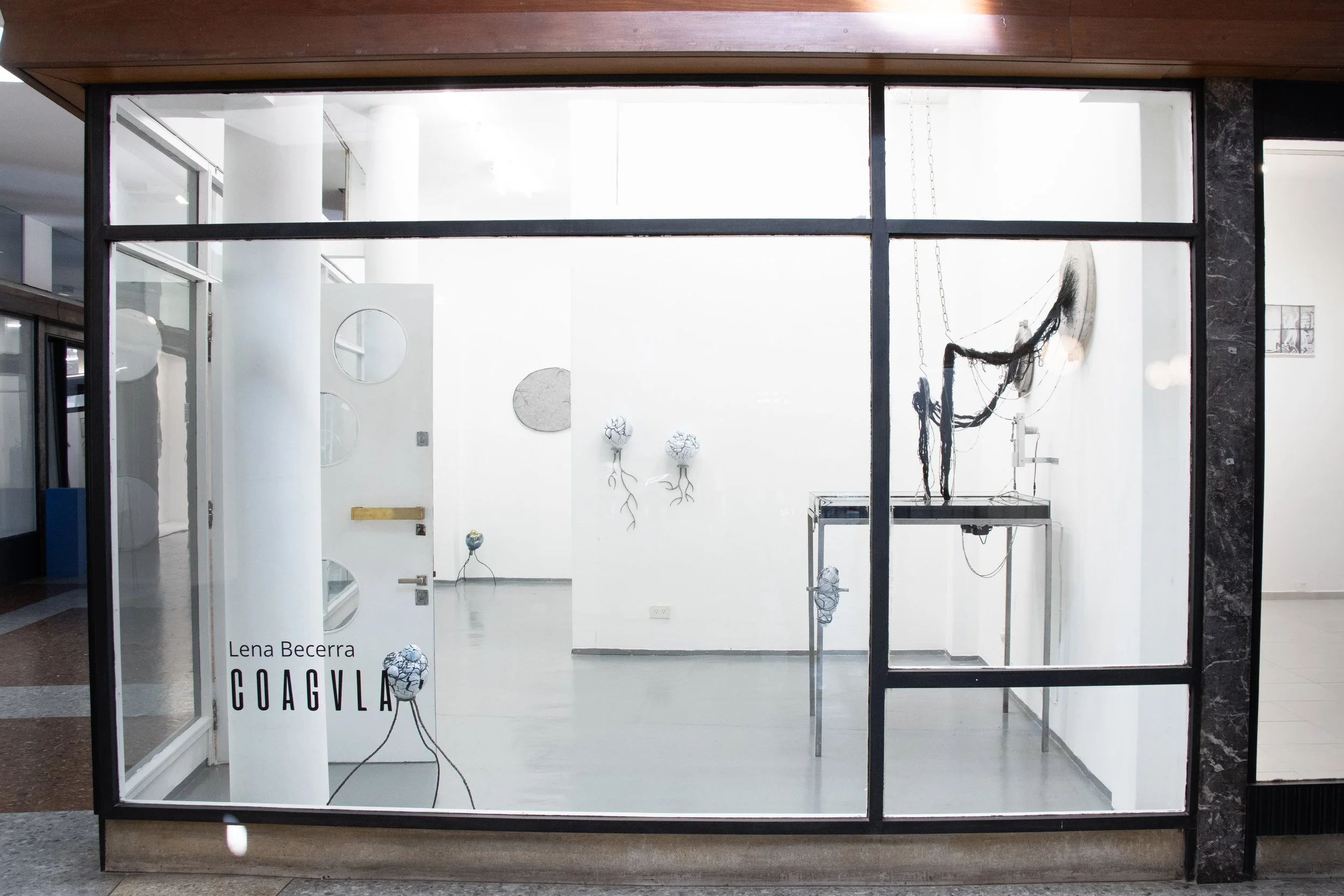
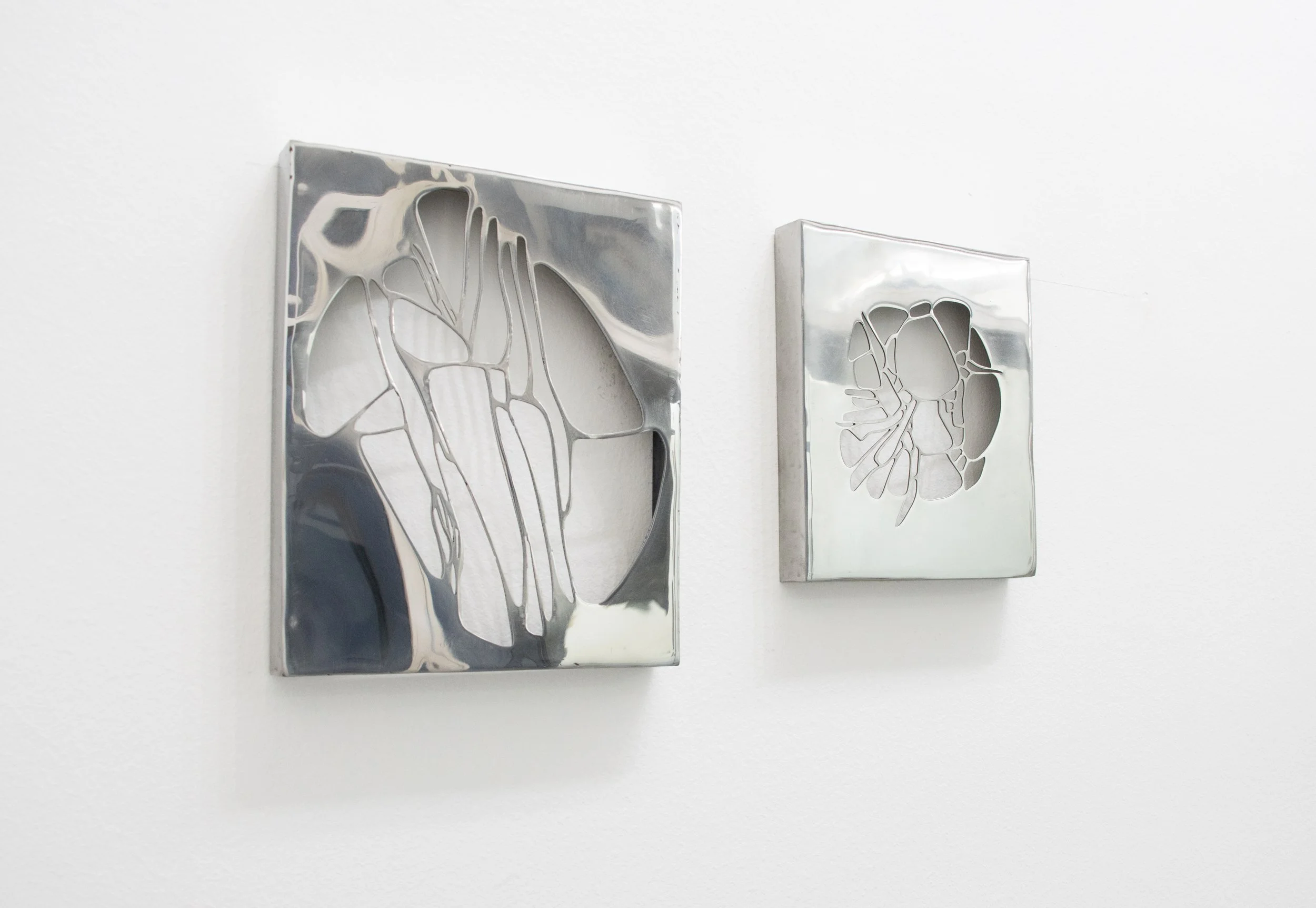
At the moment, I feel especially connected to COAGVLA. The work takes its title from the alchemical principle solve et coagula -to dissolve and recombine- and reflects many of the questions that have occupied my practice over the past few years.
The installation brought together blown glass, suspended structures, hydraulic systems, and flowing water to create an environment that seems caught between dissolution and formation. It stages transformation as an ongoing process in which materials continually negotiate between fragility and stability.
What interests me most about COAGVLA is that it shifts my work toward a more process-oriented understanding of matter. The installation performs hybridity through circulation, movement, and continual reconfiguration. It feels like a synthesis of many of my previous investigations while simultaneously opening new directions that I am excited to continue exploring.
LB