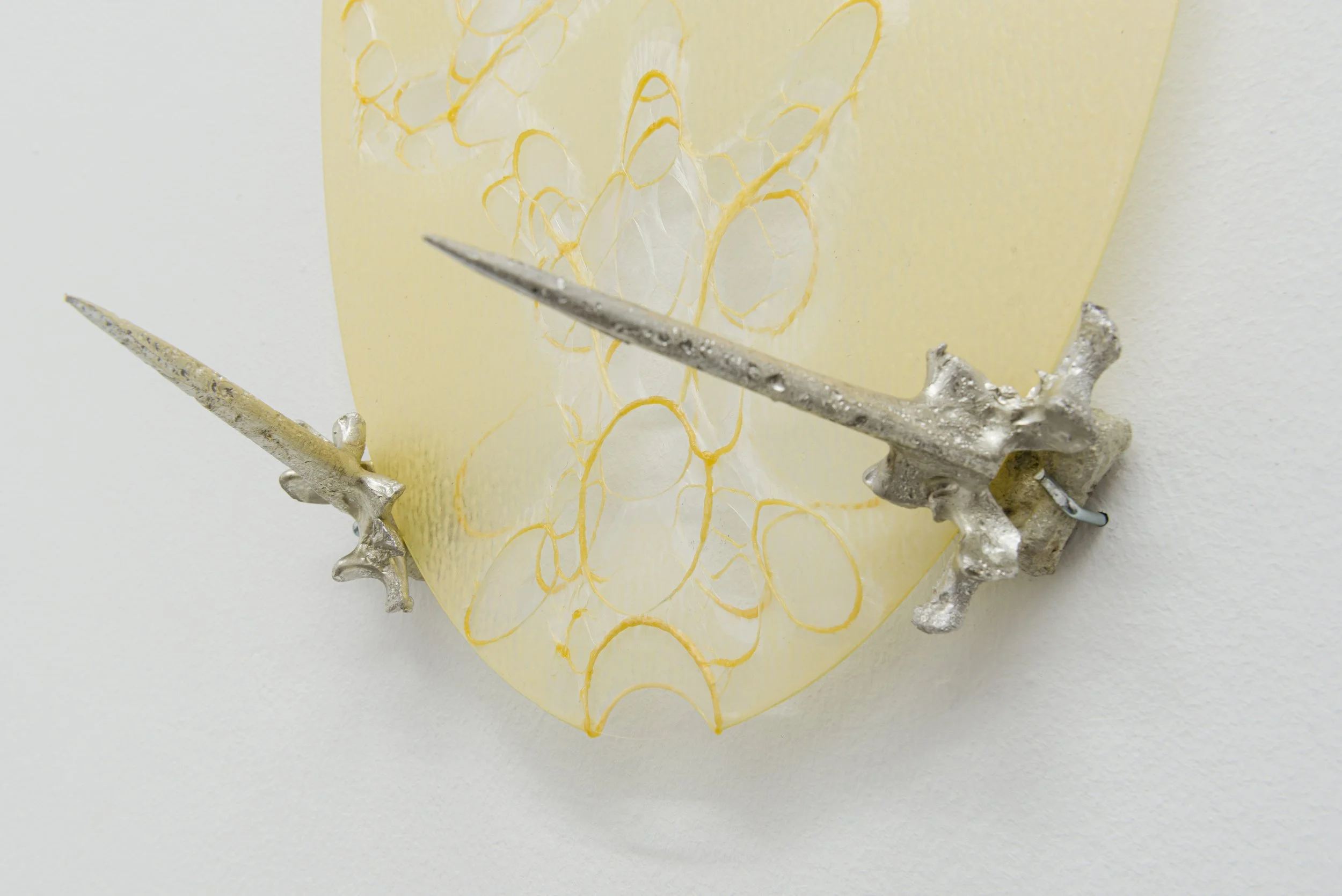
Leon Simonis
F R A G M E N T S
25.06.26
IN CONVERSATION
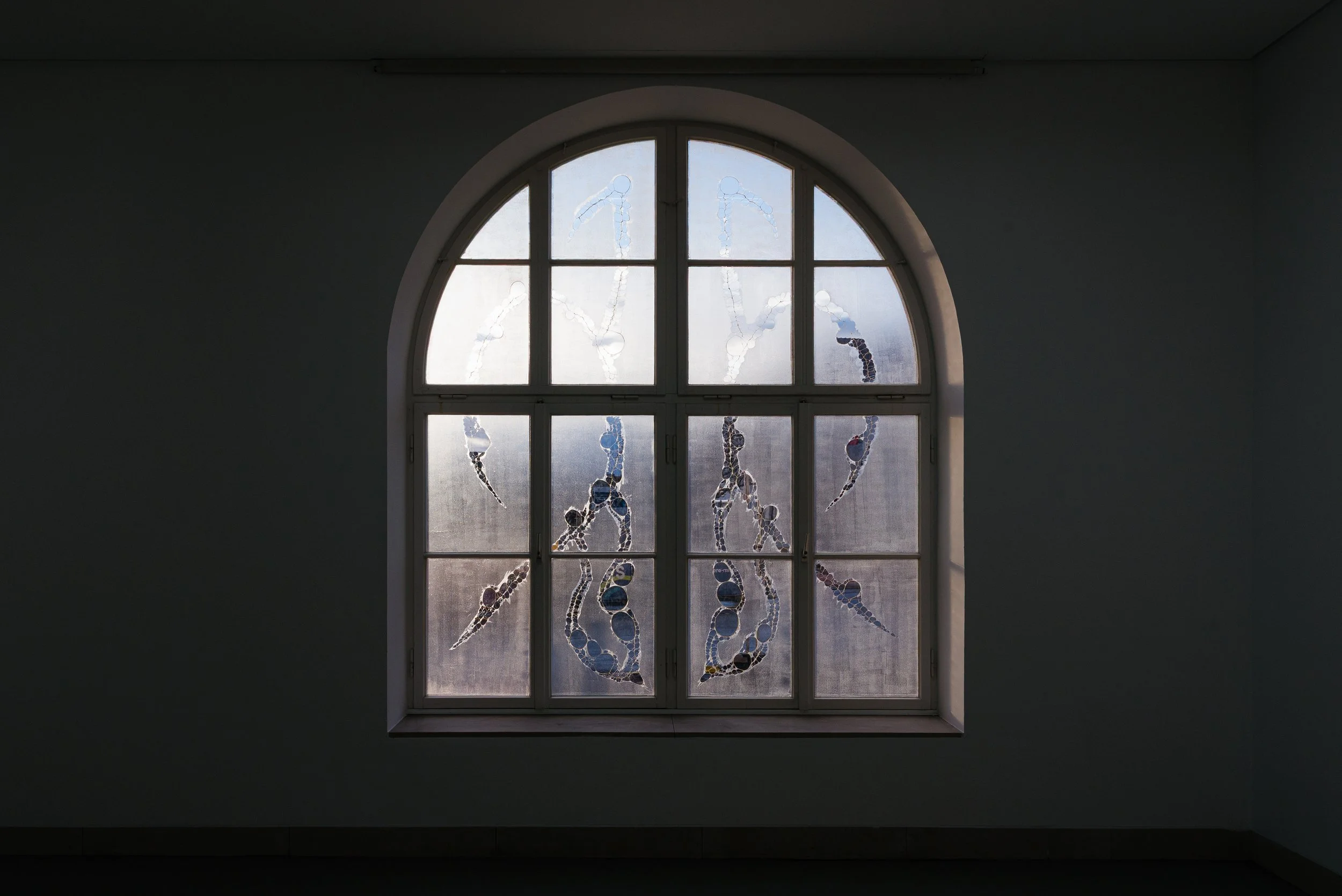
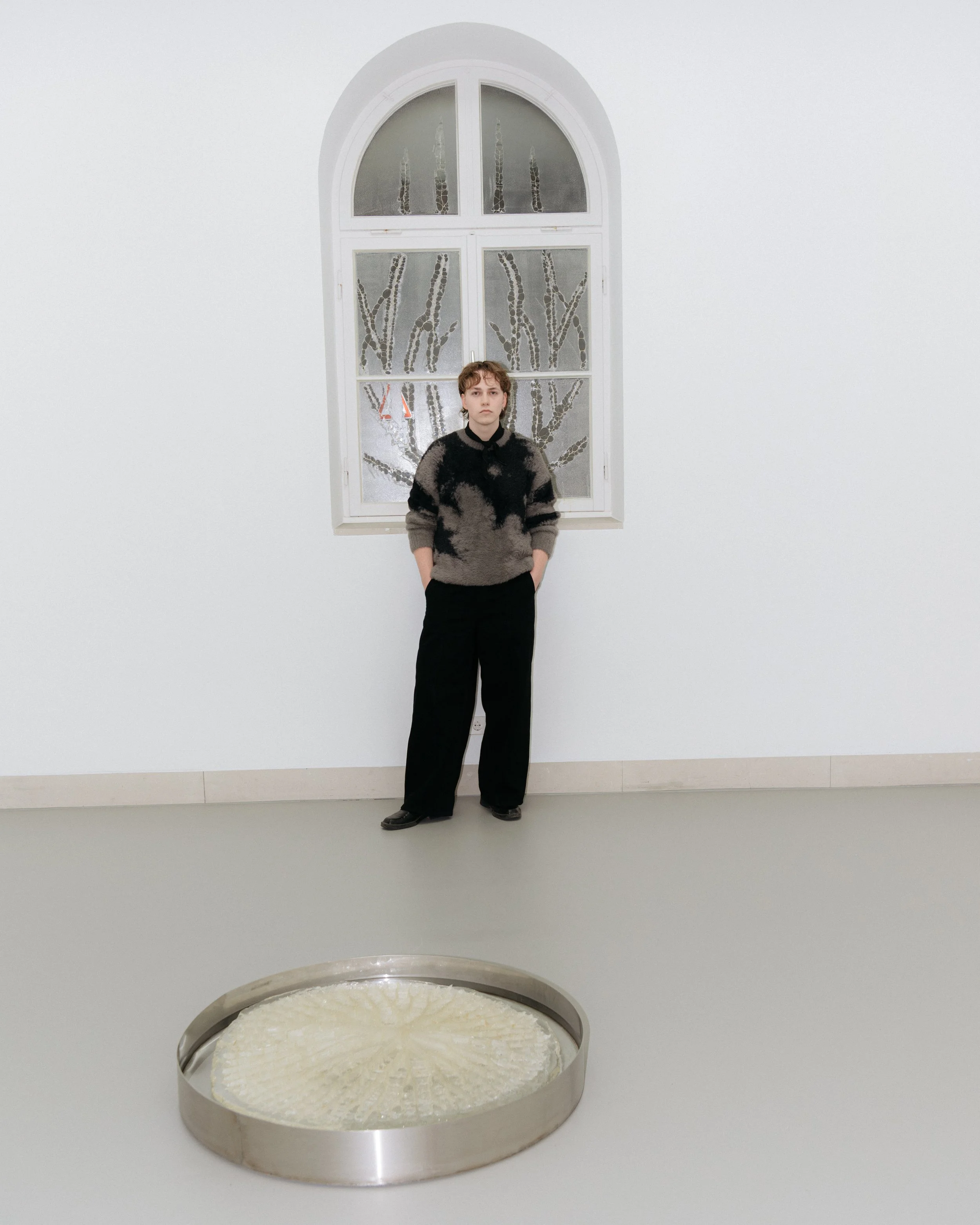
Latex on glass, existing only while the exhibition is shown. Leon Simonis works with the tension between industrial perfection and the transient messiness of decay, building sculptures that channel botanical, animalistic and supernatural elements into what he treats as their fitting vessel.
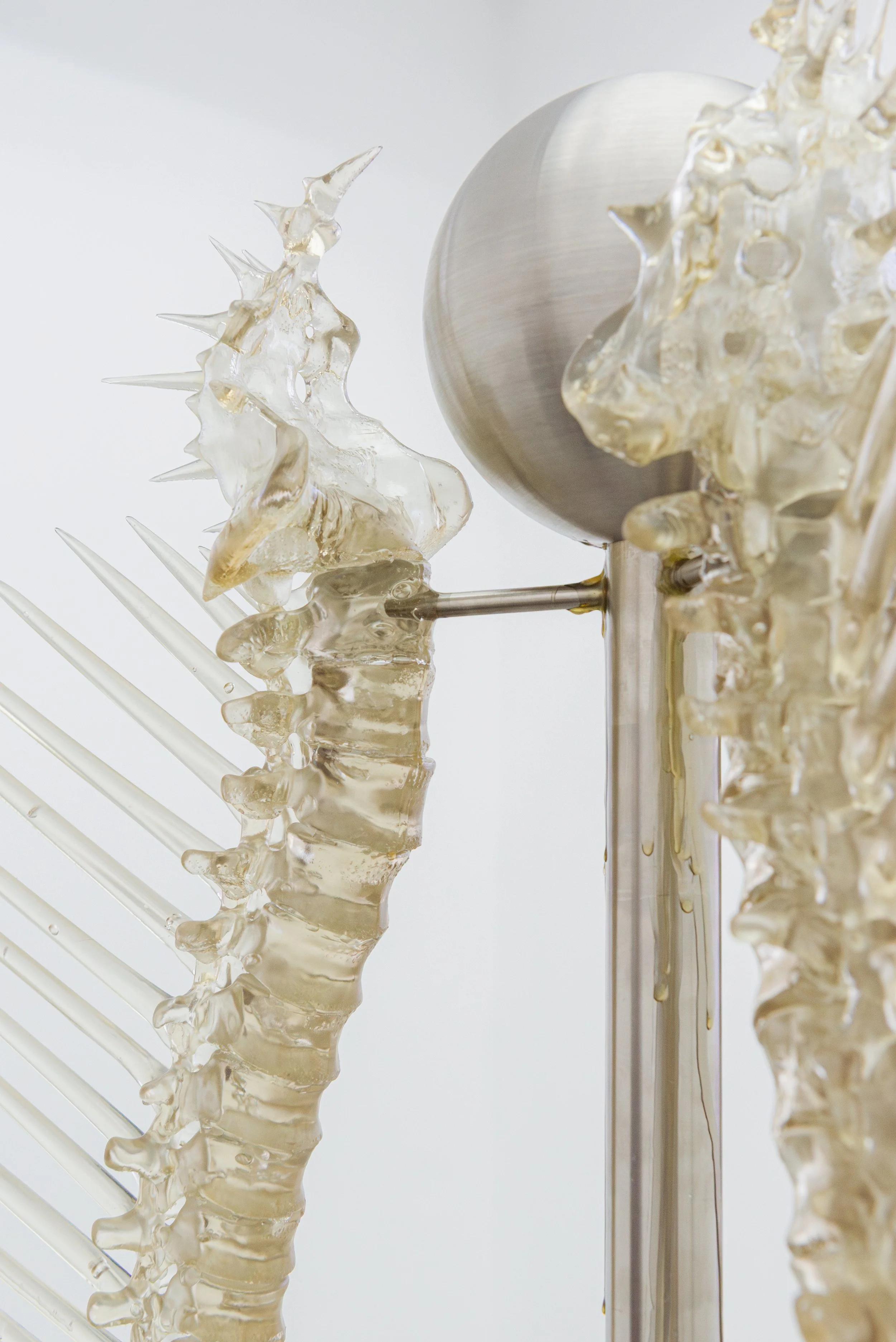
For our readers encountering your work for the first time, please take us through your background.
I am an artist and primarily make sculptures and installations. Quintessential to my pieces are botanical and animalistic elements, the theatricality of religious and supernatural iconography and my love for materials that trigger a fetishistic fascination. Growing up in an industrial city in Germany influenced me to work with the tension between reproducible, industrial perfection, made to last and the unique, transient messiness of decay.
LS
Latex on glass. How did that come about?
A space I was exhibiting at about two years ago had huge glass windows and I felt uncomfortable with the people outside being able to watch me set up inside. I didn’t like that the element of surprise would be lost and the parked cars outside shattered the otherworldly atmosphere I wanted to create. So I painted all windows with layers of latex milk, in order to alienate me and ultimately the exhibition from the outside world. I also enjoyed the confusion of visitors, who were used to being able to see the exhibitions there from the outside already. It has since become an ongoing, sort of parasitic work, that adapts to the surfaces available and, due to the fragility and transience of the material, exists only while the exhibition is shown and is destroyed by taking it off its host-surface.
LS
Your recent exhibition Vessels of Unbecoming at Galerie Stadt Sindelfingen, can you tell us more about it?
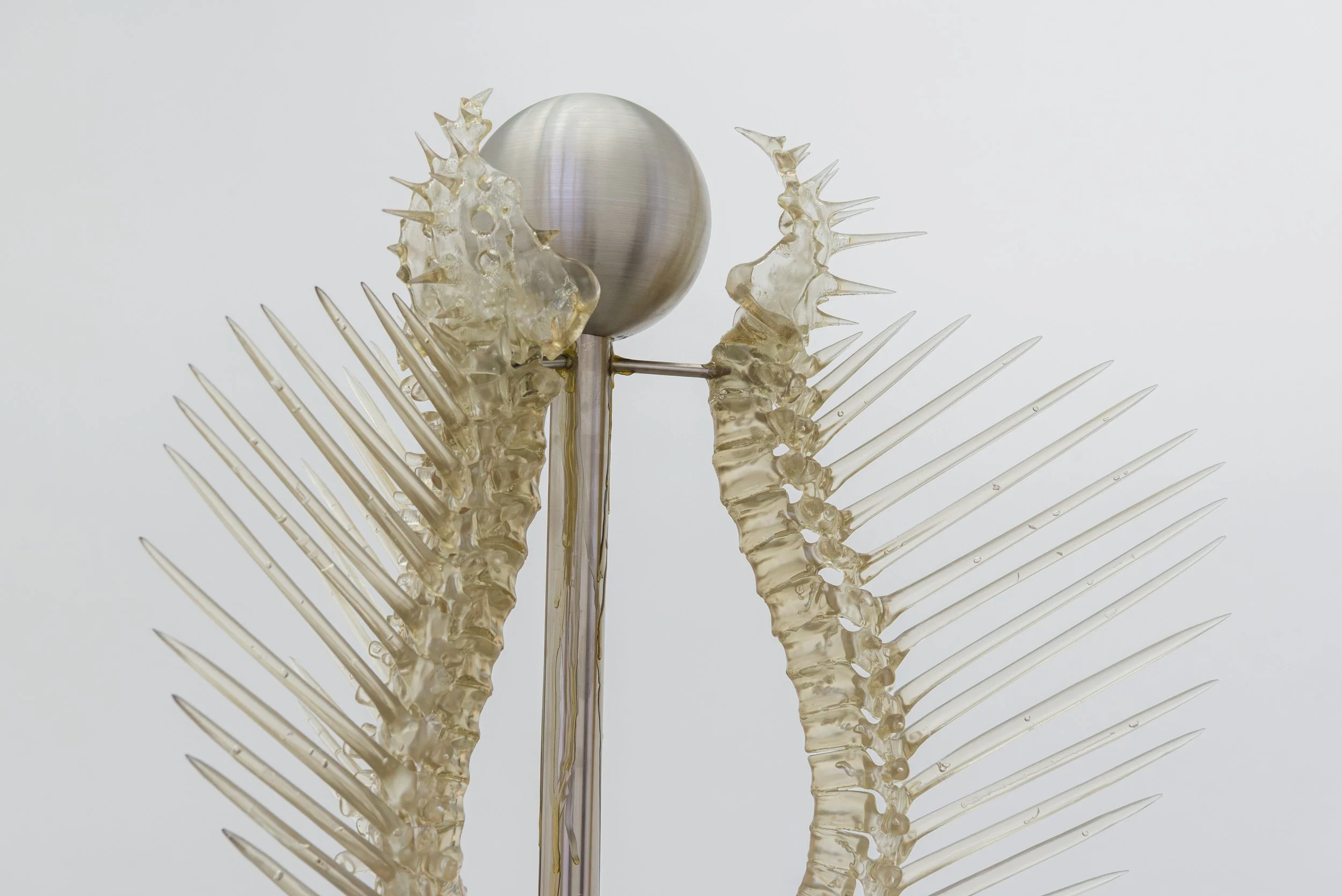
My recent show at Galerie Stadt Sindelfingen was my first institutional solo show and also felt special because it took place in the city I grew up in. I wanted to focus on these very core themes of my artistic practice which I mentioned earlier. Each work talks about a different effort to make the human life everlasting, including through various religious practices, folklore or the belief of matter rebecoming. Simultaneously, each object mirrors a Christian liturgical vessel, such as a confessional, a baptismal font and a crucifix. Ultimately, Vessels of Unbecoming is a memento mori, it doesn’t answer questions, but rips them open again.
LS
You studied fashion design before moving into sculpture and installation. Does that background find its way into your work?
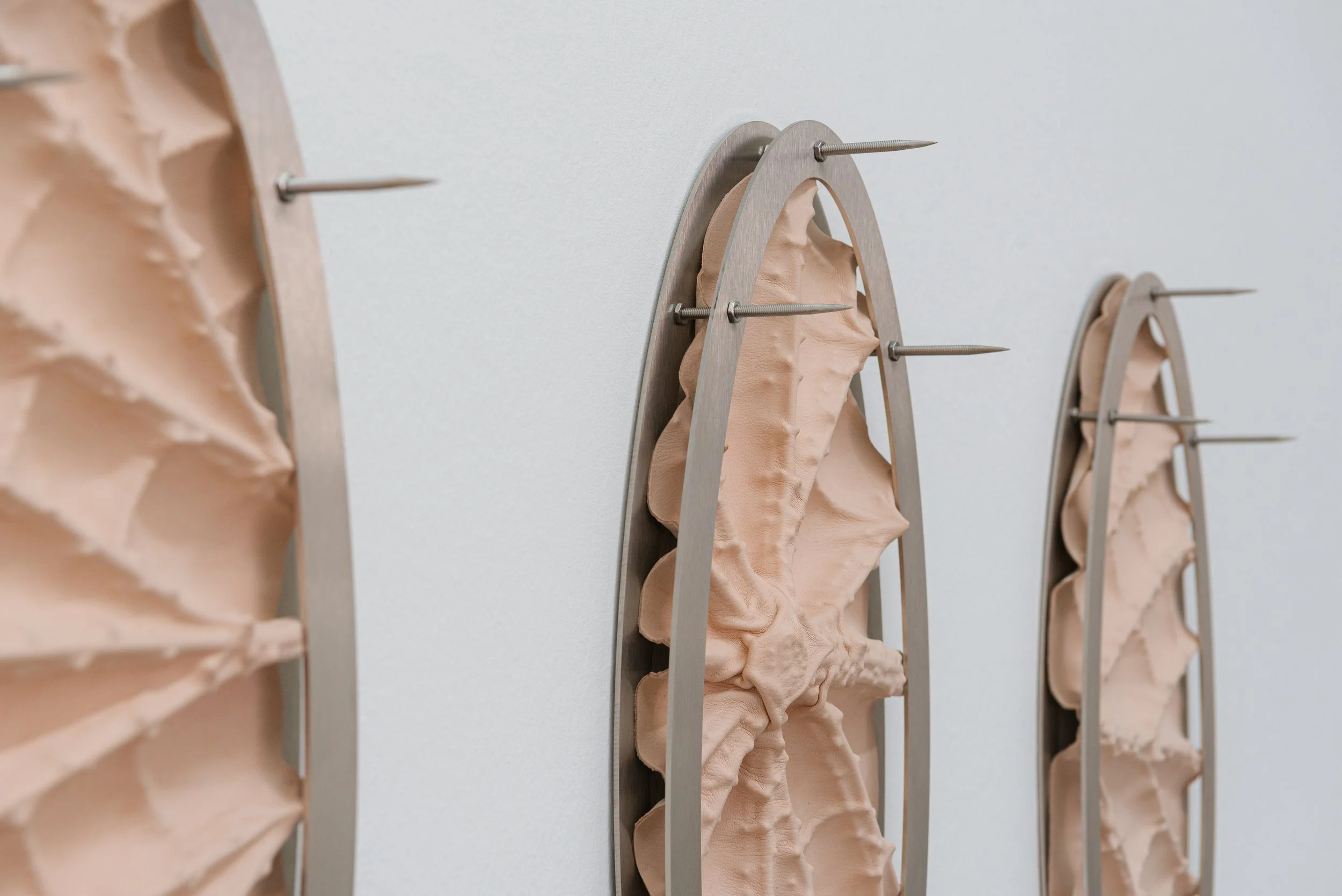
After trying to distance myself from my background in fashion in the past, I learned that instead of building onto the human body, I removed it in order to create others. The restriction to our bodily shapes and the safety net, or visual orientation for viewers, is now gone. I can define for myself what a body is and come back to the human one, when I feel the need to. Recently I have started to incorporate fabrics and other fashion related materials including leather, silk and latex into my sculptural practice. I like that they possess softness and their many relatable, loaded connotations.
LS
Where do you draw inspiration from?
I adore (cosmic) horror and science fiction films and watch them religiously, but in reality, we are constantly surrounded by organisms, ecosystems as well as our rituals and made up systems, which we have normalised, but are truly extraordinary, macabre and beautiful. So I try to collect these glimpses and channel them into their fitting vessel.
LS
Is there a piece you made that you're particularly drawn to right now?
Nepenthes: Through Matter from my show Vessels of Unbecoming encapsulates intense existential fears we all have when being faced with the monstrous dimensions of the cosmos and its eternity in contrast to our own mortality. The confining, black curtain was inspired by Victorian mourning veils, but I also associate it with a shower curtain, in connection to the film psycho, or a silken moth cocoon. Its circumference allows for only one person at a time to enter the intimate exchange with the metal plated pitcher plant in its inners. I coated the inside of the plant with a highly absorbent black pigment, making it impossible to make out its depth, which creates a suctioning effect. I think that I am really drawn to it because it weaves together many layers of material and symbolism and stages them in a haunting, ethereal way.
LS