Fharid LaTorre
IN CONVERSATION
20.07.26
F R A G M E N T S
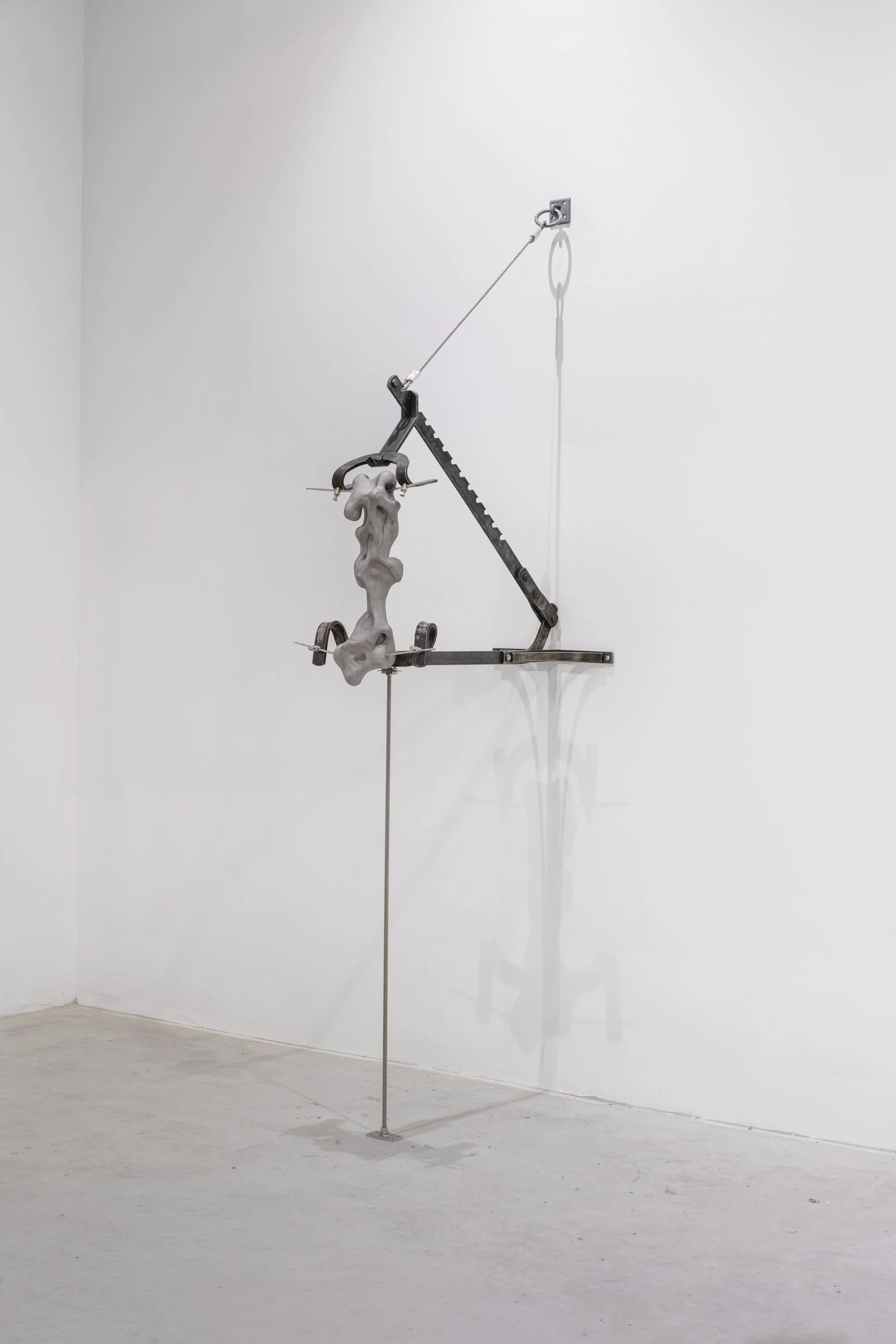
Fharid LaTorre works between Miami and New York. Sculptures as inert matter with no stress left in it. "A new kind of subjectivity forms in the gaps of these lifeless, deterministic, computational structures. A desire for extreme stability, which is really a desire to return to an inorganic state."
For our readers encountering your work for the first time, please take us through your background.
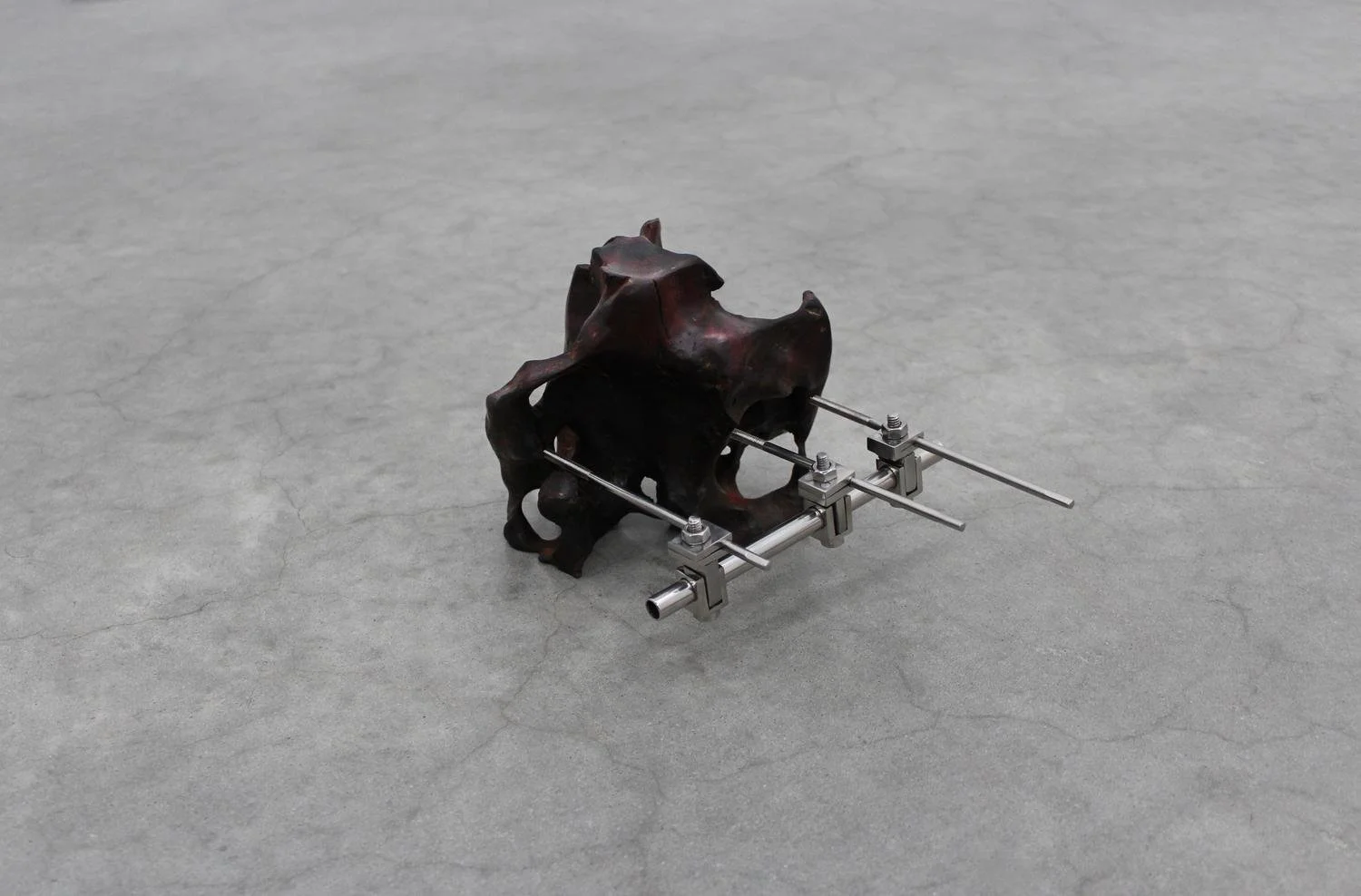
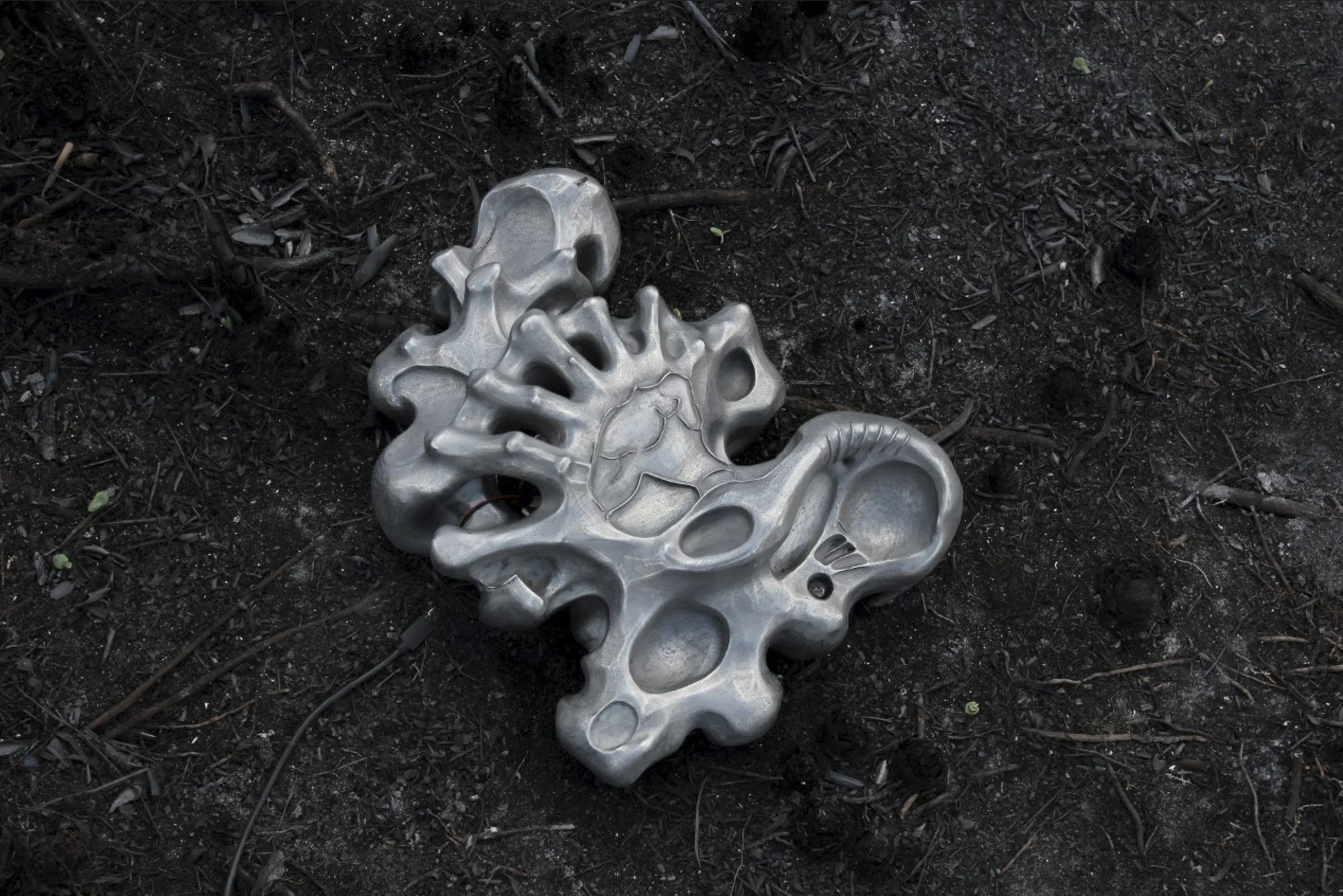
I was born in Miami in 1999 and now live and work between Miami and New York, working primarily in sculpture that moves between carved wood, cast metal, audio and digital fabrication. I’m drawn to materials that already carry a history before I get to them, something shaped by a previous industry or context, because then the material is already making decisions and it isn’t only my hand making the piece. The work itself moves through a kind of evolutionary contortion, the way a body reorganizes itself under stress it never chose, evoking altered anatomical responses and mutations outside individual control. I’m interested in undermining the function of artificial systems, in what emerges in the gaps of these lifeless, deterministic, computational structures, because I think a new kind of subjectivity forms in those gaps, one driven by a desire for extreme stability, which is really a desire to return to an inorganic state, to inert matter with no stress left in it. Rather than rendering any of this, I let it come up through the materials themselves.
FT
Titles come late, usually after I’ve already spent weeks with a piece. I treat words a little like textures, so language starts to behave like another material, and I approach writing the same way I approach sketching, which means there’s a private document running the whole time. Sometimes I write from inside a character, I have an arsenal of them I choose from, and writing from inside one gets me somewhere I couldn’t reach on my own. Then I take that private writing and run it through multiple translations, different languages and generators, until my fingerprints are gone but the residue of the original thinking is still there. Eventually one phrase is still standing after all that processing, intact, and that becomes the title. It isn’t there to explain the piece. It’s just another surface it has.
The titles of each of your pieces are poetic and cryptic. How do you go about your naming process?
FT
Your art mixes mechanical shapes and tools with depictions of body parts. Why do you combine the two? Is there a specific message you are trying to convey?
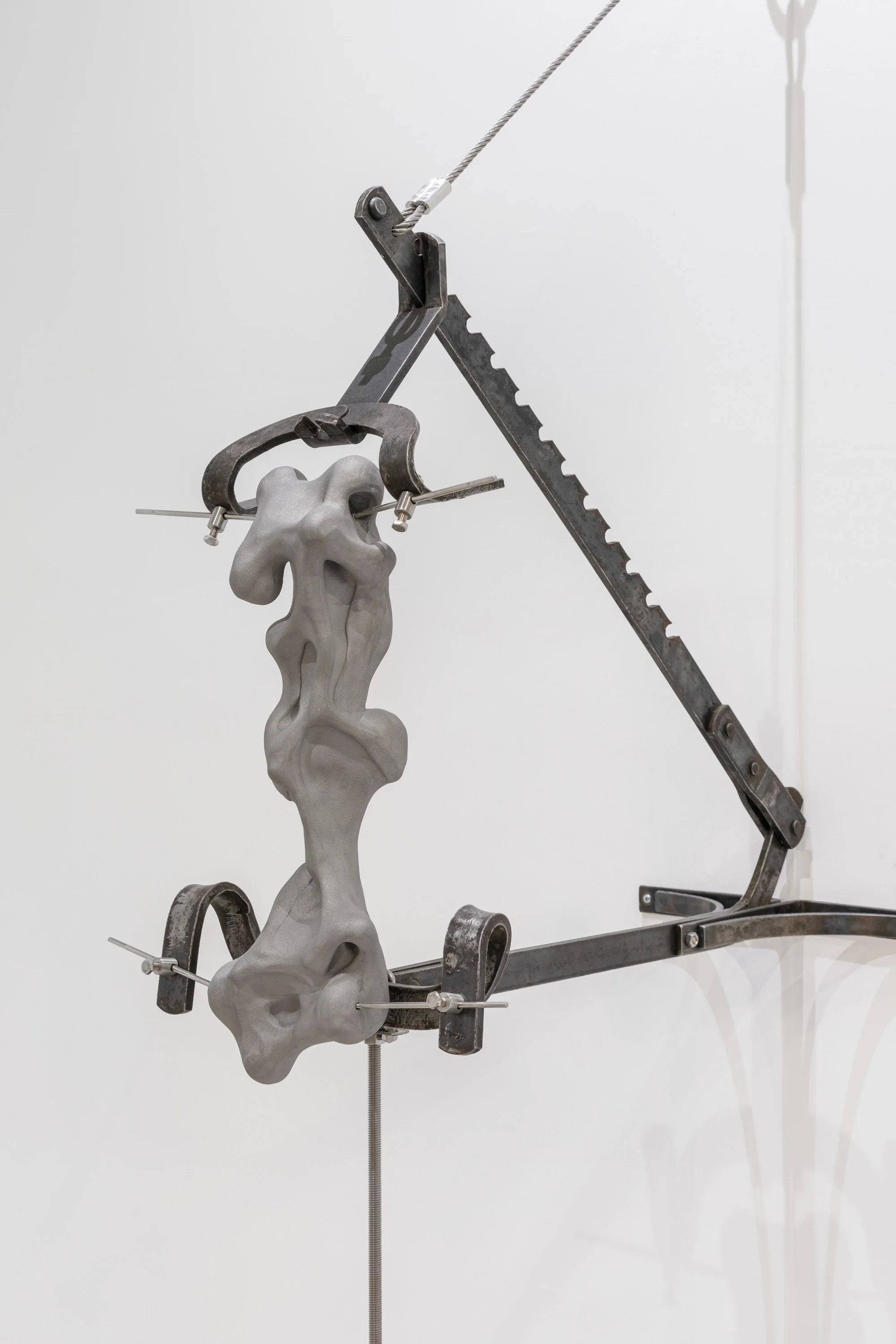
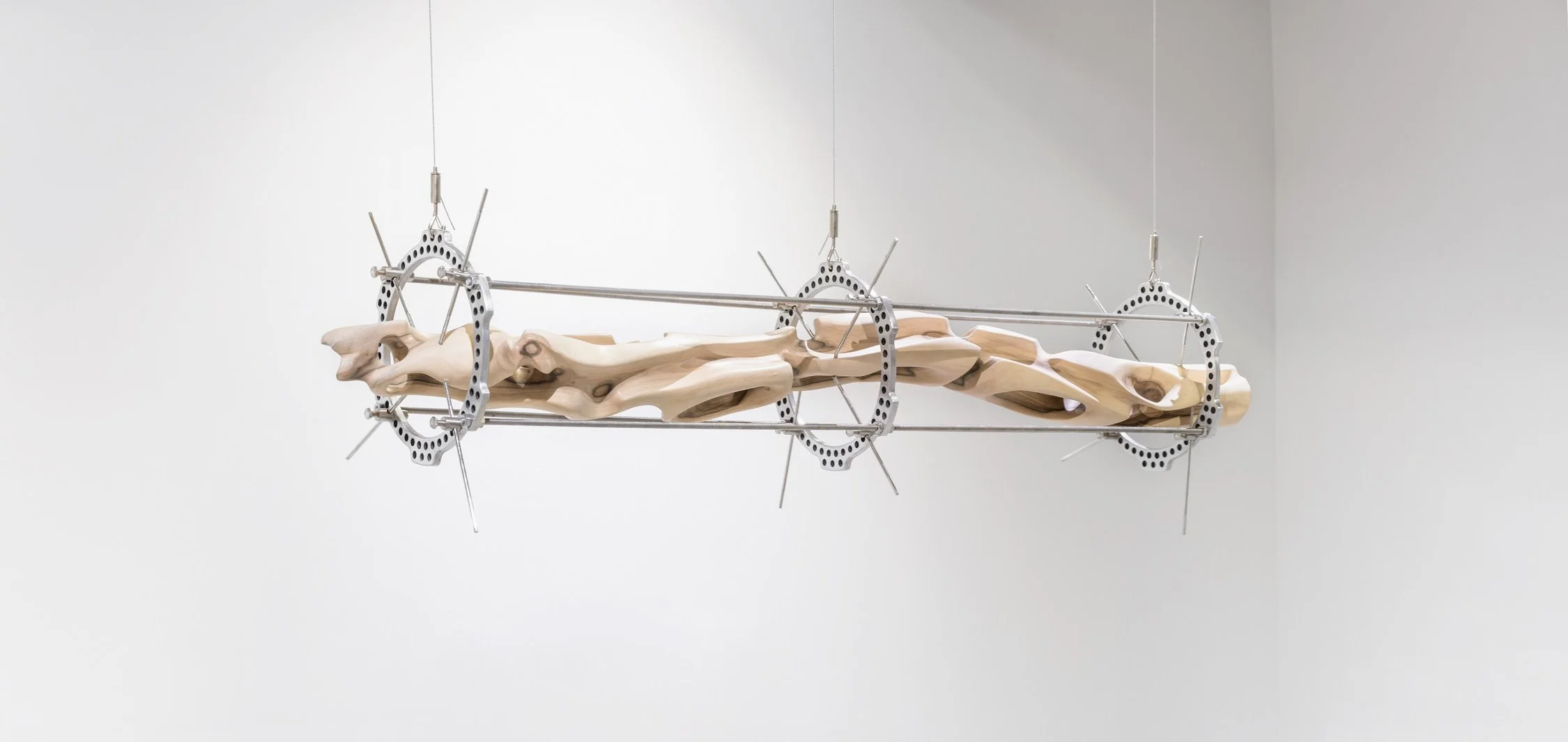
I don't really experience them as two things I'm combining. A tool built to hold something still and a body held still for the same reason, that's one gesture with two names. What I keep running into, and I haven’t fully worked this out, is that even the resistance in the work runs on the system’s terms. I say I’m undermining containment and capture, but I’m doing it with the same discipline that produces containment and capture in the first place, precision, repetition, hours regulating myself in the studio the way I’d regulate anything else that needed to behave. There’s no clean outside to stand in, maybe. The part of me that wants to critique the machine might just be the part the machine already built.
So when I put metal against anatomy, I’m not delivering a message about violence happening to a body from outside. The more honest version is that the body’s already doing it to itself, has internalized the holding-still, the way we all hold ourselves in a kind of aesthetic stasis now without anyone forcing us to, modified physically and mentally just to accommodate something’s constant presence. That’s the quiet violence I keep circling, not a system acting on someone, but someone maintaining the system inside them, policing their own shape with nobody else in the room. I don’t know how to make work that gets outside that loop. I’m not sure that’s possible. Maybe the most I can do is make the loop visible, show the moment a body disciplines itself into stillness, and let it sit there as a question instead of calling it agency, because I don’t actually believe it is agency.
FT
Where do you draw inspiration from?
Less from the outside than from turning inward, usually. But I think in terms of things I’ve been reading, there’s this part about spider silk in Parallel Minds by Laura Tripaldi that I keep coming back to—how the silk isn’t fixed, how it changes its mechanical behavior depending on the conditions it finds itself in, whether the web is wet or dry, whether a bug has just hit the surface or not. The thread reads its own situation and rewrites itself. Her point is that this isn’t some bland property of molecules, it’s a kind of intelligence, happening in the fiber itself rather than in a brain directing it, and being an artist with an accumulating material practice, that completely reorganized how I think about what I’m working with. It connects to this idea from Luciana Parisi too, this notion of Hypernature, where nature is already technical and technology is already natural, because matter forms endless combinations and doesn’t care whether we’ve decided one is natural or unnatural. Those categories were never in the material, they’re in us. It’s really inspiring, and something I feel like my practice is also moving towards.
FT
Can you tell us more about your recent exhibition, ‘Evidence of Evolution’? What was the process behind it?
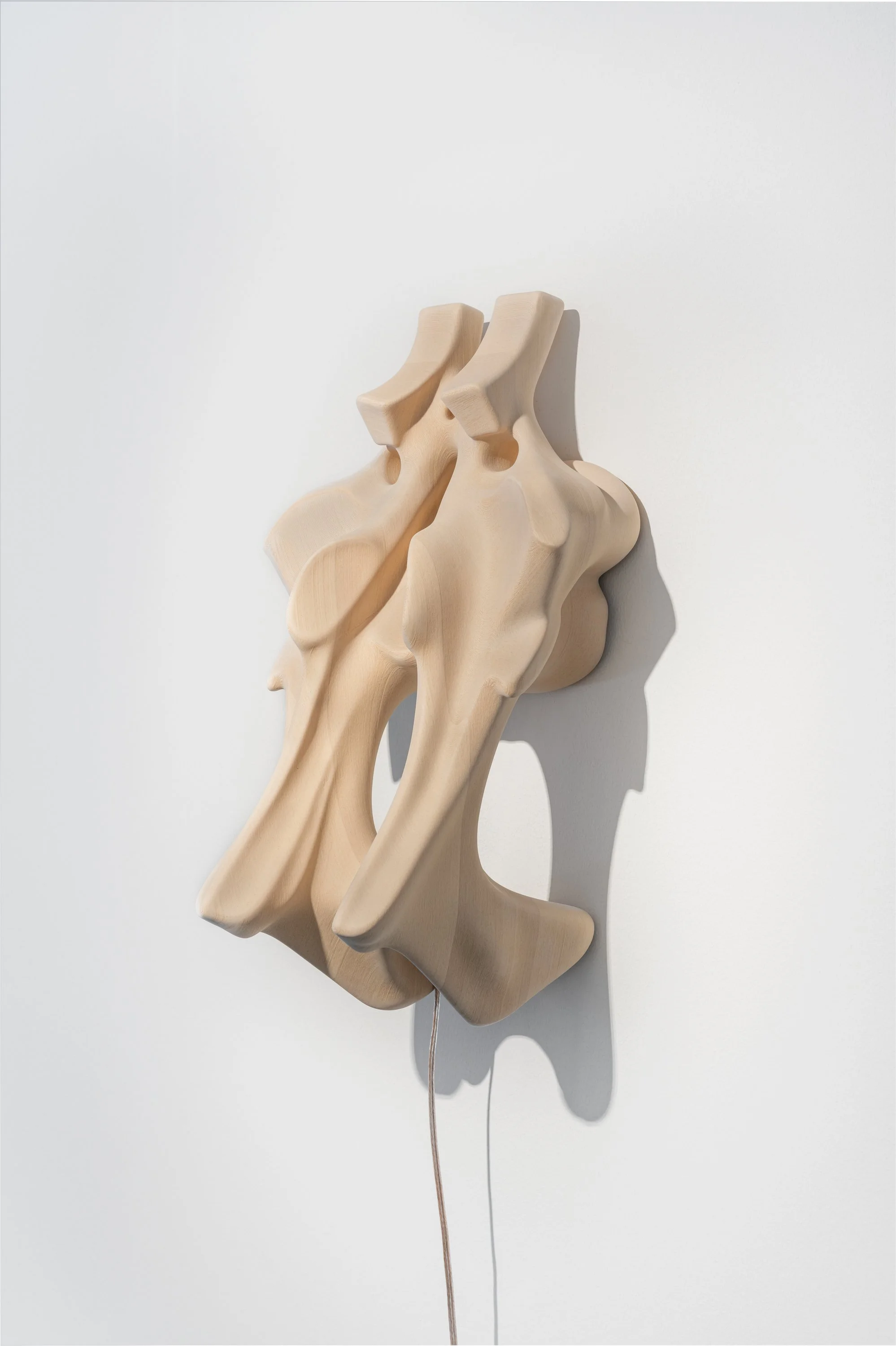
It was a two-person show at QUEUE, curated by Catherine Camargo, my sculptures alongside Jamieson Pearl’s paintings. The two bodies of work ended up in this strange dialogue about distortion, her figures were pulled from screenshots, women flattened and warped through the gaze of a screen, and my pieces were bodies held in metal, so both of us were dealing with what happens to a body once some system gets hold of it.
The process wasn’t me starting from a thesis and illustrating it. I don’t really work that way. I’d carve or cast until a form arrived that read less like something I designed and more like something that had adapted, and then the metal came in and held it in place, the way clinical hardware holds a body in a fixed position while it’s being corrected. There’s an idea underneath all of it that matter exposed to enough disequilibrium starts to organize itself, that stress produces adaptation, and I wanted the pieces to look like they’d been through that, like the form was a record of pressure rather than a decision.
The title is where the concept actually sits. Evolution isn’t progress, that’s the assumption I wanted to work against. It’s contortion, what a body does under stress it didn’t choose and can’t fully steer. So the show wasn’t really about improvement or adaptation as something triumphant. It was about the evidence left behind, the marks of everything that acted on a body, held it still, and called that stability.
FT
You also make and sell rings. What inspired you to make jewellery?
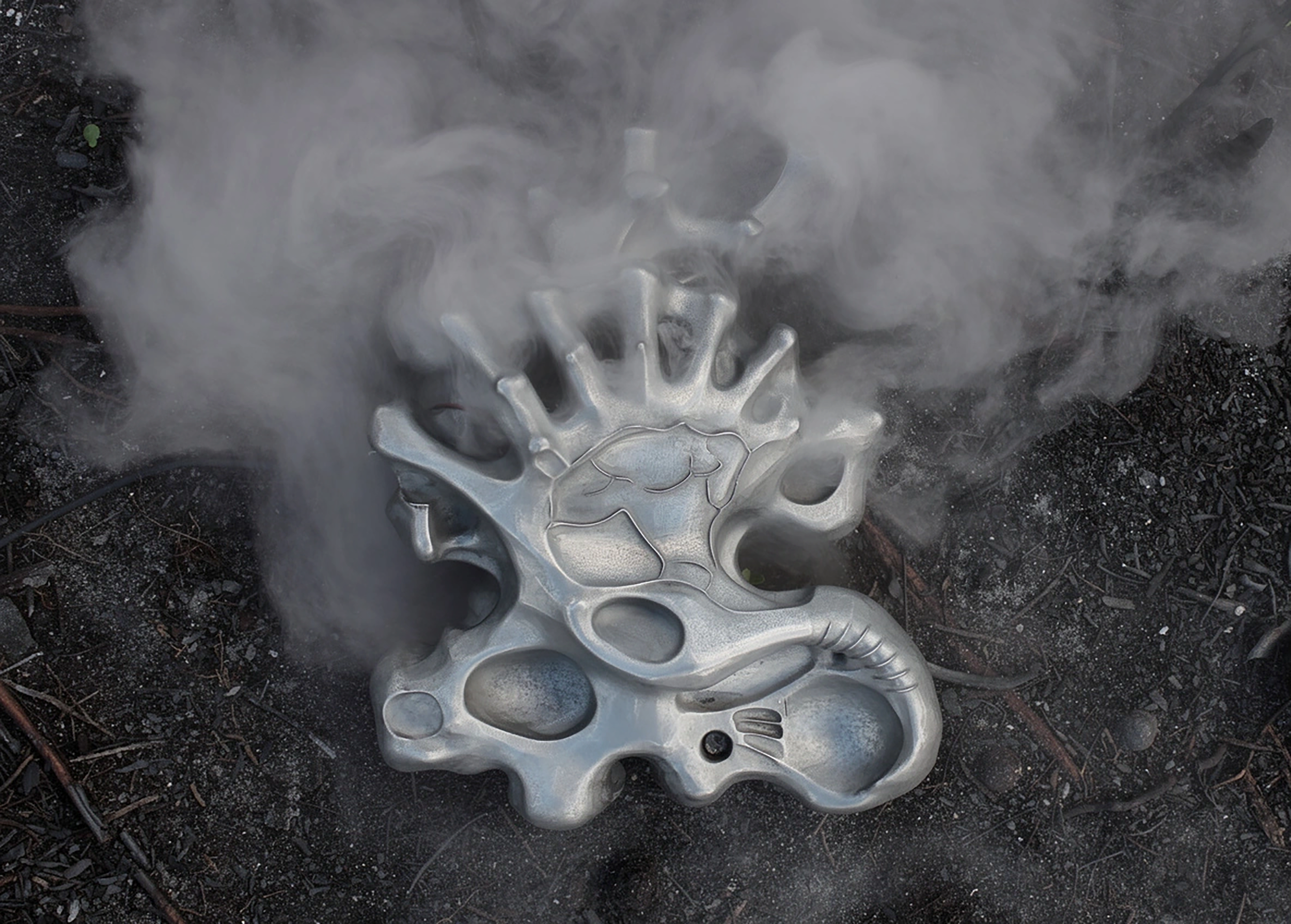
Mostly it started as a way to test formal arrangements on a much smaller scale than my sculptures. The same logic carries down, how a form holds tension, how something reads as anatomical and industrial at once, and it’s faster to work through on the scale of a ring. It’s also just closer to the body, which is already what most of the work is about.
FT
What is next for Fharid LaTorre?
Right now I’m preparing for a stone carving residency in Austria, so I’m in a re-calibrating phase, taking in new inputs. It feels like another transitional process, more re-adapting and metamorphosing, and I’m excited to keep going wherever the practice takes me.
FT