Floryan Varennes
IN CONVERSATION
17.07.26
F R A G M E N T S
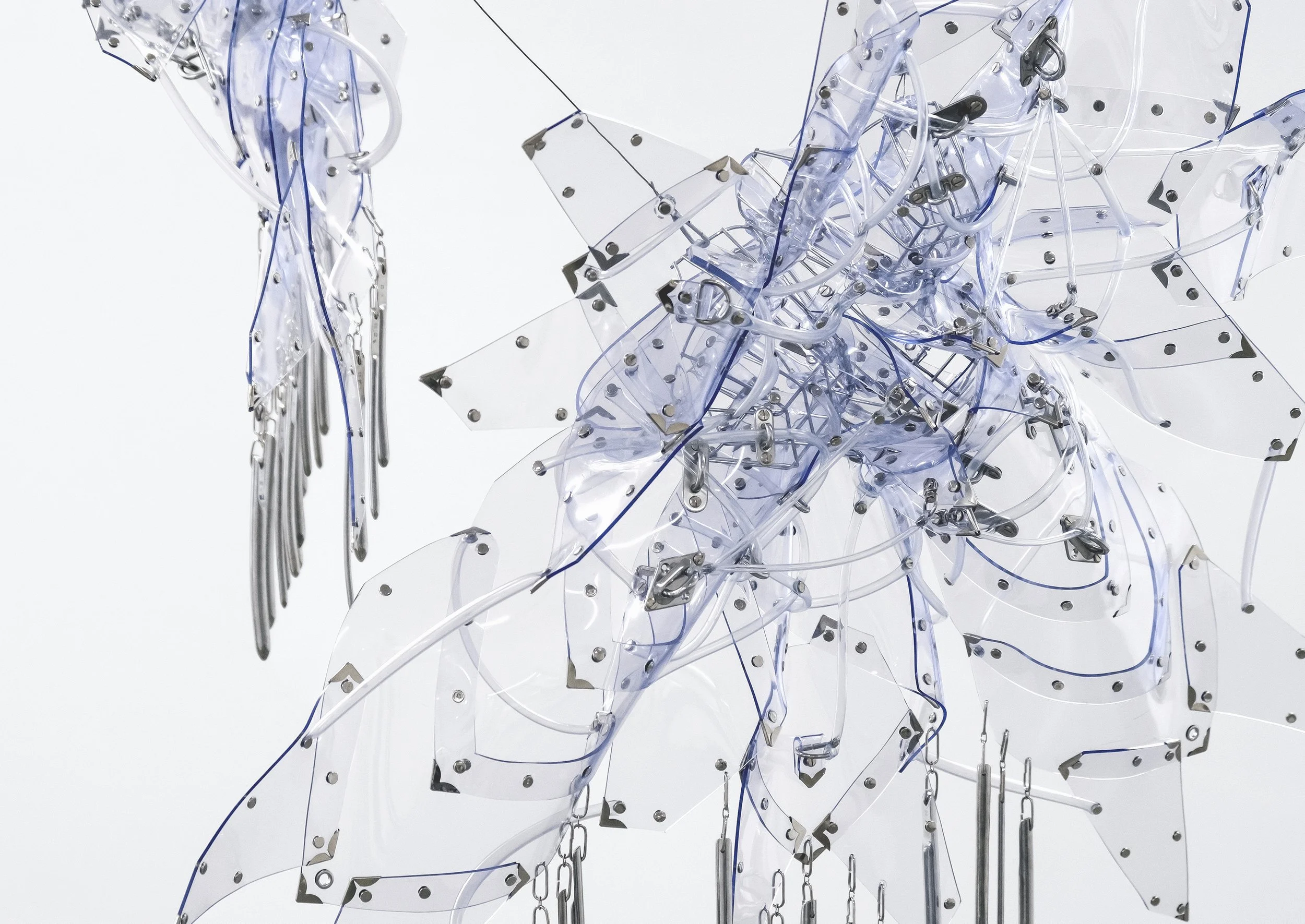
Floryan Varennes creates sculptures exploring how advancing technologies and medicines interact with the natural world. “A prosthesis can evoke an organic growth, a plant-like structure can become a protective device, and technology can take on almost mythological forms.”
For our readers encountering your work for the first time, please take us through your background.
I am a visual artist, researcher, and historian. I pursue a multidisciplinary practice, taking a conceptual approach at the intersection of sculpture, installation, video and performance. Having trained at art school and subsequently obtained a research Master’s degree in Medieval History, I am interested in the cracks in our systems of preservation — whether structural, therapeutic or fictional — which shape our environments and our imaginations. In this vein, I create hybrid sculptures in which the body is suggested in negative space, through various extensions, whether attached or optimised. My research often takes the form of speculative legacies, where counter-history and environmental narratives intersect, in order to challenge models that I sometimes find a little too binary.
FV
My work stems from extensive documentary, historiographical and scientific research, even though this is never directly visible in the artworks themselves. Part of my research focuses on what represents, protects or mobilises the body in medieval archives and marginalia: heraldry, armoury, military orders, systems of descent, and their enduring influence in popular culture. At the same time, I am interested in everything that heals, transforms or enhances the body and its environment: biotechnology and bioethics, phytotherapy (particularly nootropics), aromatherapy, pharmacology and toxicology, biohacking, biofeedback, orthopaedic devices, exoskeletons and robotic surgery.I seek to create a dialogue between these two seemingly disparate fields of reference, in order to highlight the common threads that run through our ways of preserving and transforming living life.
Where do you draw inspiration from?
FV
What piece of yours are you most proud of?
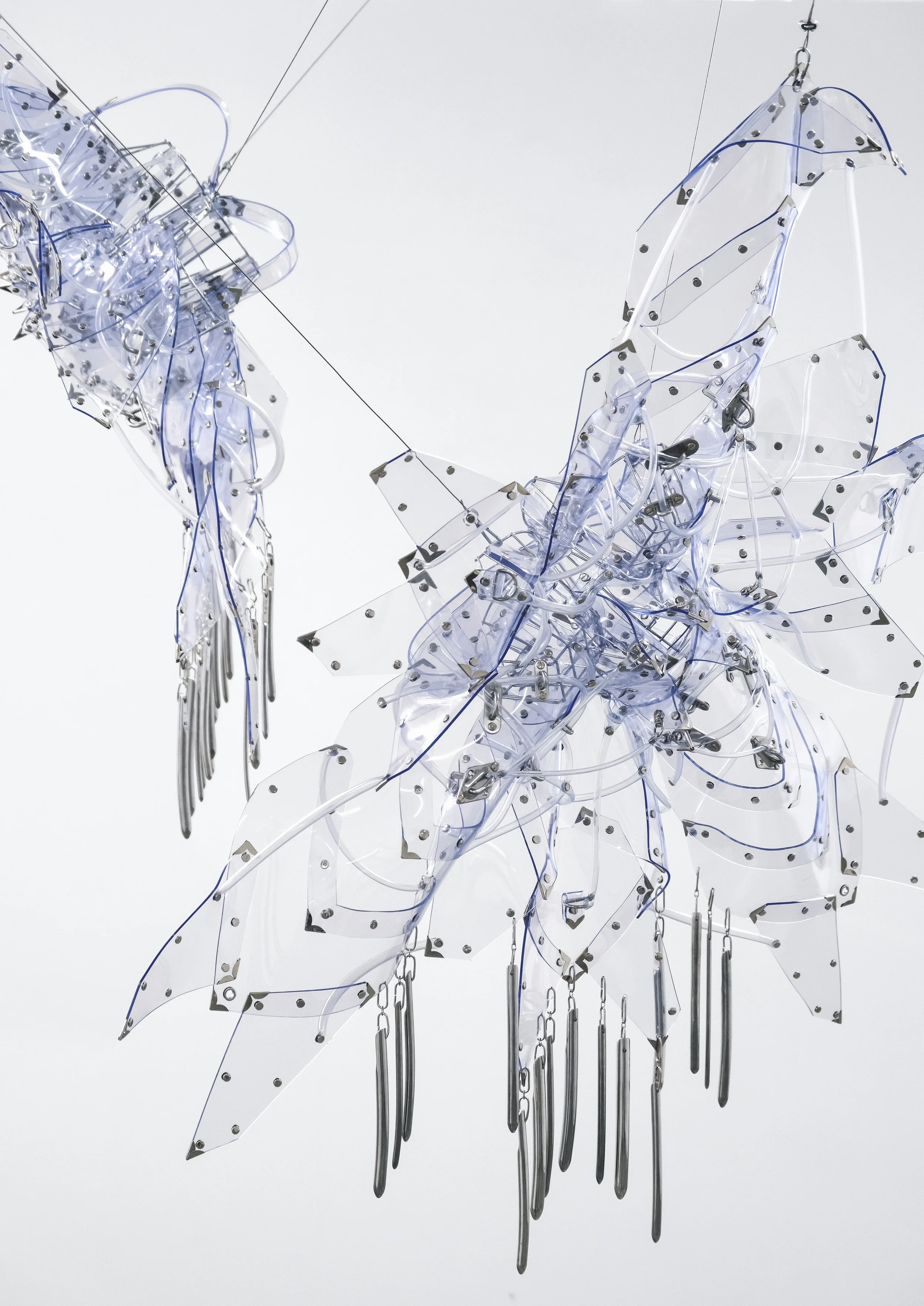
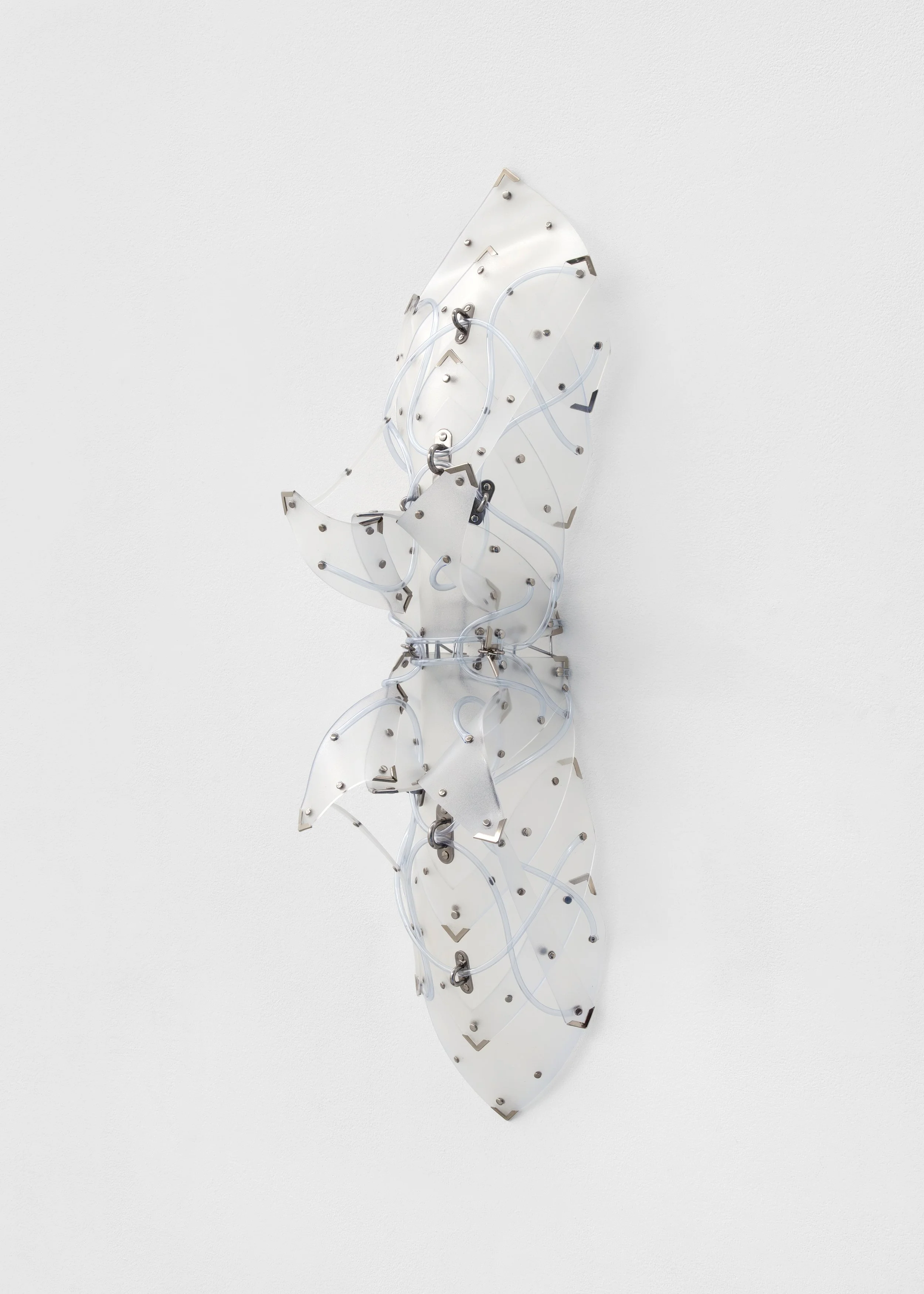
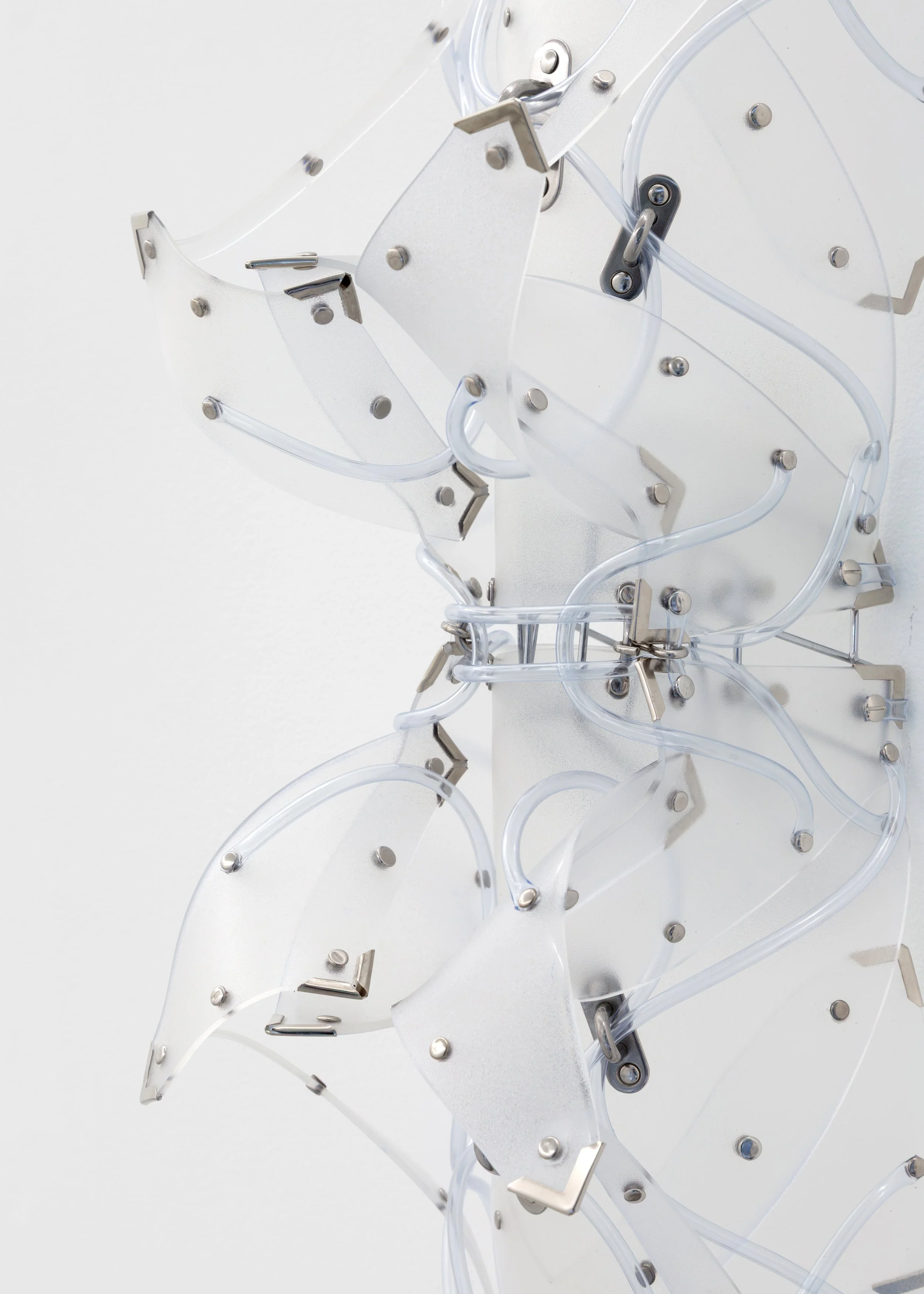
I have a rather complex relationship with my work and I rarely speak of pride. Each piece is, above all, a step in a process of exploration which, in my view, always remains unfinished. With hindsight, however, I’ve come to appreciate certain recent pieces more, such as the ‘Pixies’ – sculptures in the form of riveted frameworks inspired by exoskeletons – or my ‘Spikes’, glass appendages reminiscent of severed elven ears. These are works in which I feel that several lines of inquiry converge more effectively. It is often when I start a new project that I can look back at previous ones with greater detachment. Once they are finished, the works no longer belong entirely to me: they become traces of a journey, rather than an end point.
FV
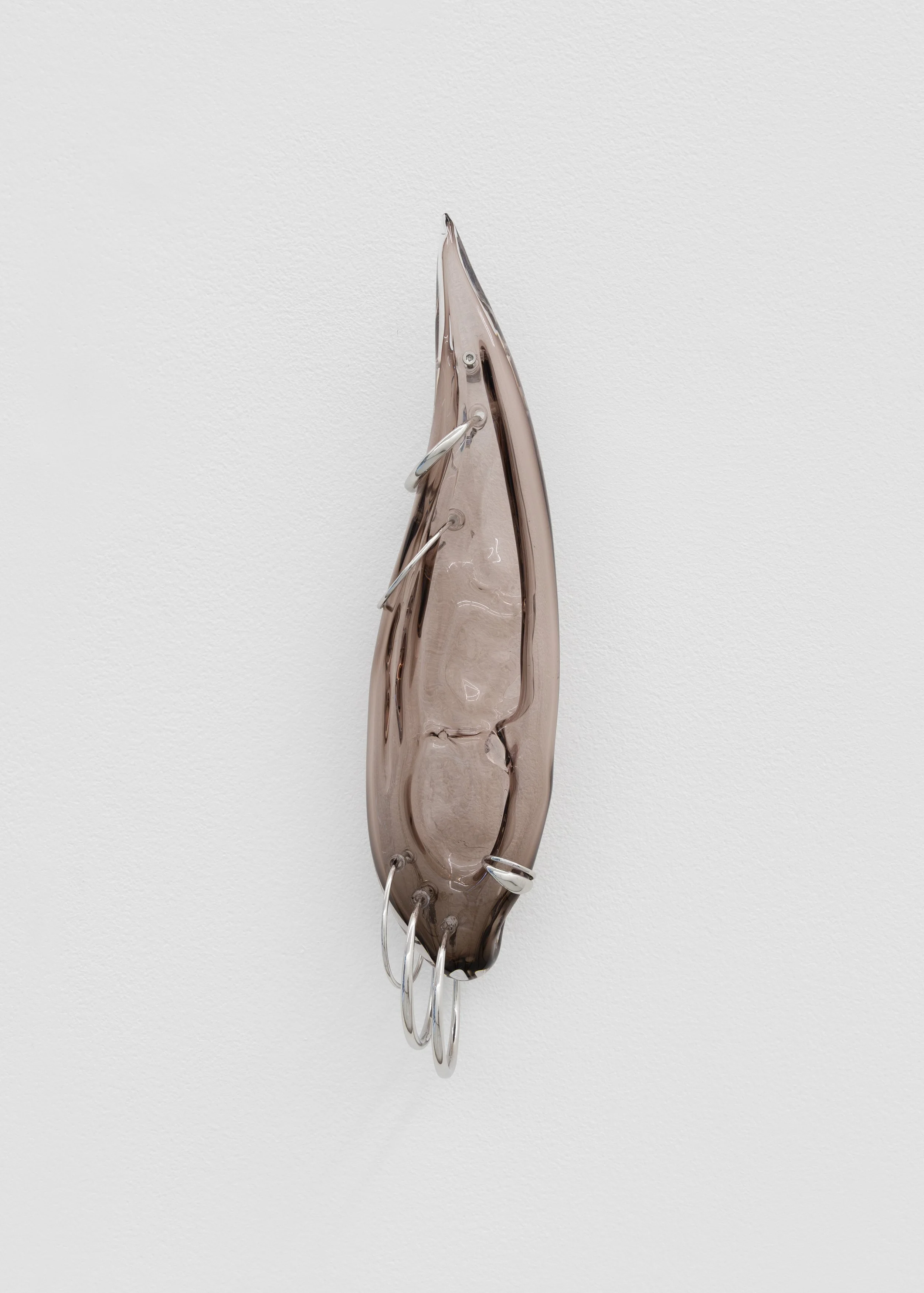
Your work seems to bring together botanical, robotic, and medical imagery. Can you tell us more about that?
For me, these different worlds constitute a system of languages that enables us to refect on living things and their transformations. They become matrices from which I construct new formal and narrative territories. What interests me is the way in which these imaginaries can influence one another: a prosthesis can evoke an organic growth, a plant-like structure can become a protective device, and technology can take on almost mythological forms.
My thinking is greatly informed by philosophers, thinkers and creators such as Ursula K. Le Guin, Bernard Stiegler and Byung-Chul Han, but also by figures such as William Morris and Hideaki Anno, who have been guiding my research for over a decade. For some time now, I have also been developing research into ethnobotany (thanks to Edward Carpenter and Gilles Clément), particularly focusing on how certain plants have shaped our relationships with care, hygiene, prophylaxis and even sensory memory. Lavender has been a key anchor in my work, serving as a material, a symbol and a cultural archive. I would now like to explore this relationship between plants, the body and preservation techniques in greater depth.
FV
What’s next for you?
I am currently presenting Respawn, a solo exhibition at the Château d’Angers in France, a particularly symbolic venue as it is home, amongst other things, to the famous Apocalypse Tapestry, which resonates with some of my research into narratives and forms of survival. Over the coming months, I will also be in residence at the Cité Internationale des Arts in Paris for a period of three months. Finally, I shall have the honour and pleasure of representing France at the French Pavilion at the Gwangju Biennale in South Korea, a country where I was fortunate enough to be in residence last summer at Villa Hanbul.
FV