
Veronika Desova
F R A G M E N T S
11.11.26
New York-based sculptor Veronika Desova, injects breath and the human body into each of her installations.
For our readers encountering your work for the first time, please take us through your background.
I come from a background in architecture, which has inevitably shaped the way I think, research and make work. Before moving into art, I spent six years working as an architect and teaching architectural design in Glasgow, Scotland. Architecture gave me a particular vocabulary, both conceptual and technical, that I now find myself borrowing from, questioning and occasionally misusing in my sculptures, performances and photography.
I've always been endlessly fascinated by the anatomy of buildings. Their structural skeletons, façades, HVAC ventilation ducts, pipes, and all the elaborate mechanisms that keep them standing, breathing and functioning. I'm perhaps even more interested in what happens when these systems begin to fail. There's something strangely human about a leaking pipe or a structure struggling to support its own weight.
I grew up in a postindustrial suburb of Varna on the Bulgarian Black Sea coast, next to a glassblowing factory where many of my family and neighbours worked back in the day, surrounded by the remnants of socialist modernity. At some point in my childhood, my father worked at a recycling plant while running his bar, and I remember visiting the scrapyard, watching machinery being dismantled and enormous piles of motors and metal fragments lying in the sun. I think those images and aesthetics stayed with me, particularly the sight of machines with their internal organs exposed. This landscape extended into our backyard, where my dad and my brother would weld metal components, often repairing our car or other machinery.
Later, working in Glasgow as a Bulgarian, I became increasingly attentive to the parallels between the modernist architectural landscapes of both countries, particularly their industrial and Brutalist buildings as well as ageing structural experiments.
I suppose my work is a digestion of these experiences. I'm interested in the moment when a seemingly rational system begins to act irrationally, when a structure starts behaving like a body, or when something designed to function perfectly becomes strangely dysfunctional.
VD
Where do you draw inspiration from?
I'm often inspired by the unexpected failures of the machines and structures I make. During the process of building and testing, things inevitably misbehave, and these moments tend to introduce a second layer of narrative that sometimes becomes more interesting than my original intention. I like the idea that the work can develop a will of its own.
I'm also drawn to a more intimate, perhaps feminine side of architecture, one that allows for dreaming, vulnerability and mystery, qualities that often get lost in the corporate, profit-driven reality of architectural practice. I'm interested in architecture beyond its functional purpose, particularly in how it shapes our psychological and bodily experiences.
The human body is a constant source of inspiration. I often think about its respiratory, digestive, nervous and reproductive systems as architectural infrastructures in their own right. The circulation of air, fluids, signals and energy through the body has remarkable parallels with the hidden mechanisms of buildings. My sculptures often inhabit this strange territory between the mechanical and the biological, where it's not entirely clear whether something is breathing, functioning, struggling or slowly breaking down.
VD
Your work, A(R)MOUR, is currently on show at the W2 store in Glasgow, transforming the store into a ‘Thracian burial ground’. Can you tell us more about this?
A(R)MOUR is a collaborative project with my dear friend and one of my favourite artists, Slava George. Slava has this wonderful fascination with mythology, feminism and alchemy, and with the ways ancient rituals and beliefs continue to inhabit our collective subconscious.
The project really began with a road trip through Bulgaria's Rose Valley during the Festival of Roses in May. We visited ancient Thracian burial sites, watched roses being picked in the early hours of the morning and witnessed the distillation of rose oil. Along the way, we met Stoyan, a local rose producer, who was incredibly generous and gifted us pure rose oil to incorporate into our sculptures.
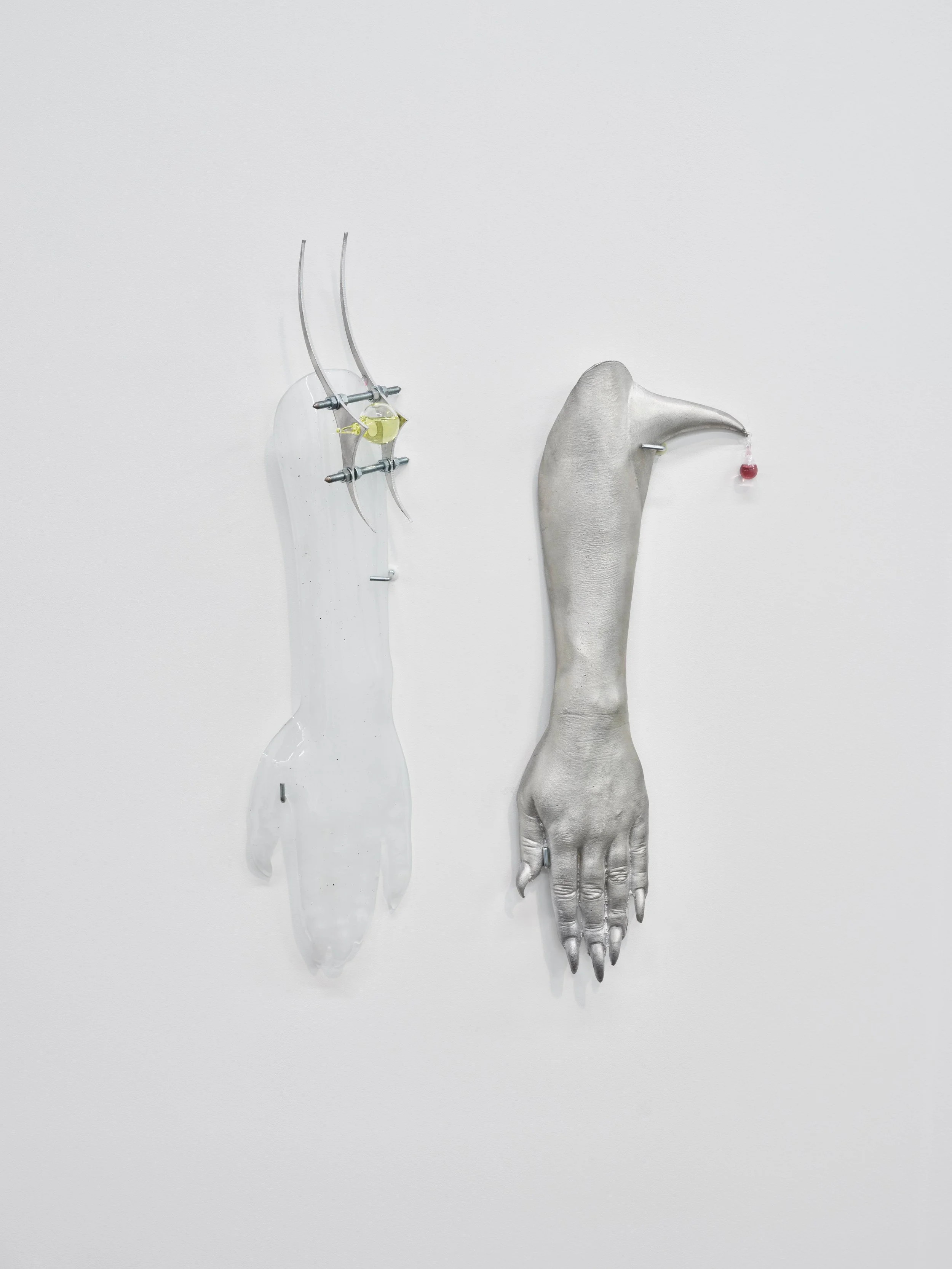
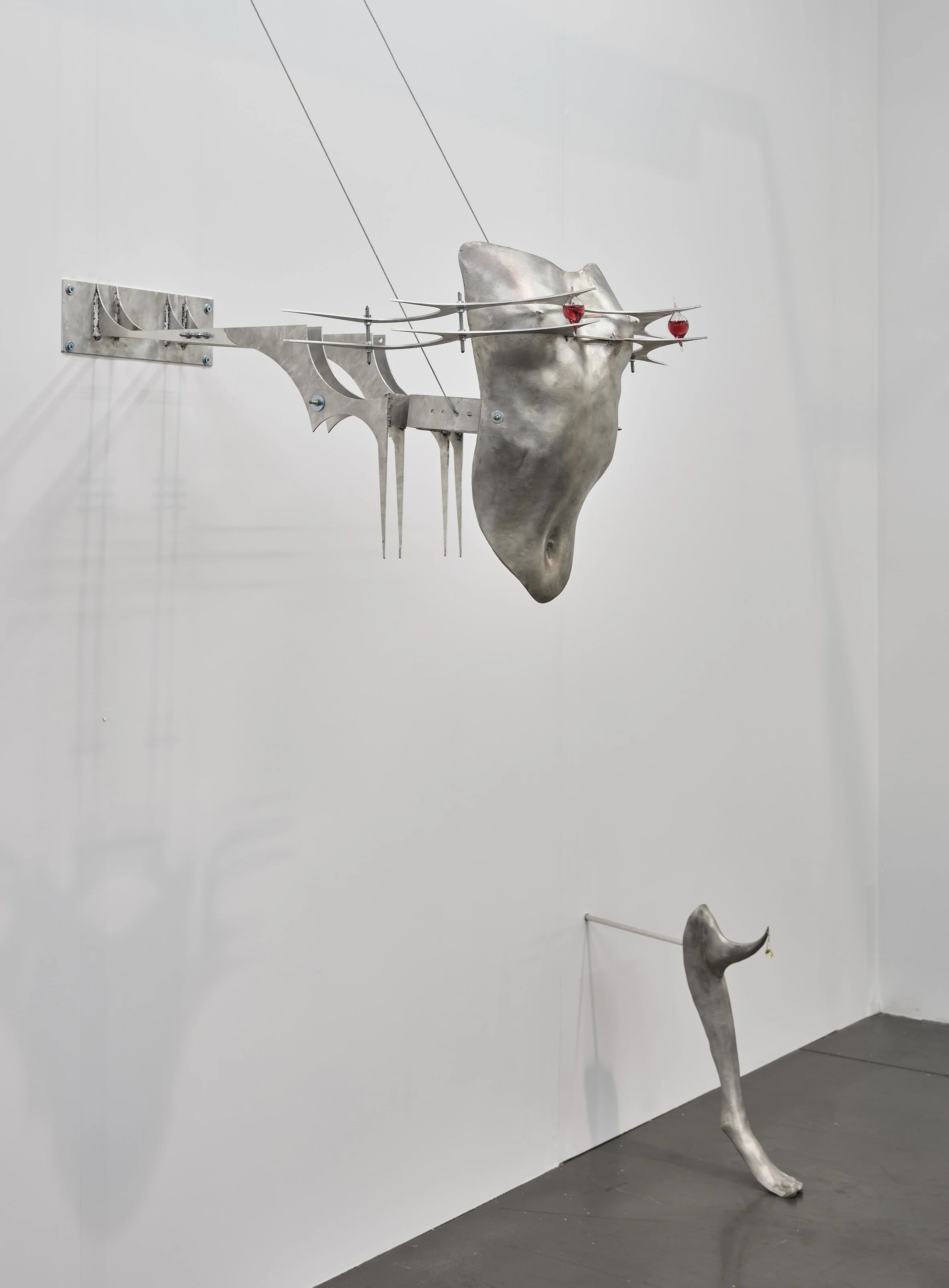
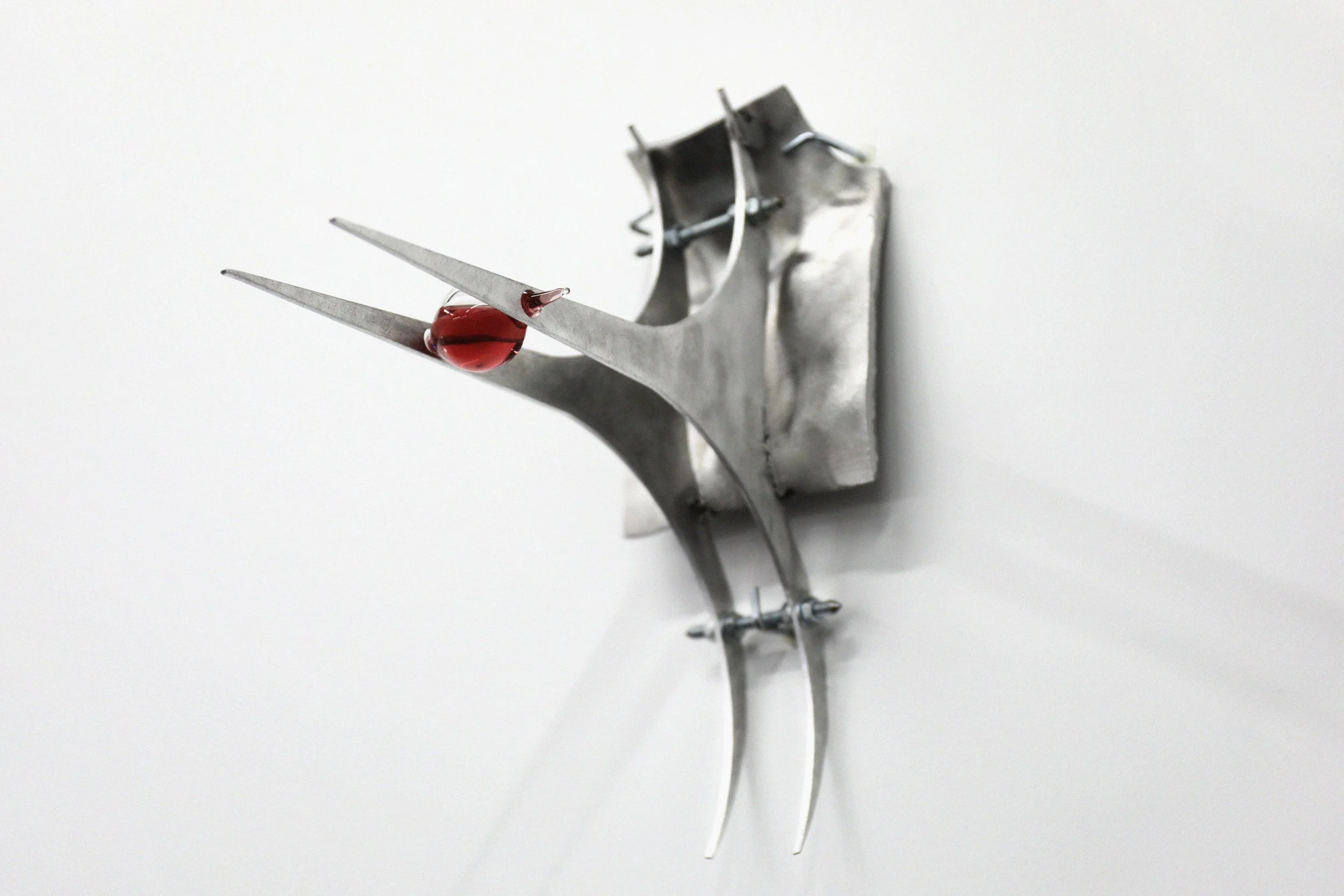
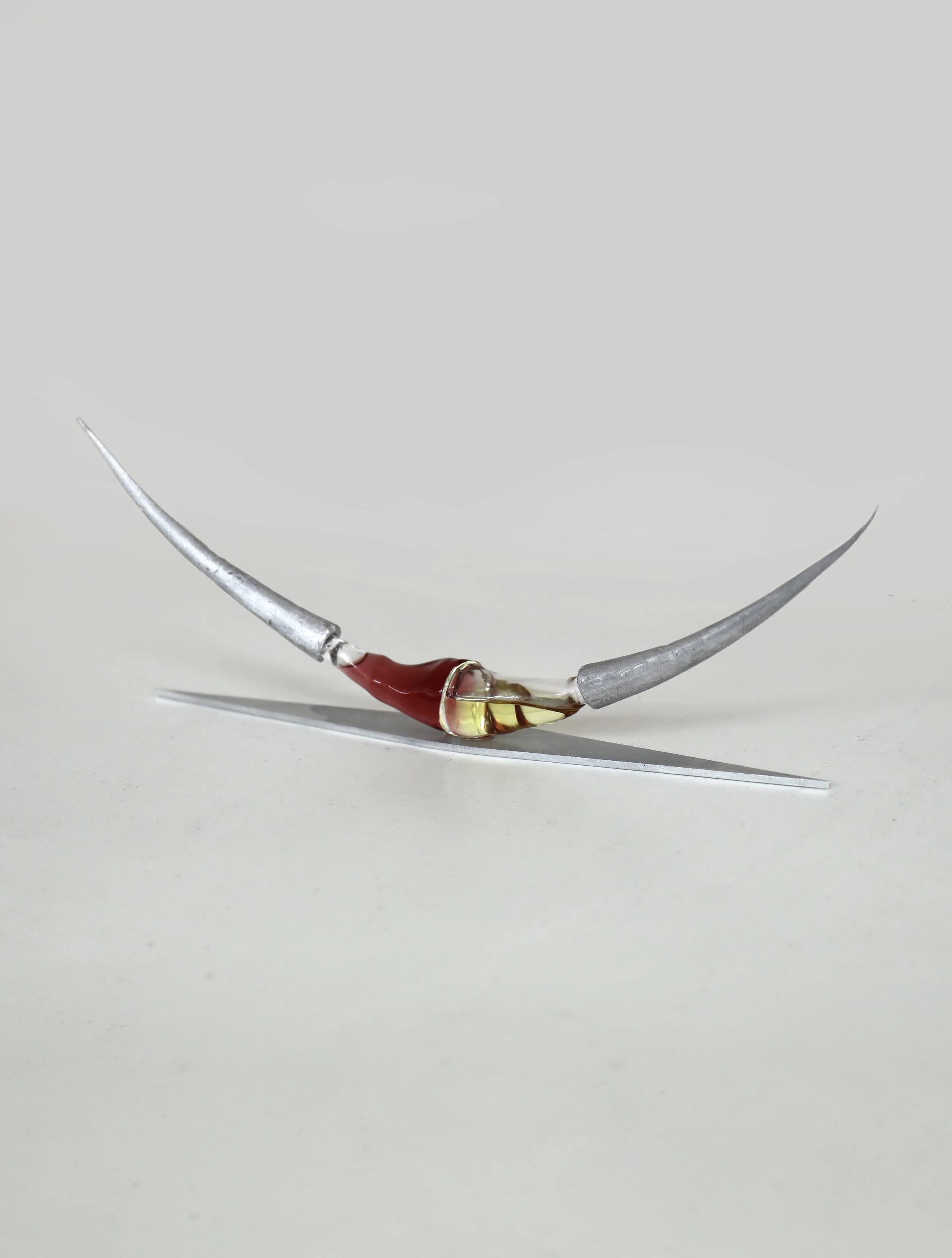
We became fascinated by the region's Thracian heritage, particularly its elaborate burial rituals, armour and personal adornments. A(R)MOUR imagines the ritual burial of a contemporary, or perhaps future, Thracian woman through a dystopian and surrealist lens. We cast fragments of our own bodies in metal and glass, combining them with sealed vessels of rose oil and gold-infused water. These liquids become agents of purification and protection, drawing on the Bulgarian tradition of protiv uroki, or protection against the evil eye.
The installation transforms W2 into a speculative burial ground, somewhere between an archaeological excavation, a shrine and a futuristic tomb. The works were also presented at Art-O-Rama in Marseille this August and at Spiaggia Libera Gallery.
VD
Tell us more about your series, Tension Studies.
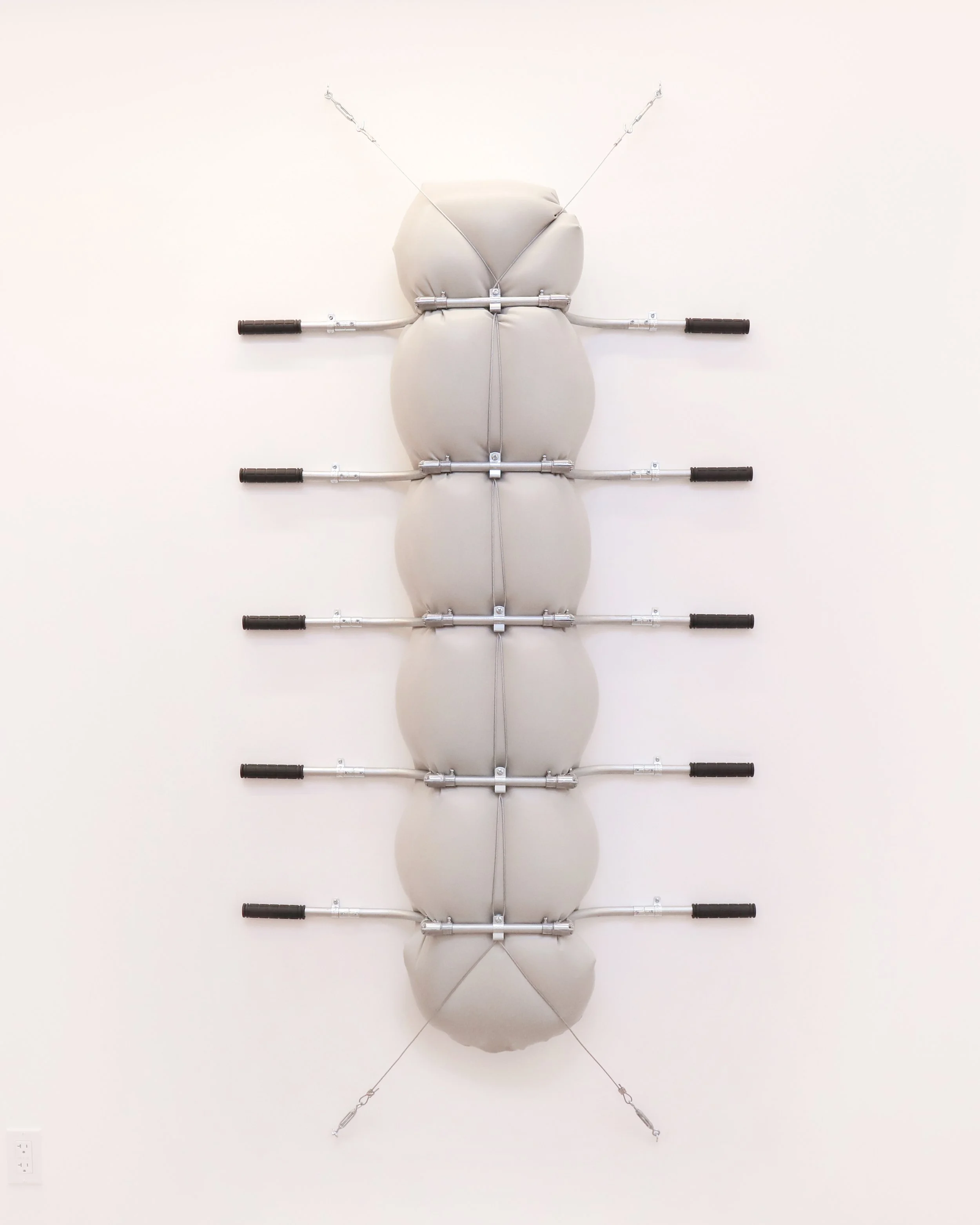
I began the ongoing Tension Studies series shortly after moving to New York last October. I started experimenting with inflatable pneumatic devices, using pressurised air, heat, motion sensors and timers to choreograph durational sculptural performances. Alongside these experiments, I developed a language of welded steel structures that support, constrain and occasionally antagonise the softer, more temperamental elements of the work.
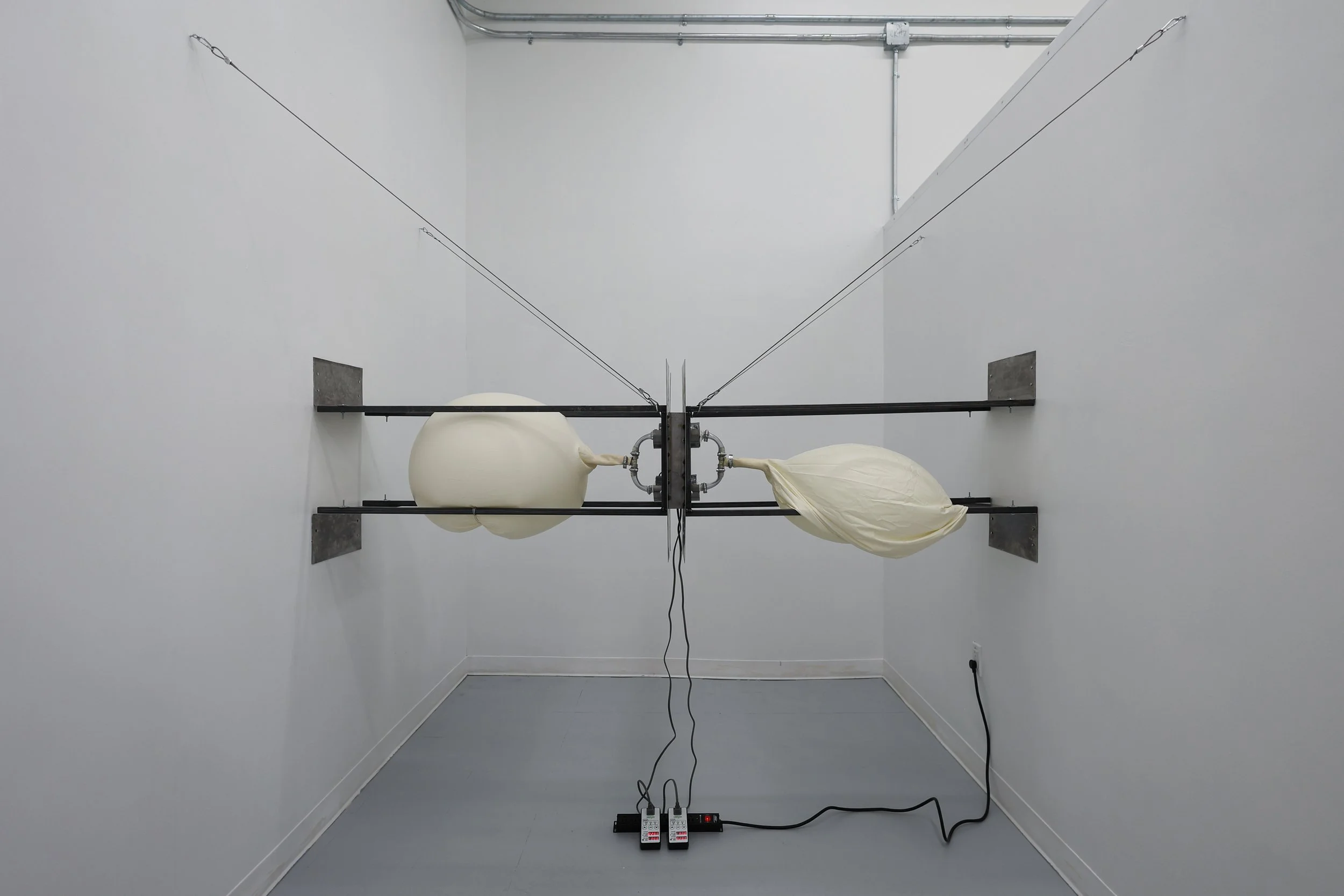
Tension Study 03 (Lovers) is perhaps the most prominent example so far. Two latex volumes, suspended within a steel beam-like structure, exchange air through a closed-loop pump system. As one inflates, the other deflates, each entirely dependent on the other's breath. Initially, their seven-minute exchange would gradually deteriorate as air mysteriously escaped the system, until neither could sustain itself. I spent a ridiculous amount of time trying to diagnose the leak, only to realise that the machine's inability to maintain this choreography had become the narrative itself. Strangely, the piece has since taken on an autobiographically prophetic quality.
In May, I presented Lovers at the Williamsburg Savings Bank in Brooklyn for The Wedding, a one-day exhibition curated by Surfacescape. Rather ironically, the machine suddenly decided to work perfectly. The balloons continued exchanging air indefinitely, transforming a story of mutual exhaustion into one of seemingly eternal reciprocity.
For this iteration, I introduced characters from my earlier performance Room at the End of the World, a satirical corporate tableau set somewhere between the sublime and the mundane. These female corporate figures became a sort of absurd technical support team, tasked with maintaining the sculpture's breathing apparatus. The whole thing felt like an elaborate ceremony dedicated to keeping a dysfunctional relationship alive.
VD
Glove Stain emerged from Market of Desire, a larger curatorial project initiated by Boyana.
Dzhikova in collaboration with CAIRN Institute of Art. I was invited for a residency in Digne-les-Bains in 2024, where I began researching the region's perfume industry, visiting laboratories in nearby Grasse and becoming increasingly fascinated by scent, distillation and the peculiar histories of perfumery.
I was particularly interested in the relationship between Bulgaria and Provence. Bulgaria is one of the world's leading producers of rose oil, while France has historically been at the centre of the perfume industry, creating a fascinating relationship between the labour of scent production and the luxury of consumption. The exhibition explored this connection through sculptural installations, distillation processes and the more intimate, often invisible histories of labour, femininity and desire embedded within perfume.
The exhibition took place in a vacant shop in Digne-les-Bains, as part of a series of artist interventions into abandoned commercial spaces across the town. For a while, the entire street smelled of Bulgarian roses. The night before the opening, I had to salvage thousands of euros' worth of rose oil that had been accidentally thrown away in the bins during the installation of the work. Let me tell ya, it was loads of fun.
The project subsequently travelled to Sofia, where the exhibitions occupied vacant shops around the Women's Market, extending the dialogue between the two cities and their different economies of production, consumption and exchange.
Talk us through your social exhibition, Glove Stain at the Bureau Moderne in Digne-les-Bains, Provence.
VD
What’s next for Veronika Desova?