Ruiji Han
F R A G M E N T S
09.07.26
IN CONVERSATION
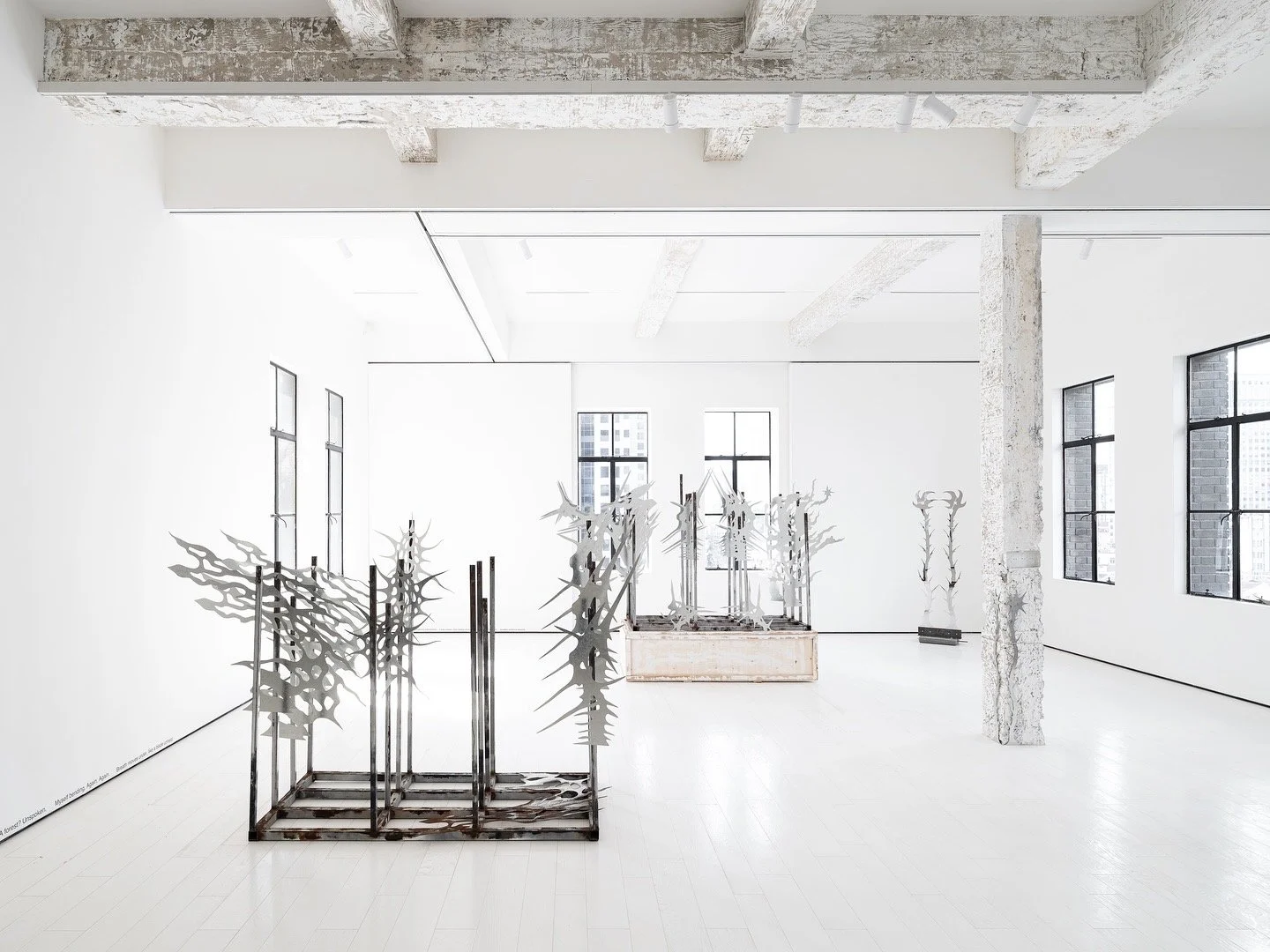
Ruiji Han works between London and Shanghai, drawn to materials that already have a history or a sense of resistance. Steel, concrete, resin, fossil and crystal coexist in Ruiji’s sculptures, carrying radically different temporalities.
For our readers encountering your work for the first time, please take us through your background.
I grew up in northern China and now live and work in between London and Shanghai. Moving between different cultures has shaped the way I think about materials and the stories they carry. I mostly work through sculpture, often using steel, concrete, resin, organic materials. I'm drawn to materials that already have a history or a sense of resistance. They never feel neutral to me, they carry memory and time. A lot of my work is informed by ancestral beliefs, shamanic traditions. Rather than illustrating those ideas, I'm interested in letting them emerge through the materials themselves. I think of sculpture as a way of testing what materials can do. How it can hold different histories and temporalities without collapsing into a single meaning.
RH
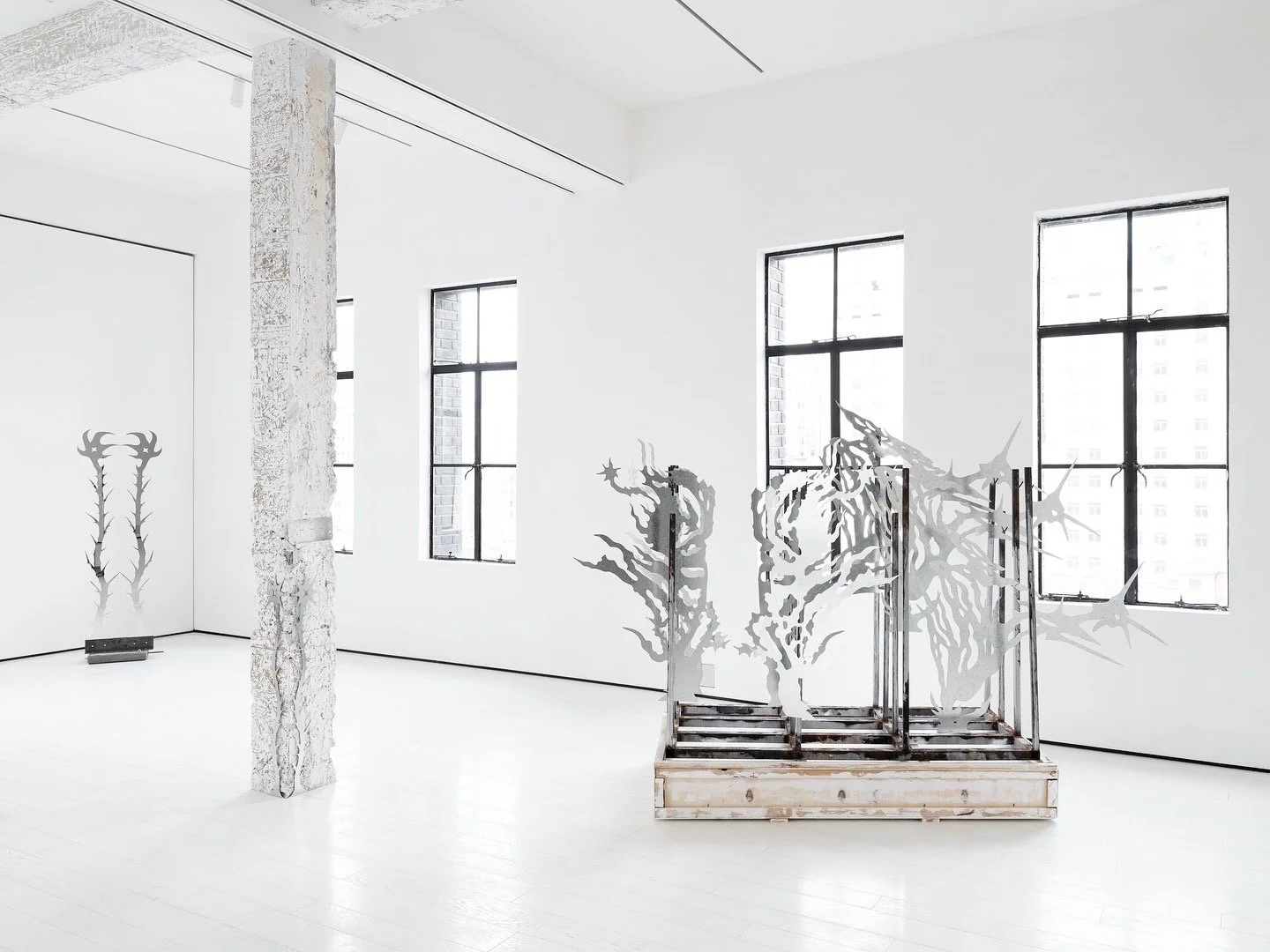
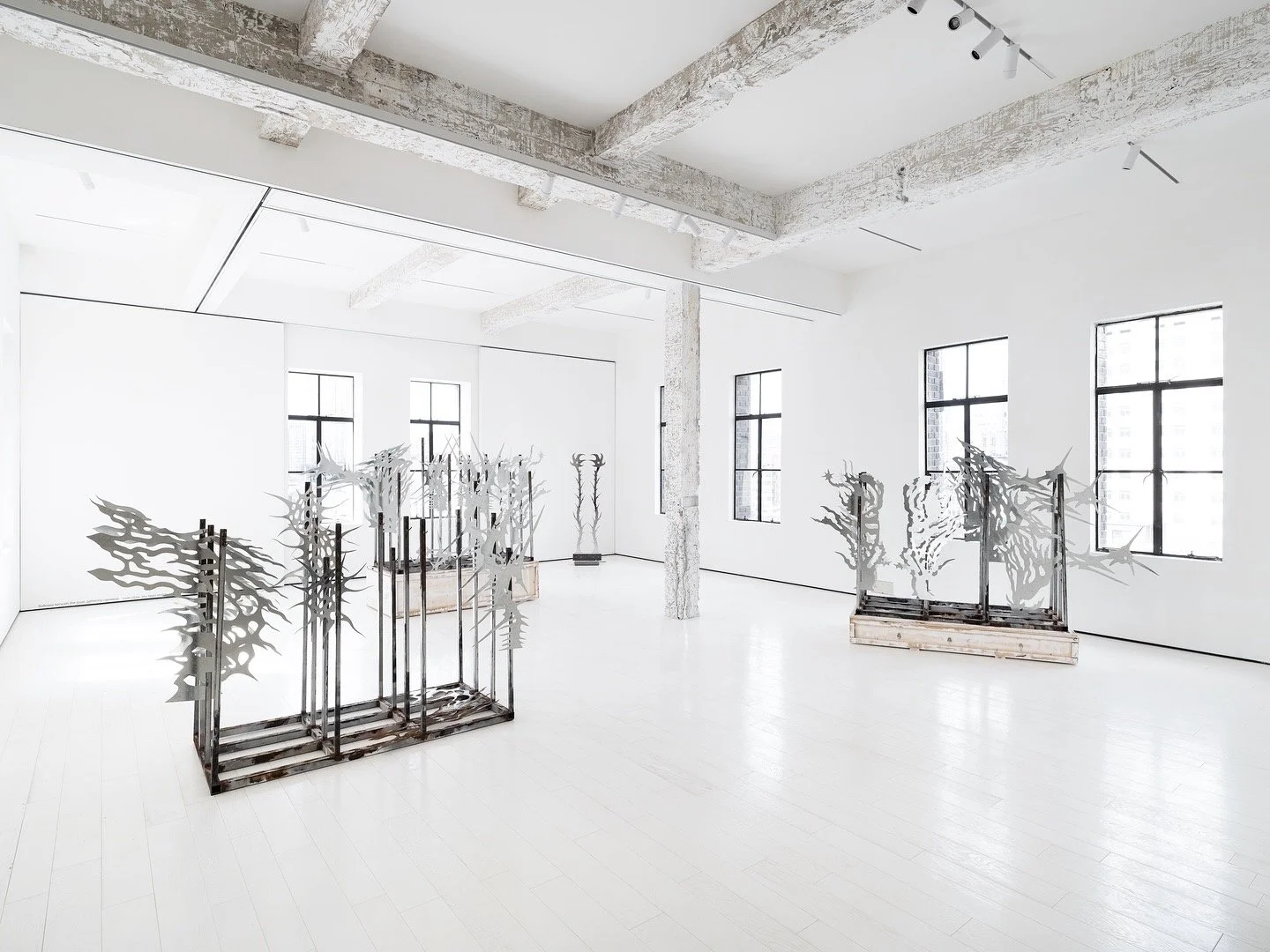
The exhibition grew out of an interest in suspension not as inactivity, but as a condition where force has not yet been directed. I wanted to think about what remains possible when function is delayed and certainty is withheld. Rather than presenting a fixed narrative, I approached the exhibition as an environment in which different temporalities and material states could coexist.
Industrial structures, traces of labor, ecological processes, and geological time were allowed to overlap without collapsing into a single meaning. Looking back what interests me most is that the exhibition never arrived at a conclusion. It remained open and I think that openness became the work itself.
A Blade Unheld was your first Shanghai solo exhibition. Can you tell us more about it?
RH
Where do you draw inspiration from?
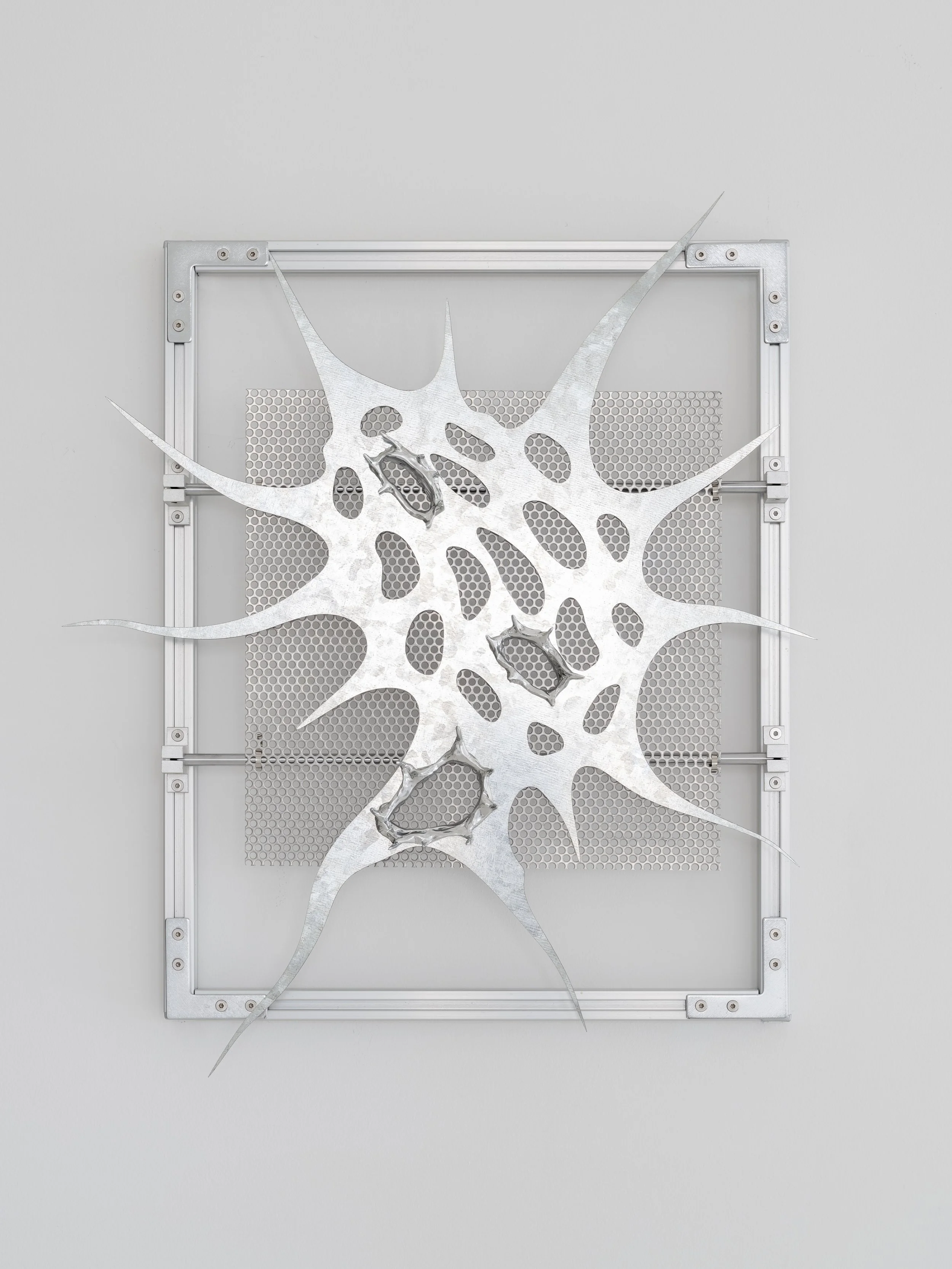
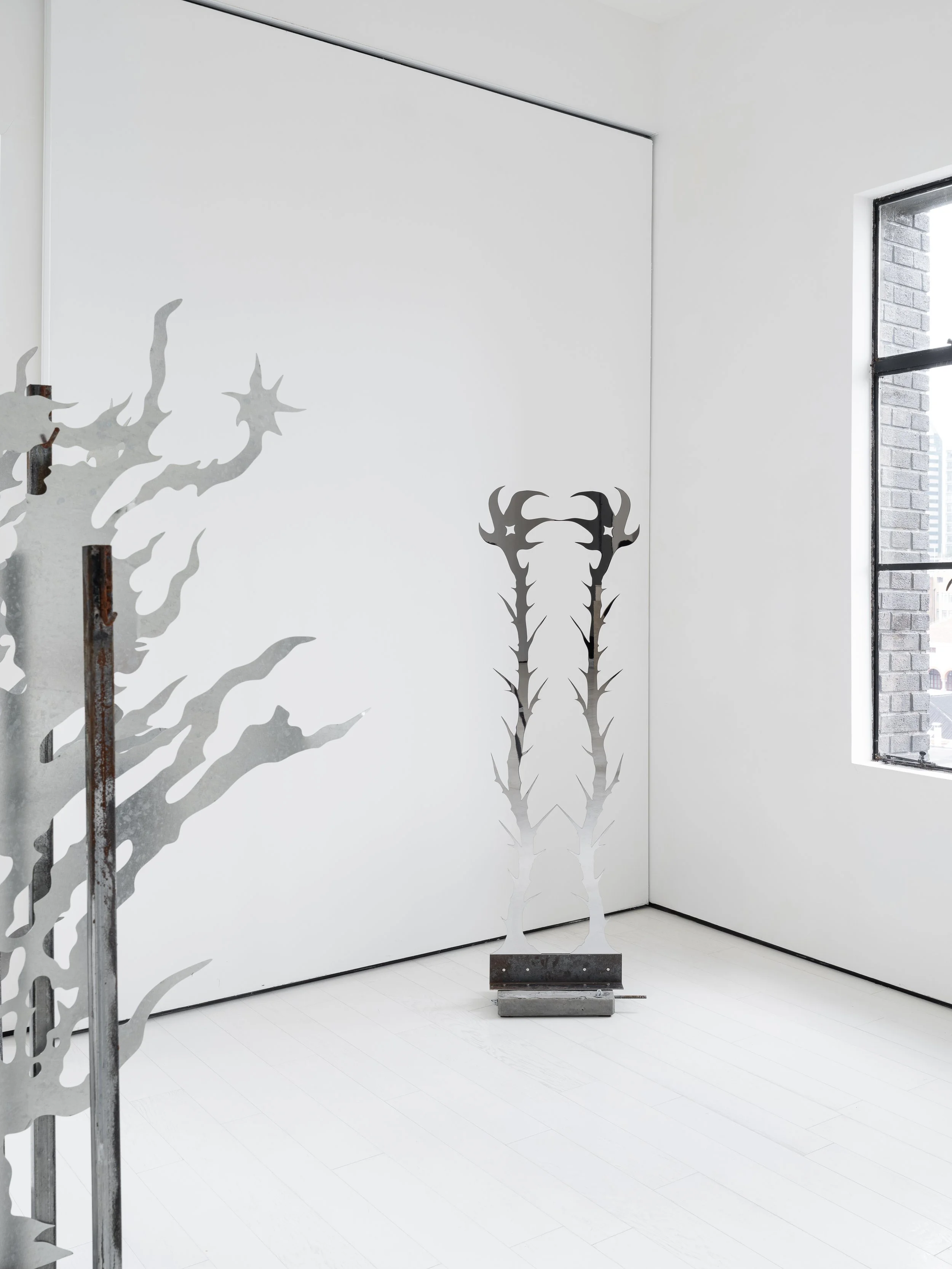
Poetry is very important to my practice, but it isn't where the work begins. Ideas usually emerge through making. The studio is where theory encounters resistance. Welding, corrosion, cutting, casting these aren't simply techniques but ways of thinking through material. A piece of steel carries its own history; resin doesn't just preserve an object, it alters its relationship to time.
I'm interested in the point where concepts stop functioning as explanations and begin to transform through contact with matter. The work develops through that negotiation, where material often leads the thinking rather than follows it.
RH
Is there a piece you’re particularly drawn to right now?
I keep returning to Defence of Deep Time and the Cryo Layer series.
Defence of Deep Time compresses industrial and geological time into a single structure, where steel, rebar, fossil and crystal coexist in tension. I'm interested in how these materials carry radically different temporalities. Steel and concrete belong to the accelerated logic of construction and modern infrastructure, while fossils and raw crystals point toward a timescale that far exceeds human history. Bringing them together isn't about creating a contrast, but allowing those different durations to occupy the same physical space.
The work also questions the apparent permanence of infrastructure. What appears stable is already entering a process of erosion, sedimentation, and transformation. Rather than separating the industrial from the natural, I'm interested in the point where they become inseparable. Where construction begins to resemble geology, and geology begins to read like an archive of human intervention. The Cryo Layer works, by contrast, are more intimate. They seal objects like gloves, tires in resin, suspending them as frozen fragments of labor and memory.
RH