
Manuel Goetz
F R A G M E N T S
20.10.26
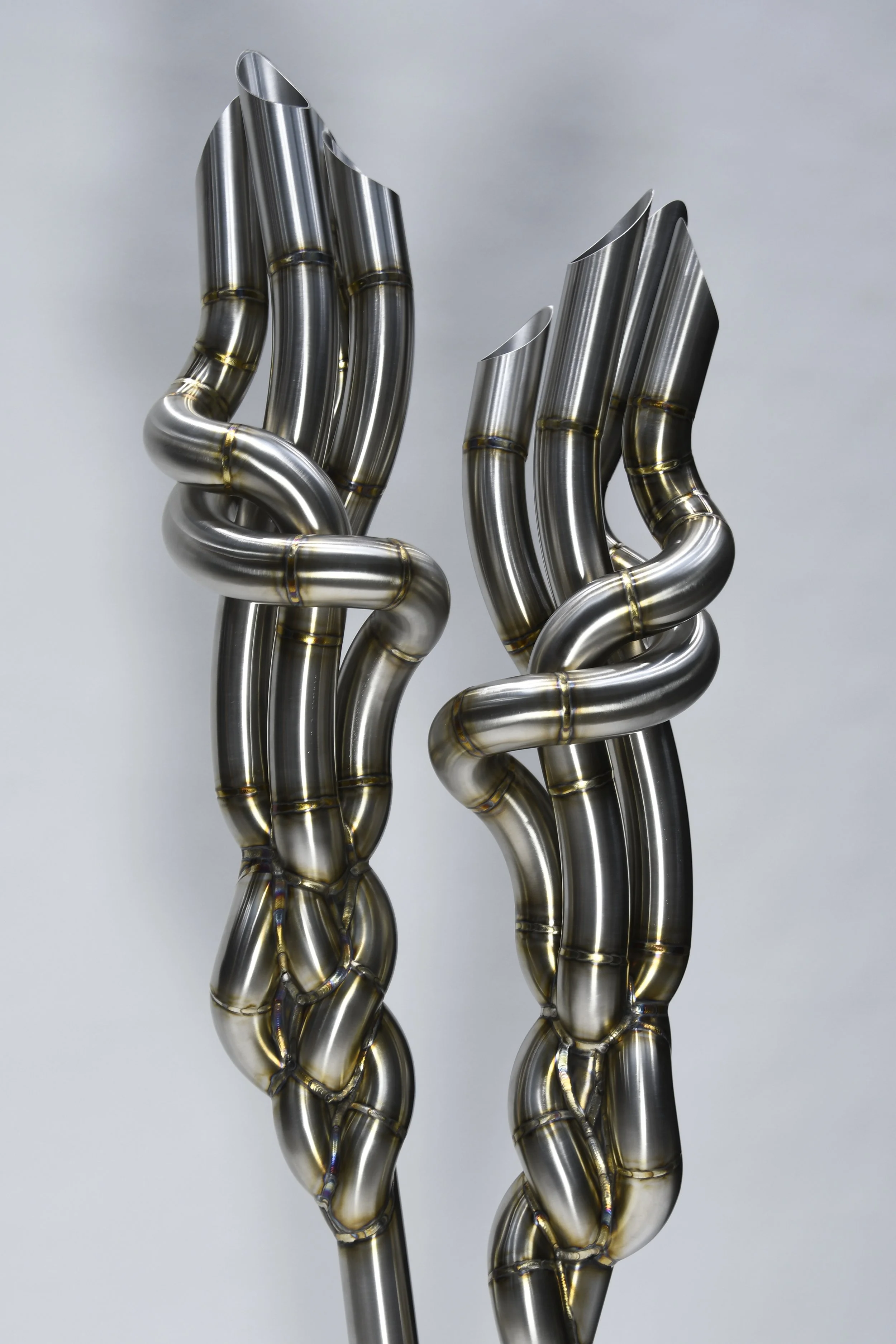
Berlin-based sculptor Manuel Goetz draws on a background in metal technology and industrial design, shaping metal into organic forms. Each sculpture is simultaneously strong and fragile, playing on the idea that everything can become dysfunctional past a certain point.
For our readers encountering your work for the first time, please take us through your background.
My name is Manuel Goetz, and I am a Berlin-based artist. I was trained as a metal fabricator from a young age in Munich, Germany. I gained experience in industrial and construction mechanics at various companies. I moved to Berlin to obtain my high school diploma in metal technology, later gaining a Bachelor's degree in Industrial Design. During this period, I worked as an artist's assistant for Anna Uddenberg, gaining insight into contemporary sculpture. I started sculpture in 2024, and I am currently working part-time as the metal workshop manager in the sculpture department at BBK Berlin.
MG
Where do you draw inspiration from?
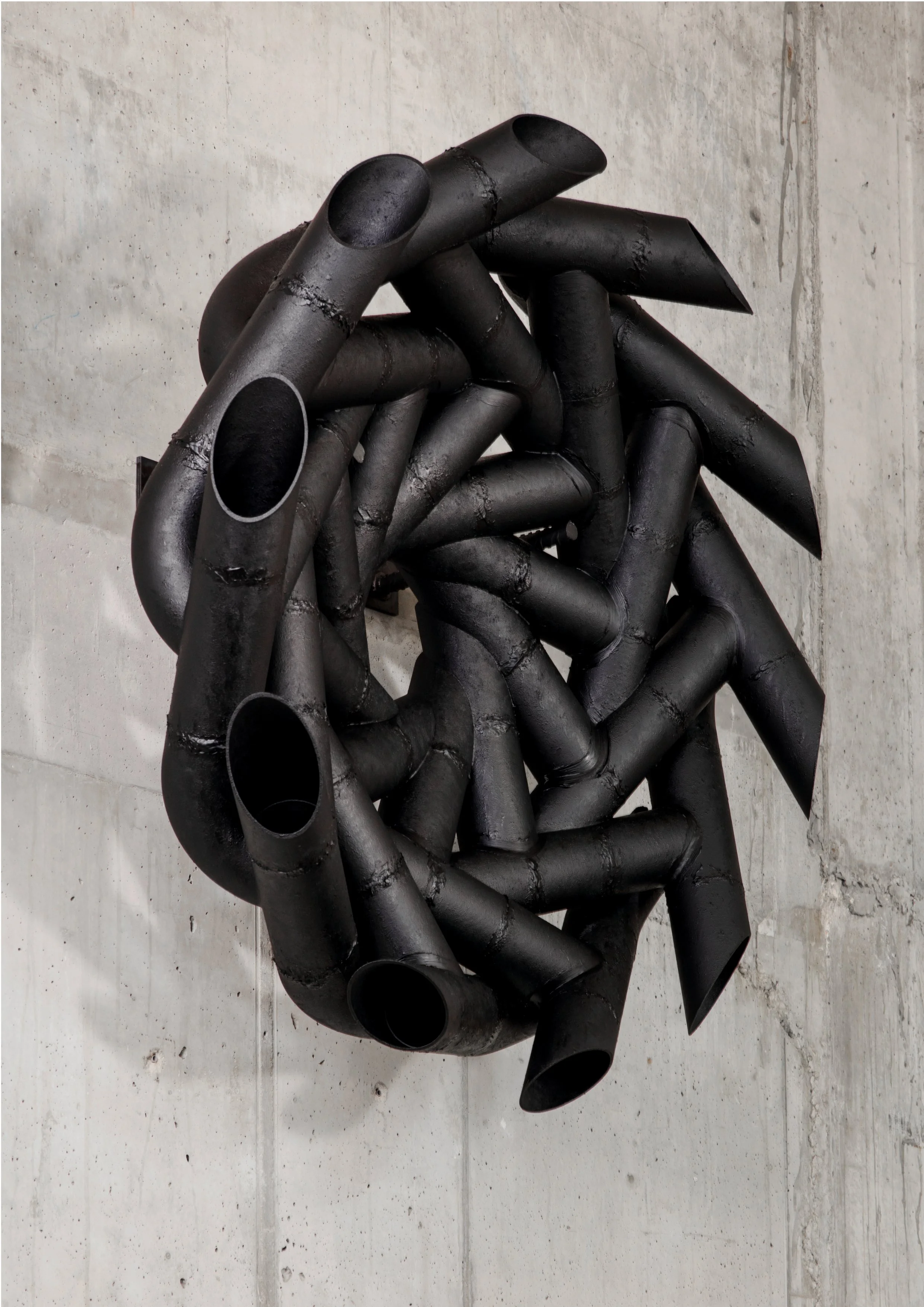
I am drawn to objects that push the boundaries of performance, the small gap between technical precision and failure. The tension between highly refined engineering and the potential for failure fascinates me, as does the idea that they are designed to fail in order to determine where the boundaries can be pushed further. This draws me to areas such as aerospace and engine building, motorsport exhaust manifolds and roll cages, surgery and anatomy, structure and tension. This leads me to my strong interest in form, proportion, balance, and movement, which gives my work a visually strong, almost decorative dimension. I am interested in the human body, which has been trained, modified and enhanced for peak appearance and performance, as well as the structures within it: muscles, bones, fibres. In my body of work, these organic forms merge with mechanical elements to create objects that exist somewhere between body and machine, being fluid in ambiguity.
MG
Can you tell us about your work in the exhibition, Orbital Decay, at the ACUD Gallery, Berlin?
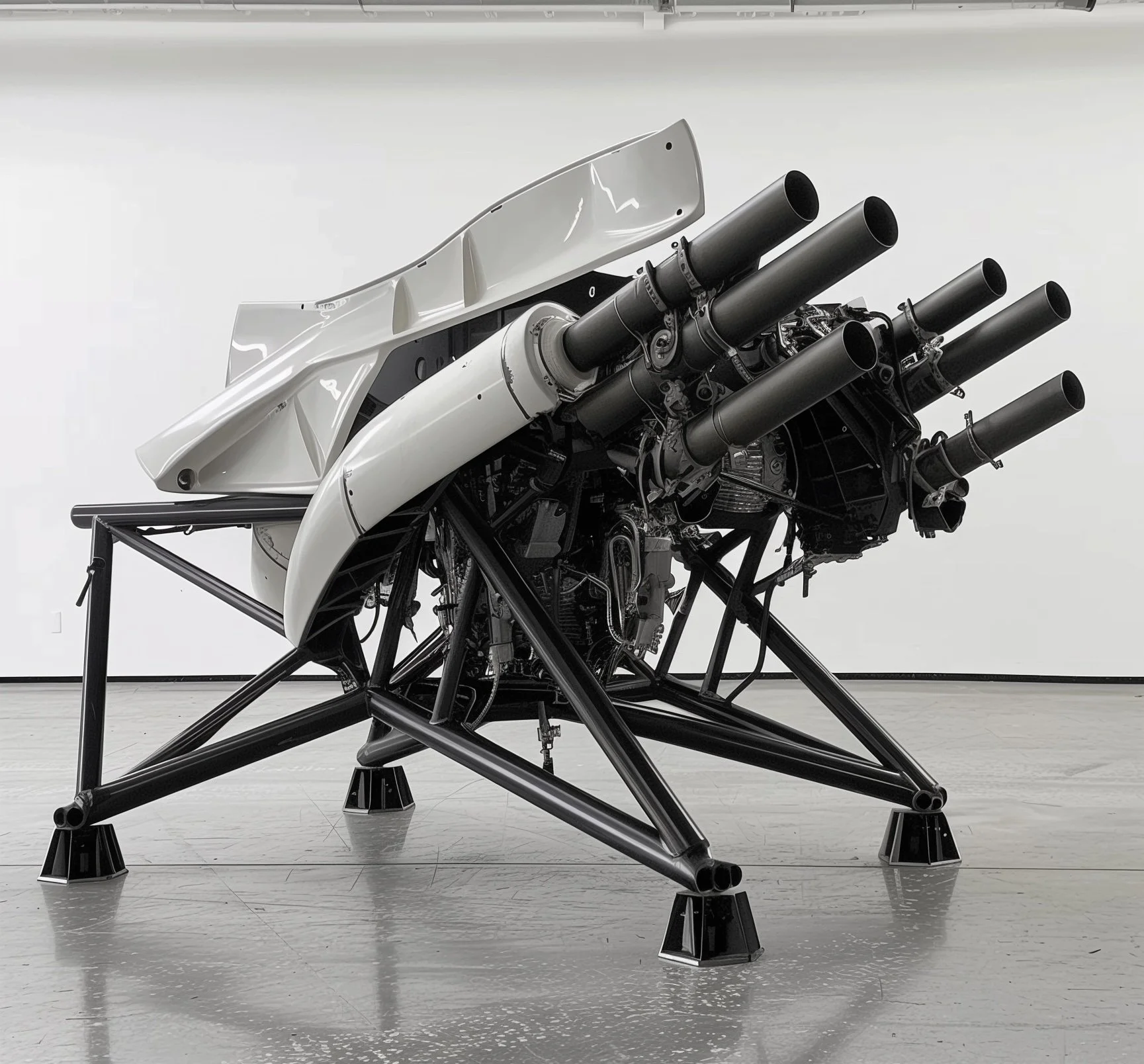
The ACUD show, ORBITAL DECAY, curated by Gabriela Matuszewska, opened in September. There are three sculptures on display, each in a different medium. The largest sculpture will only be on display until mid-October. The exhibition explores the ideas of instability and transformation, and the gradual loss of structural integrity. I am interested in the moment when something that appears functional and controlled begins to shift towards ambiguity or dysfunction. The sculptures occupy the space between construction and dissolution, and between mechanical function and autonomous form. I invite viewers to experience the sculptures as both physical structures and forms that suggest something beyond their apparent function.
MG
Tell us about the work you showed at Caged Movements, at the Nadan, Berlin.
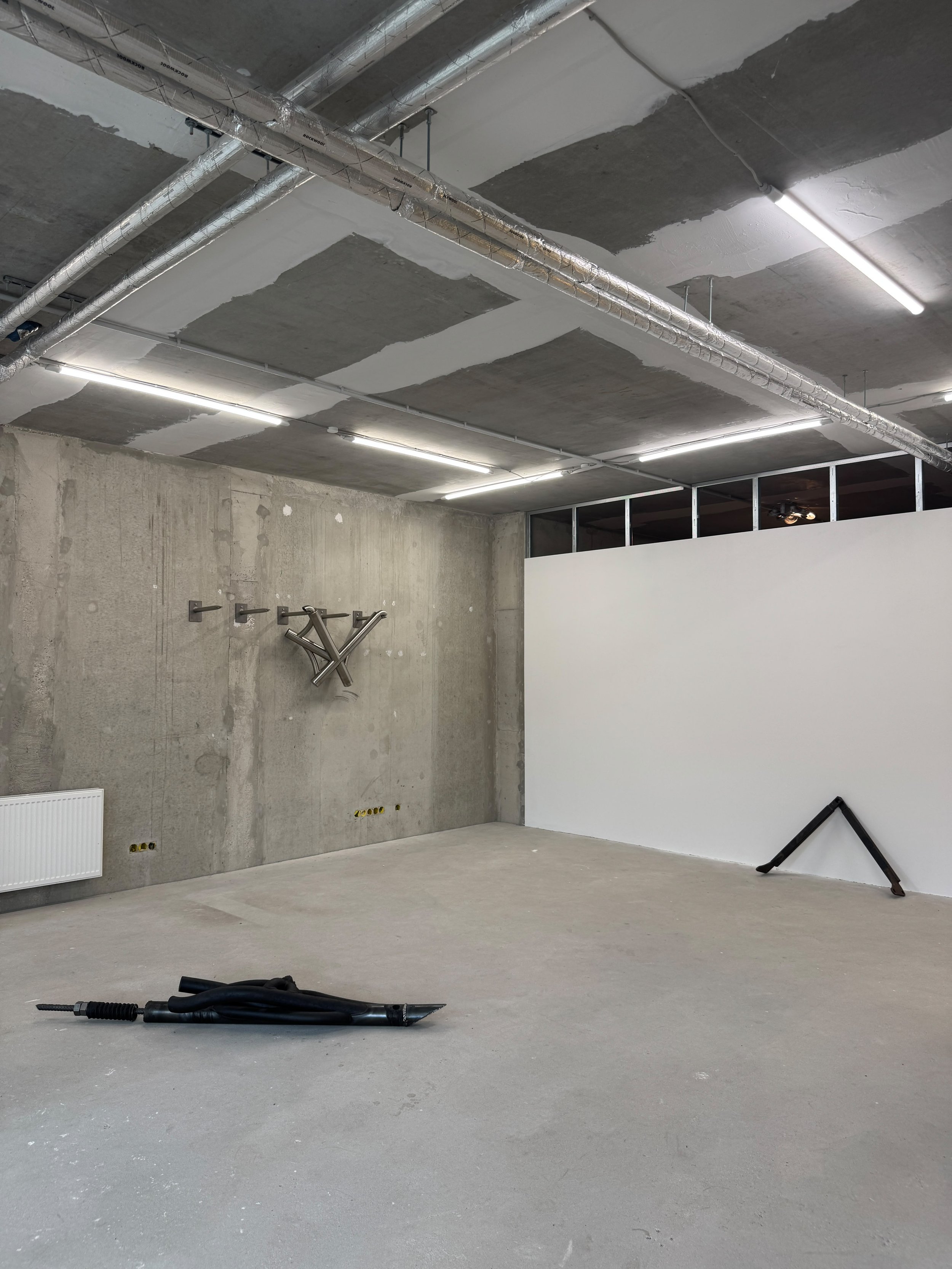
I tend to work with the material rather than starting with a fixed idea, so the meaning of a piece often becomes clear to me afterwards. The works I showed at Caged Movements were created intuitively. I was following form, tension and balance before I could articulate what they were about.
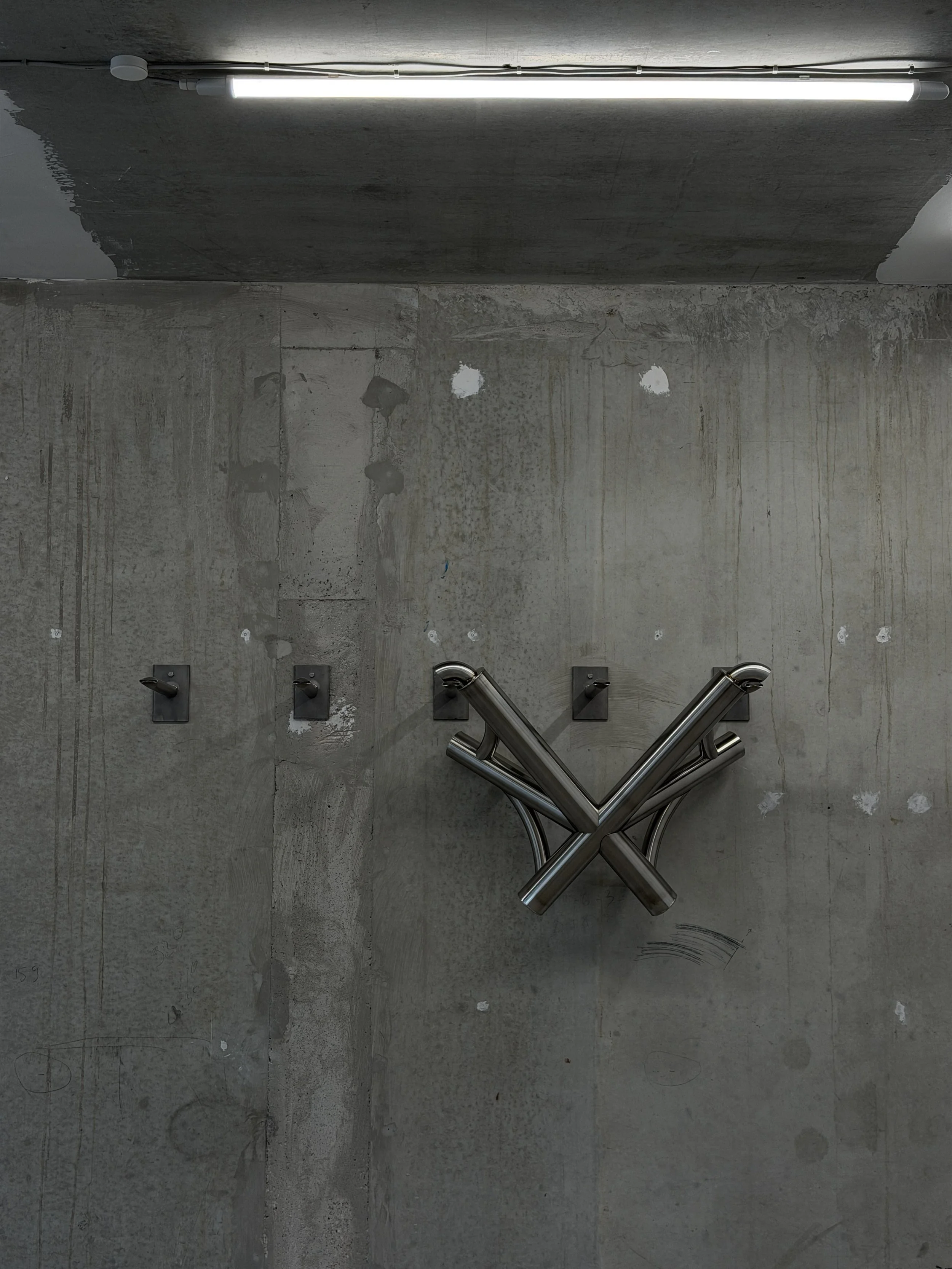
The pipe is what I keep circling back to. A pipe's purpose is to carry something; to route a flow, a force or a charge from one point to another. When I weld them together, they begin to take on a physical presence: they stop looking like hardware and start looking like organs — the vessels and conduits of a body — the parts that carry everything that passes through them. A bundle of tubes becomes closer to a circulatory system than a figure: an anatomy of flow. That's where the exhibition's theme met my work. These aren't bodies in the obvious sense; they're the channels inside one — movement made solid and held within a structure that contains and sustains it.
What I find most interesting is how differently people interpret them. Some viewers tell me a piece reminds them of a back, while others see a pelvis or an écorché torso stripped back to its structure. Just as often, someone will ask which machine the element came from, as if it had been cut out of a larger engine. A friend described the work as looking like part of a war machine — something with the aesthetic of a weapon: extremely precise, beautiful to look at and unsettling for that very reason. He described the discomfort of being drawn to something that resembles an instrument of force and then questioning why he finds it beautiful.
I'm interested in the tension between something that appears functional and something that feels unstable, dysfunctional, or psychologically charged. I think this relates to my sculptures, which often exist somewhere between stability and instability, control and failure. I'm interested in using materials normally associated with function and construction and shifting them into a more ambiguous sculptural context.
I'm interested in the body, but not necessarily in representing it directly. Mechanical structures can suggest joints, limbs, tension, or physical restraint.
MG
What’s next for Manuel Goetz?