
Lulu Wang
F R A G M E N T S
15.10.26
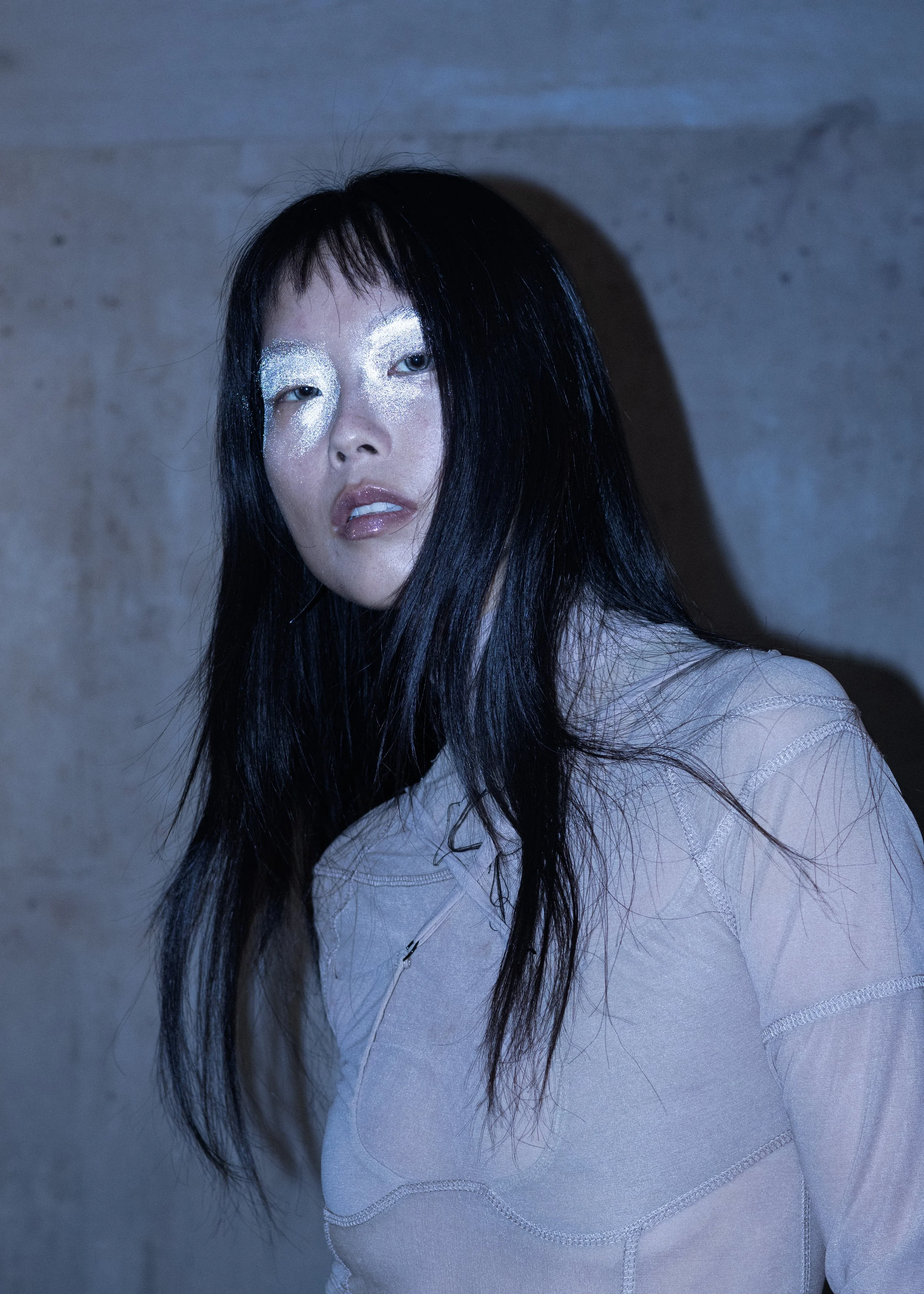
Lulu Wang’s interdisciplinary practice brings together sculpture and movement performance to explore how identities are established and how they transform. Lulu is also the co-founder and the creative director of Diasporas Now, a live art platform championing the global majority through cultural programming and alternative education. Recently, she collaborated with THE UNSEEN Beauty on her project Prompted Angel, which she is now extending into a multi-channel performance piece.
For our readers encountering your work for the first time, please take us through your background.
I’m an interdisciplinary Chinese artist based in London, my work spans performance, sculpture and digital visuals. I moved to the UK from Shanghai in 2018 and began my practice through a mix of movement, experimental materials, technology and worlds I grew up loving: anime, gaming, fashion, and sci-fi.
My practice is very body-led, and I don’t come from a conventional dance route. I taught myself through making: moving, sculpting bodies, playing with forms and technology, and following images that felt emotionally true before I could always explain them. I’m interested in exploring the uncertainty between the physical world and what I see from it.
LW
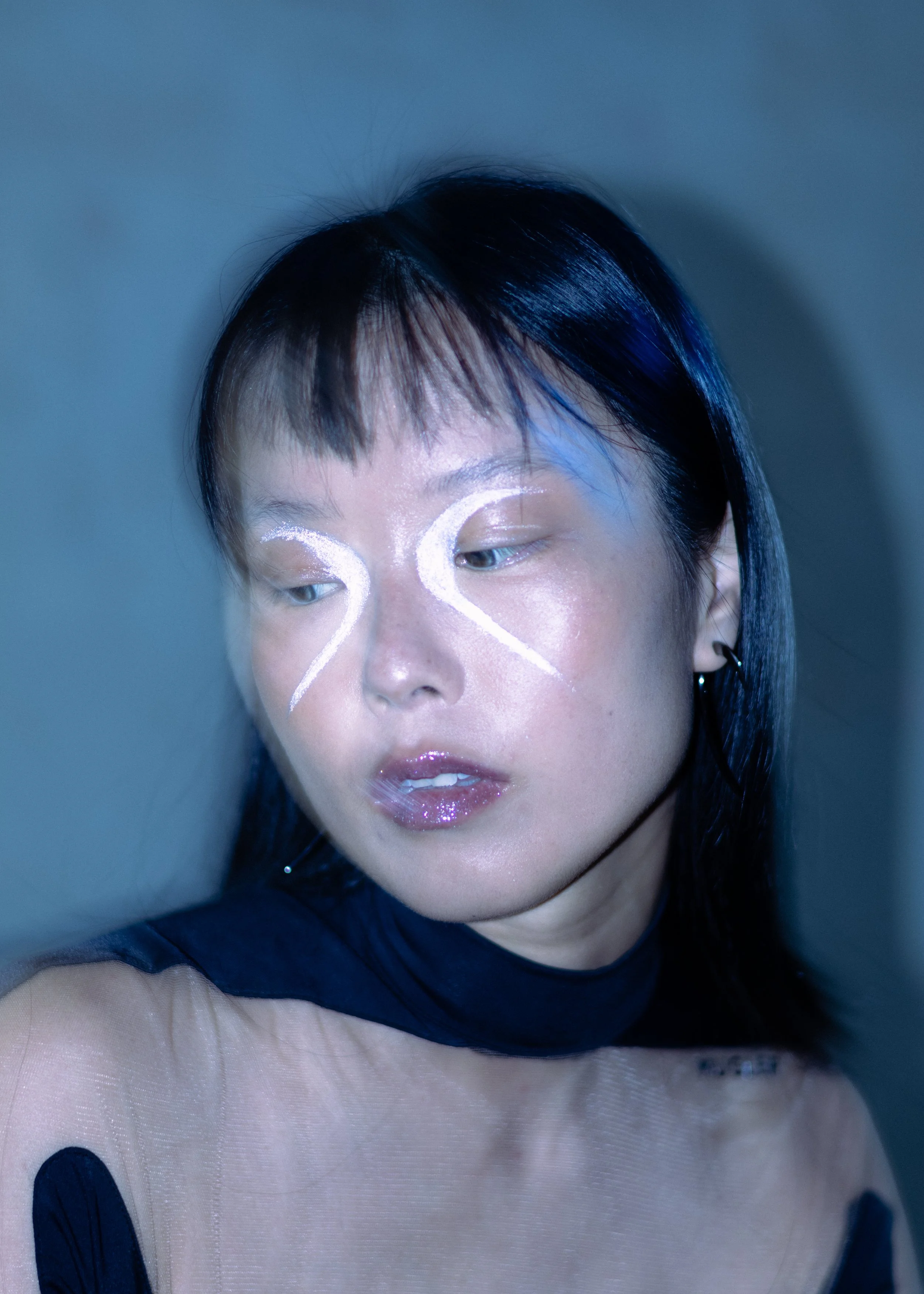
Can you tell us more about your recent installation, ‘Human Puzzle’?
Human Puzzle was a live installation and performance exploring identity as something constantly being assembled. It brought together long-duration performance, 3D-printed modular sculptures, and performance film.
I was thinking about the process of transformation to become tangible. As a migrant, as a woman, and as a human being, the definition of self is generatively reshaped by
our living experience. I asked what if identity is not a fixed image to achieve, but a moving puzzle that is forever ongoing? The performers and sculptures kept shifting their relationships to each other, so the audience could witness bodies becoming landscapes, tools, companions or unfamiliar creatures.
The sculptures were like frozen moments or speculative fossils: forms caught mid-transformation. I designed and 3D-printed them as modular, tactile fragments that could be seen as a whole landscape of architecture or alien nature, while people walk around them, the ways of seeing also turning this still moment dynamic. They became companions, extensions and obstacles of living bodies, creating a shifting relationship between human experience and its material double.
It was important that the work stayed unresolved; it created a space for transformation as a state of being.
LW
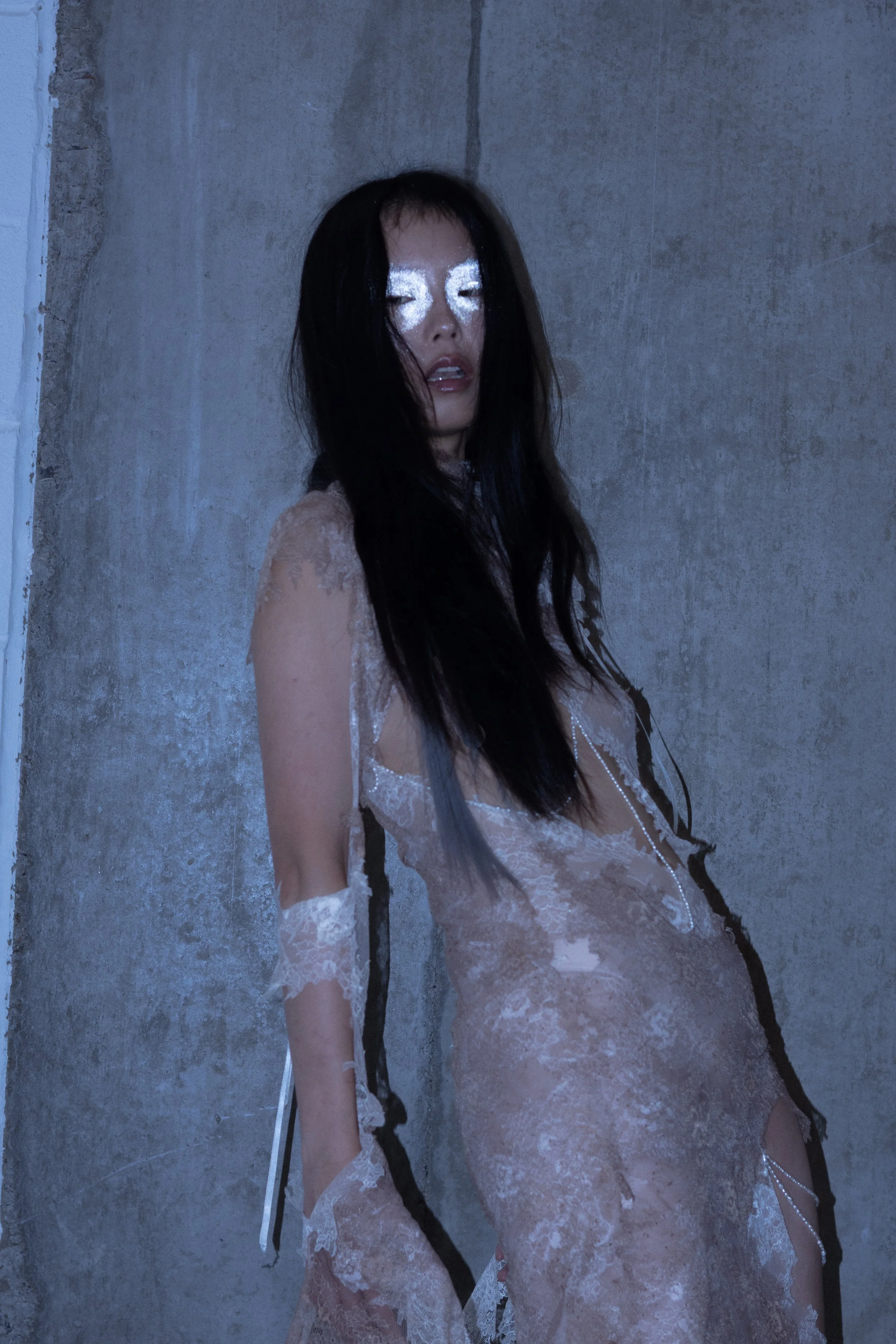
You’re also collaborating with THE UNSEEN Beauty for your new project, Prompted Angel. Could you tell us more about this project?
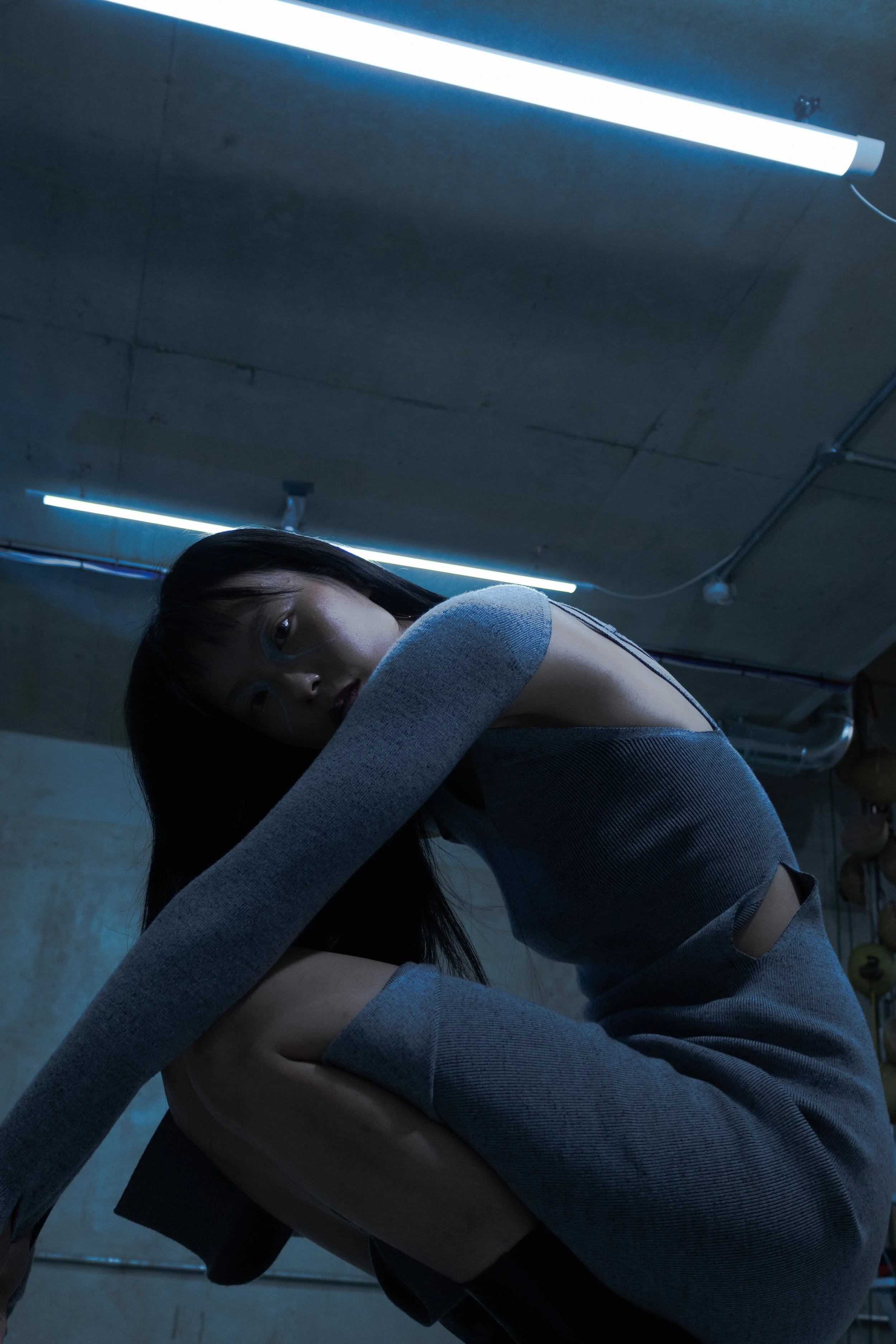
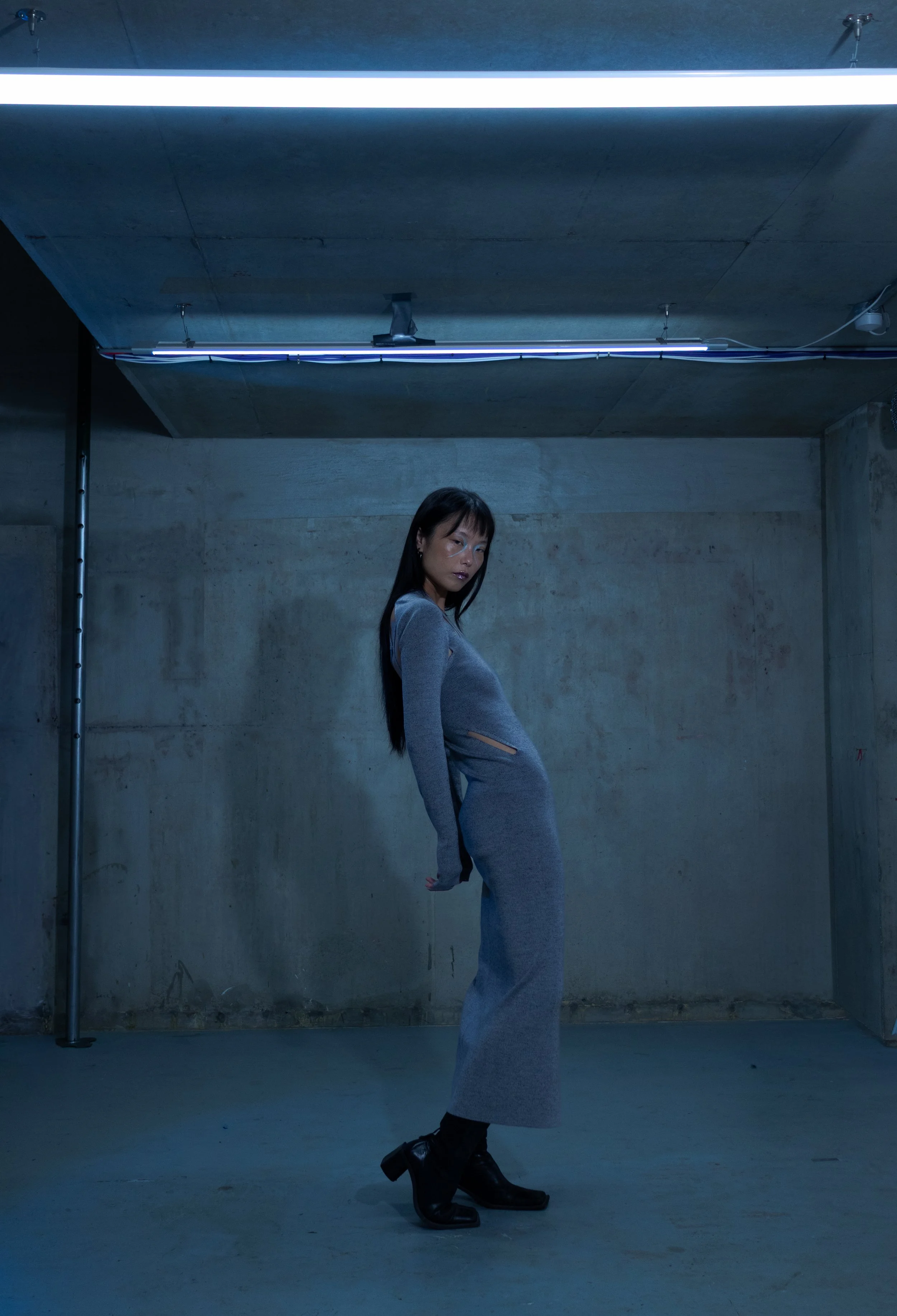
Prompted Angel is a new visual project exploring the body as a living data centre that generates alter characters: an archive of memory, cultural inheritance, encounters and desires.
I wonder where all these things go when this body disappears. Perhaps another version of us is already being generated somewhere else. I treat my physical body as a character base: the same body, but under different prompts, it can become a different self in a different world. The figures that emerge sit somewhere between avatar, angel, self-portrait and future creature. They are not invented identities placed onto me; they are versions of me retrieved from what my body already carries in posture, gesture, tension, rhythm and instinct.
While I was building the story and thinking of how the idea of ‘data materials’ should be presented throughout the physical appearance, THE UNSEEN Beauty and Todd approached me. I was inspired by the Spectra shadow cream – using the reflective silver sparkles to embody the ‘angel DNA’ that came out of characters. I worked with
Dasha Taivas and photographer Detroit Law to realise the looks. The collaboration felt very natural because makeup is part of that transformation, and I like to push the body into a surreal and heightened space and multiply the self. An angel is a creature we have never seen, yet somehow recognise through stories and imagination. I like the idea that perhaps we might appear the same way to another world: strange, invisible, but still somehow familiar.
LW
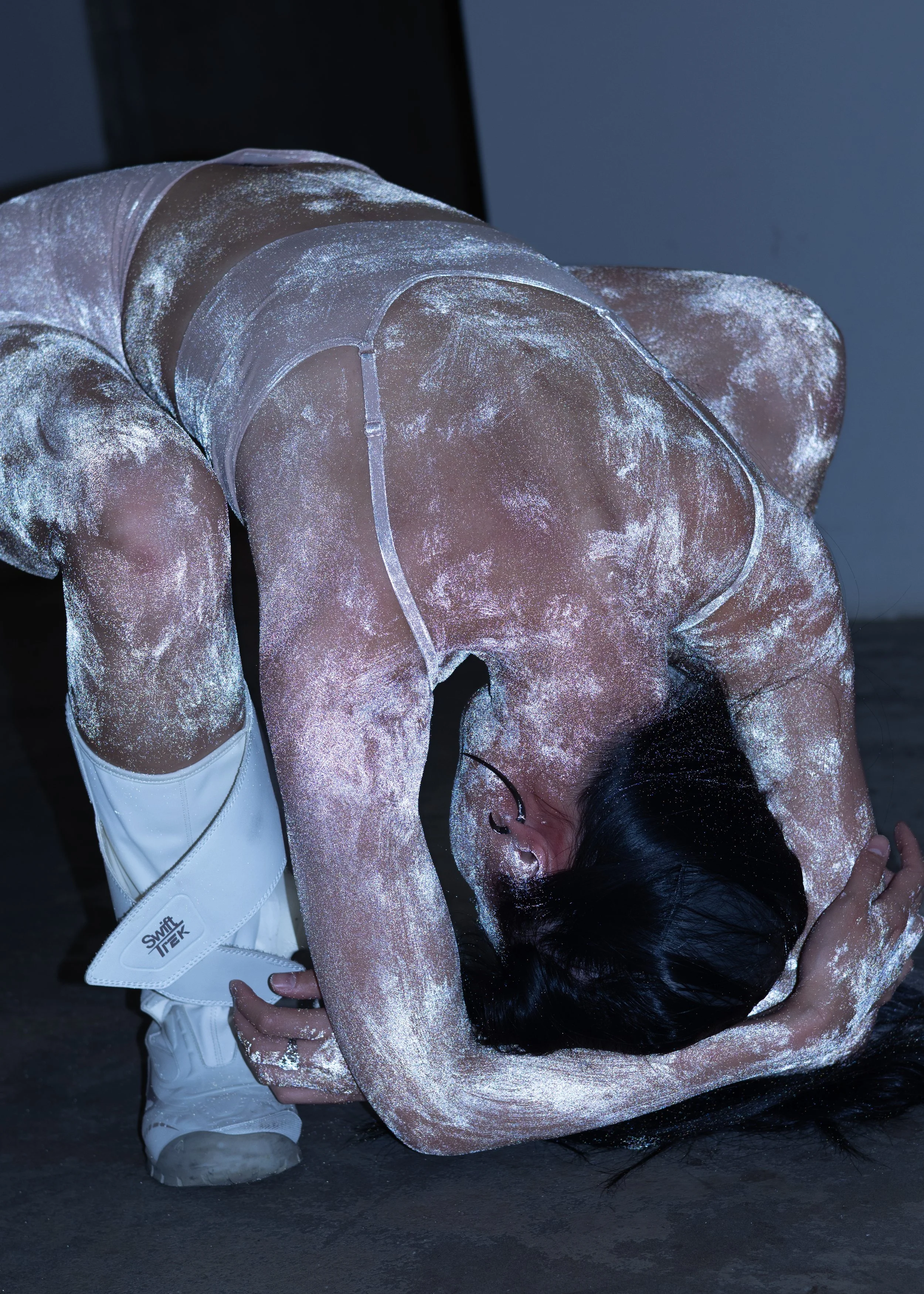
It seems like a lot of your movement art centres around physical contact, interactions, and intertwined limbs. These interactions are also mimicked in many of your sculptures. What is the significance of human contact in your artwork? What does the combination of movement and sculpture bring to your practice?
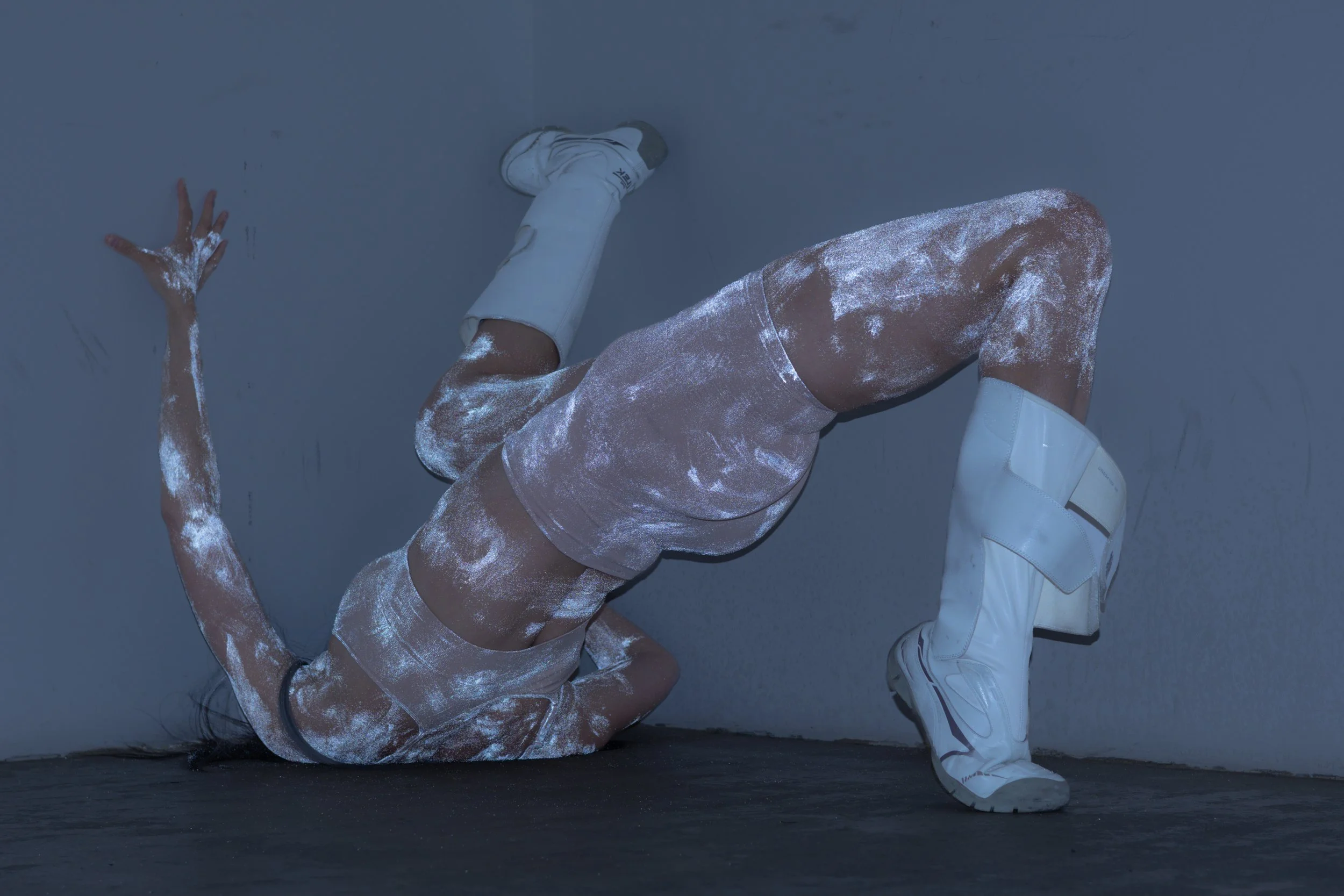
I’m obsessed with the moment when bodies move and become something more than themselves. A hug, a fight or someone leaning on you can be gentle, intimate, heavy, awkward, intense and comforting, all at once. I’m interested in that unstable spacebetween care and control, closeness and resistance.
Much of my work views the body as a site where belonging is negotiated. Contact makes that visible: who is holding the weight, who is following, who is trying to escape, and the balance can break.
My sculptures come from the same place. They are like bodies paused mid-mutation: limbs tangled together, fragments becoming furniture, creatures, armour or little architectures. I think of them as alien landscapes. Performance gives them a pulse; sculpture leaves a dynamic trace after the bodies have disappeared.
LW
How do you think being part of such a diverse community has affected the way you approach your own artistic practices?
Diasporas Now has made my practice more expansive and collaborative. I started it with RIEKO and Paola Estrella because we wanted to make a space where we could find our people. Over the past five years, it has grown into a community that constantly surprises me. I am surrounded by artists with different histories, aesthetics, languages and ways of making, and every encounter opens another door. It has encouraged me to follow connections instinctively. Movement can sit with sculpture; technology can meet ritual; a club night can become a site for care, performance and collective imagination. I love the friction of bringing things together that are not supposed to belong in the same room, then seeing what kind of new language appears.
It has also made me think of making conversation. My work might begin with a body, a gesture or a strange image, but it becomes richer when another artist brings their sound, movement, design, story or perspective into it. Diasporas Now has shown me that collaboration and exprementation are the keys to let creative voices travel further.
LW
Where do you draw inspiration from?
My inspirations are kind of all over the place. I’m a gamer and I have ADHD, so I’m always picking things up from different worlds: a character I’m obsessed with, the way someone moves on the street, a weird silhouette, a sound, a tiny gesture that somehow stays in my head.
I grew up with anime and games, so I think in characters and worlds quite naturally. That mixes fashion, sci-fi, experimental music, digital culture and my Chinese heritage, especially ideas of flow, balance and transformation.
I don’t really start with a neat concept, but I find my way through working and playing around it. Usually, there’s just one strange thought that I can’t get rid of, then I keep feeding it — bodies, images, objects, sound, styling — and build a world around it. I like when things glitch, that’s usually where something unexpected happens and excites me.
LW
What’s next for Lulu Wang?