Denis Macrez
F R A G M E N T S
09.09.26
Denis Macrez is an artist based in Paris, working with marble and limestone. A graduate of the Rennes School of Art and current artist in residence at Poush in Aubervilliers, his practice draws on the human body, marine life and geological time. According to Macrez, the stone he carves already carries traces of life that existed long before us, now creating sculptures he describes as part of a biomineral aesthetic.
For our readers encountering your work for the first time, please take us through your background.
I’m an artist and sculptor working with marble and limestone. I developed a real interest in stone at the end of my studies at the Rennes School of Art, where I graduated in 2018. I currently live and work in Paris and am an artist in residence at Poush.
I’ve always been interested in working directly and physically with matter, but it is through stone that I’ve found the material I feel most fulfilled working with. I’m drawn to its resistance and solidity, but also to the particular character of each type. Differences in density, texture, porosity and the way each one responds to tools strongly influence the way I approach a piece.
DM
Where do you draw inspiration from?
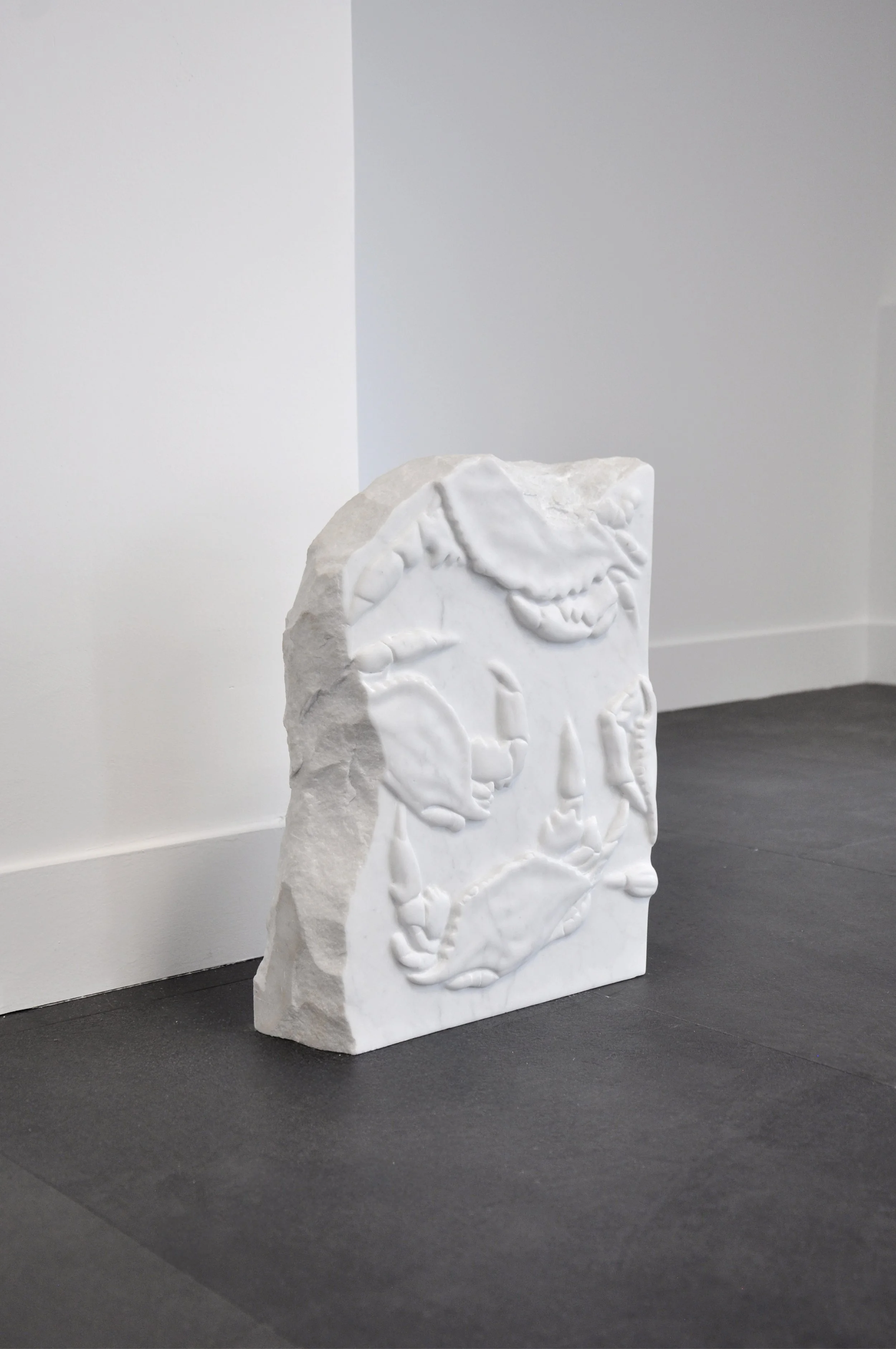
My inspiration comes primarily from the living world: the human body, animals and marine life. I’m less interested in the individual than in what we have in common as living beings: flesh, bones, fluids, tissues and matter.
The history of painting is an important source of inspiration for me, with artists such as Caravaggio and Ribera among many others. I’m fascinated by details of the body, gestures, tensions and skin, particularly when it is stretched, wounded or opening.
The underwater world is also very important to me. I see it as another world existing within our own, connected to the origins of life. There is something that connects these two worlds for me: their liquid dimension. Blood, fluids and the organic matter of the body create a continuity with the aquatic world, reminding us that, in a sense, we are still aquatic beings.
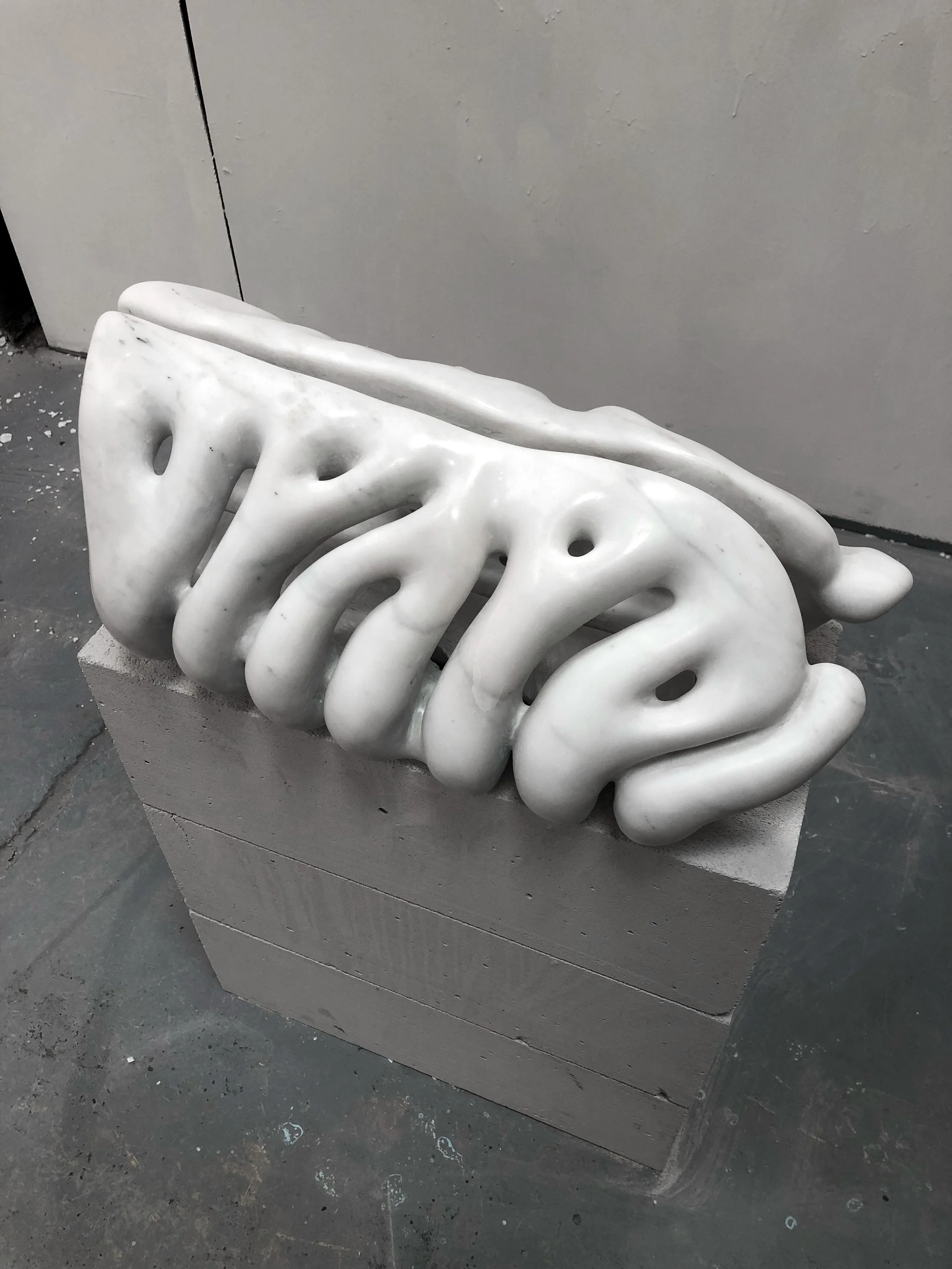
I’m drawn to fragments, hybrid forms and bodies in transformation. I like forms that remain ambiguous, where it is difficult to tell whether something is emerging, disappearing, growing or decaying. I’m interested in forms that seem to be moving very slowly, caught between different states of transformation, where the organic and the mineral begin to meet. I think of this as a kind of biomineral aesthetic.
DM
You’ve said that by carving into marble, you reveal the layers of time that it holds. Tell us more about this.
The marble and limestone I work with carry a geological history that goes back millions of years. They are made from layers of accumulated material, including shells and fragments of ancient marine life. The stone I carve therefore already carries traces of life that existed long before us.
What was once part of a living body can become mineral matter, and later become part of another living body.
When I carve into stone, I’m revealing a state of matter that has already been transformed by life and by time. I’m interested in this long cycle, where the living and the mineral are constantly interacting and transforming one another.
DM
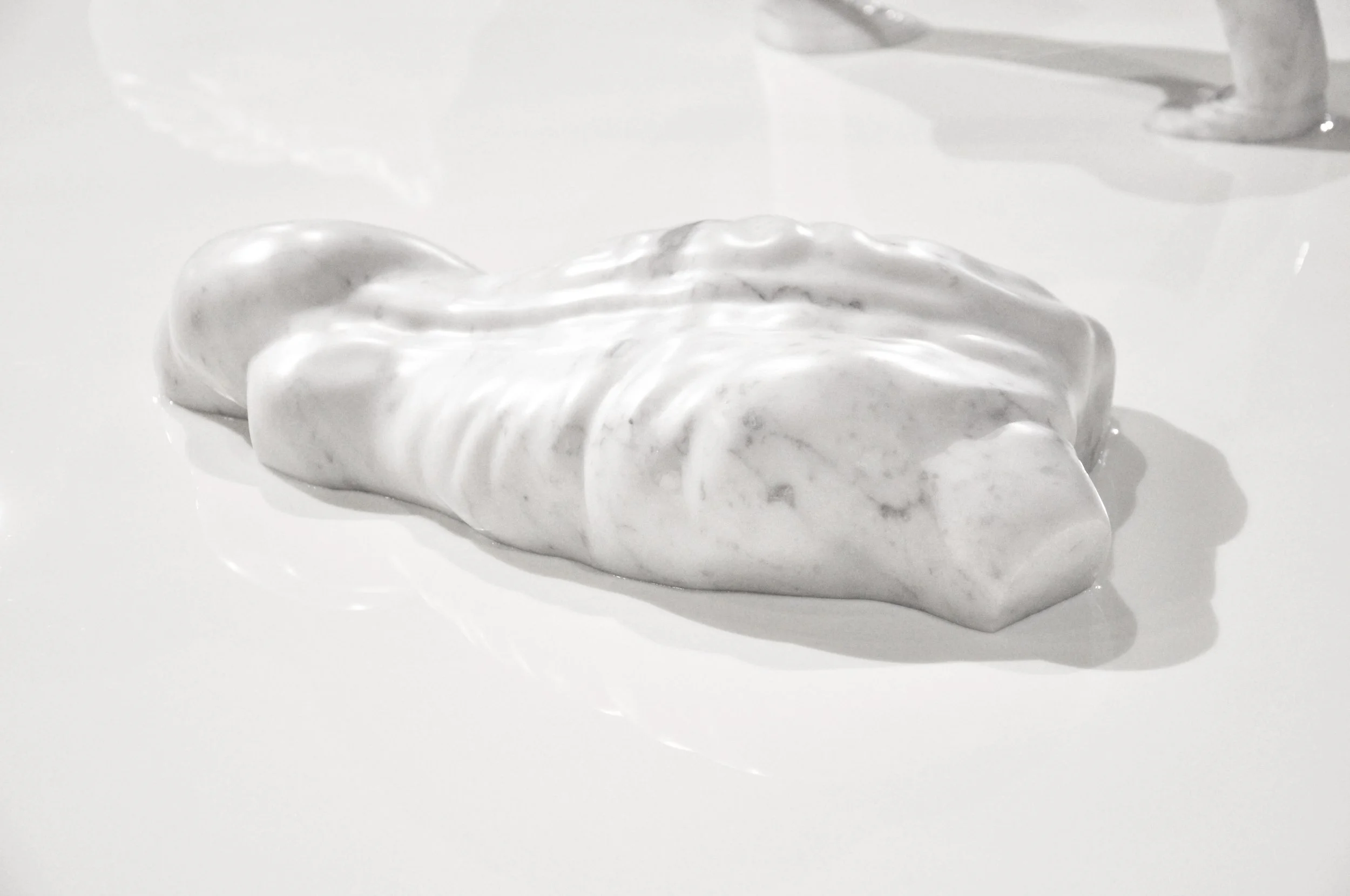
You are currently a resident at Poush, a collective of artists in Aubervilliers, France. Talk us through the works and exhibitions you have done while at Poush.
I have been an artist in residence at Poush since 2022. It is an important art space and artist residency in France. Being there has allowed me to meet many artists and professionals, and has led to exhibitions, collaborations and public acquisitions.
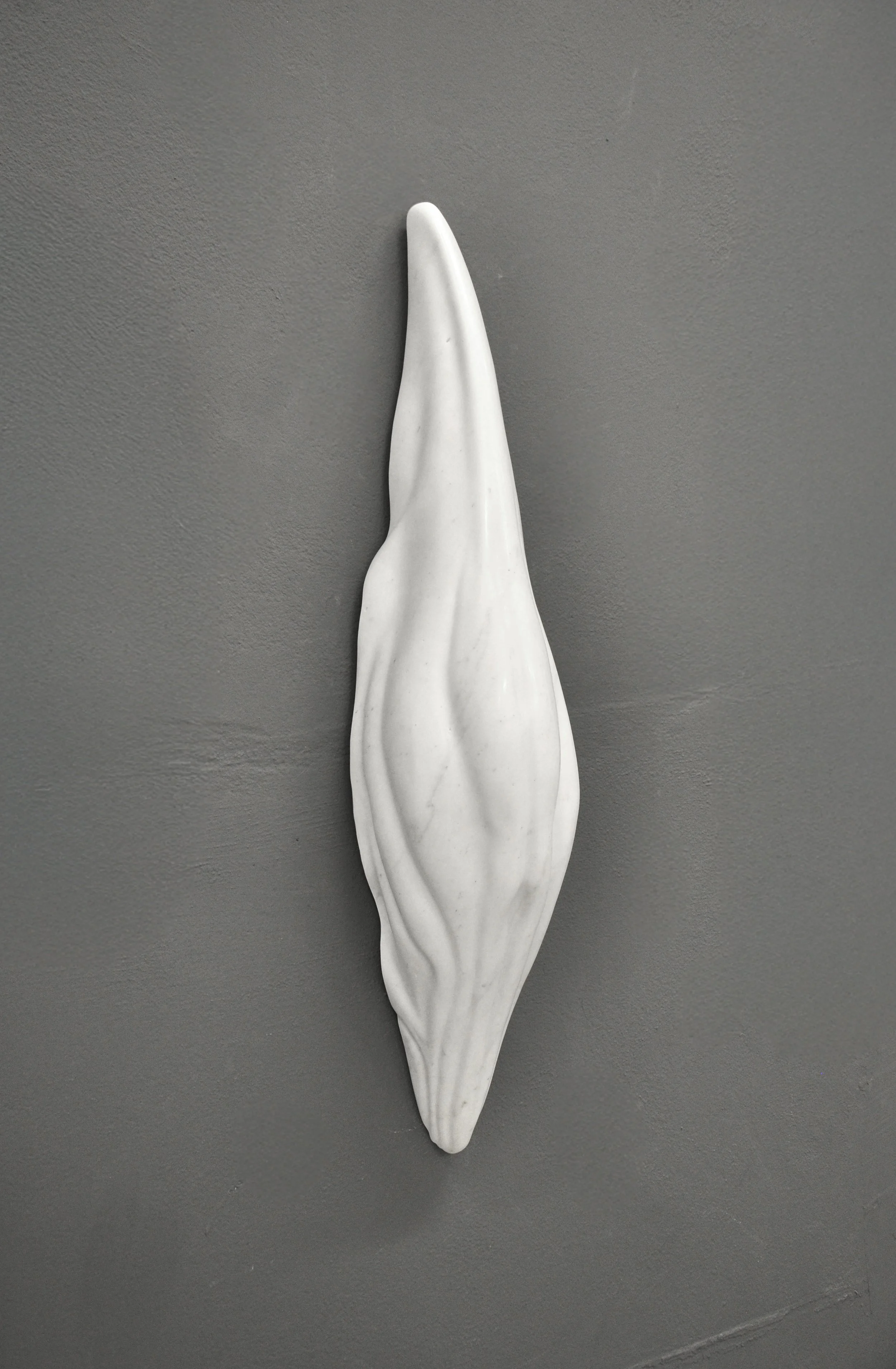
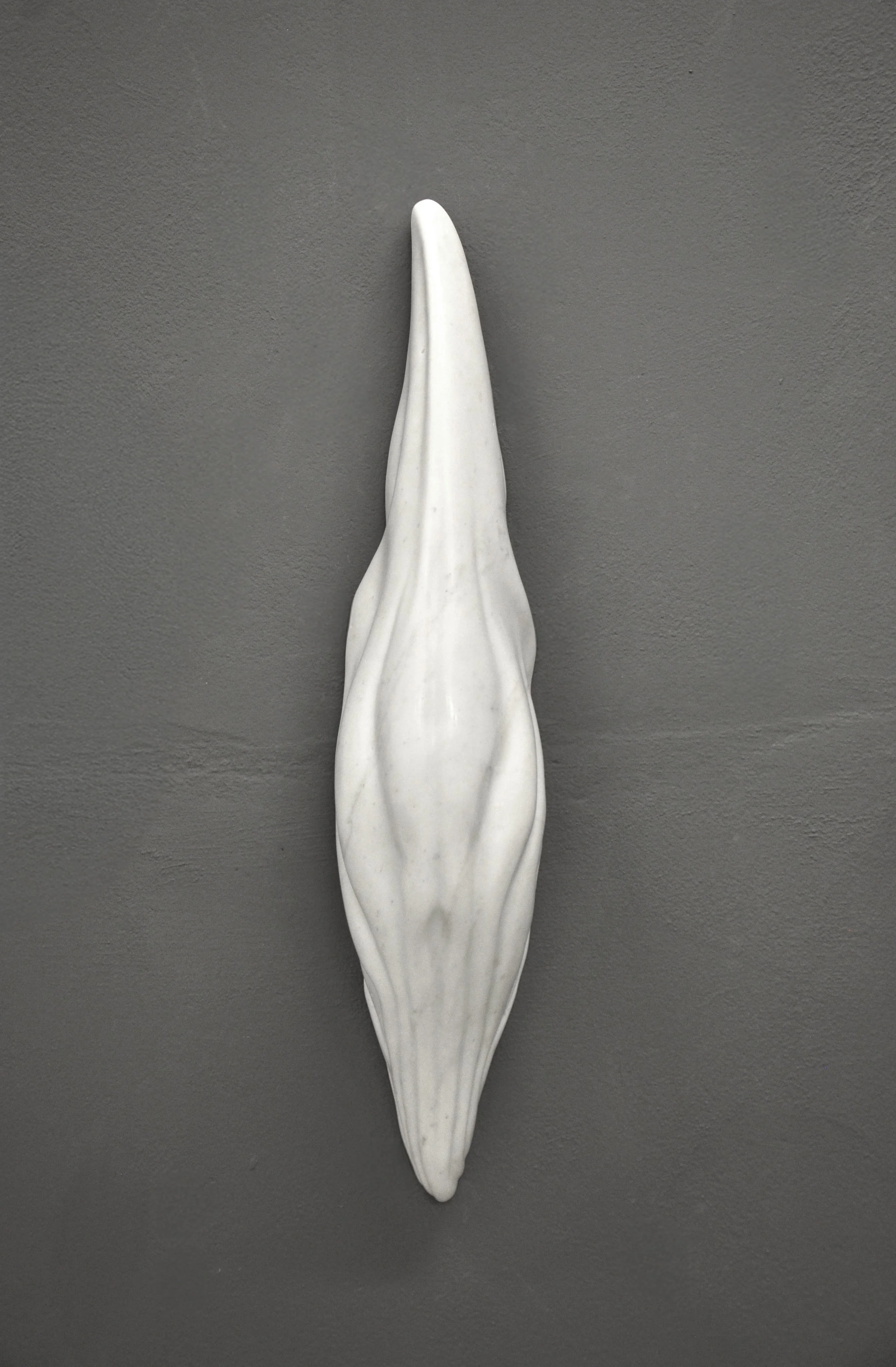
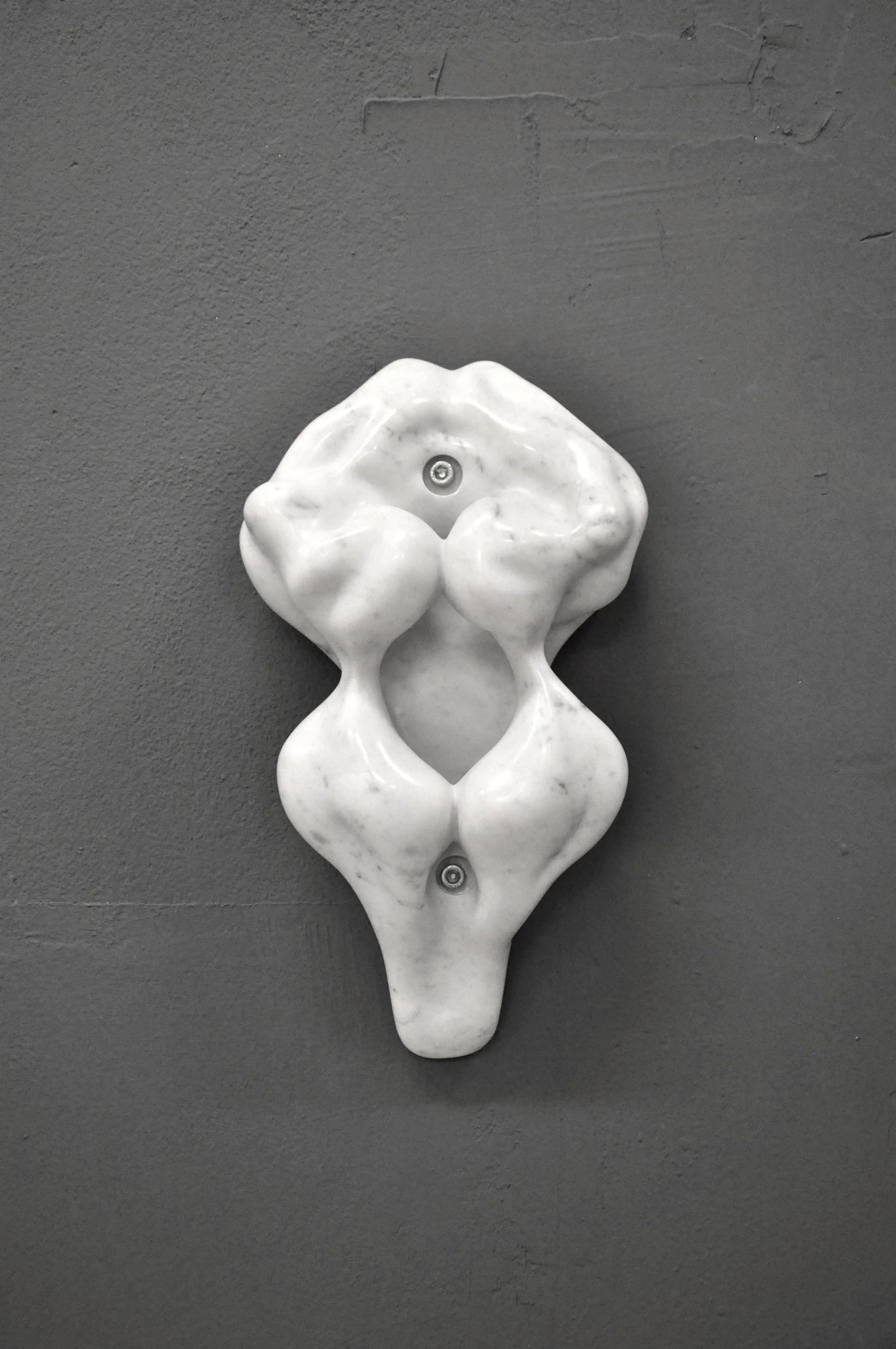
When I arrived at Poush, I began developing an important new series called Holds. These are wall-mounted marble sculptures made of organic forms inspired by climbing holds. I’m interested in creating tactile, sensual forms that are meant to be experienced through the hand. I perforate the sculptures to fix them directly to the wall, leaving the screw visible as part of the work.
This way of working also led me to think differently about how sculpture can occupy a wall, and to consider the sculpture itself as a wall-mounted object. It opened up new possibilities for working with metal and for creating smaller sculptures that can be brought to eye level. The series has been presented in different contexts, including two exhibitions at Poush during Paris Design Week.
DM
You also completed a two-month residency at SIM Gallery, Iceland. How did working in Iceland influence your artistic approach?
My two-month residency at SIM Gallery in Iceland was a very formative experience. I was lucky to be there at the end of the pandemic, when there were no tourists, with a volcano erupting at the time.
What stayed with me most was the ambivalence of the landscape. Iceland can be harsh and extreme, but also incredibly beautiful. I remember bird carcasses scattered across black sand, something at once pure and macabre, or the bleached skull of an enormous whale rising from the sand like a strange piece of architecture in an isolated bay. This balance between beauty and darkness confirmed something that was already present in my work.
DM
What piece/s of yours are you most proud of?
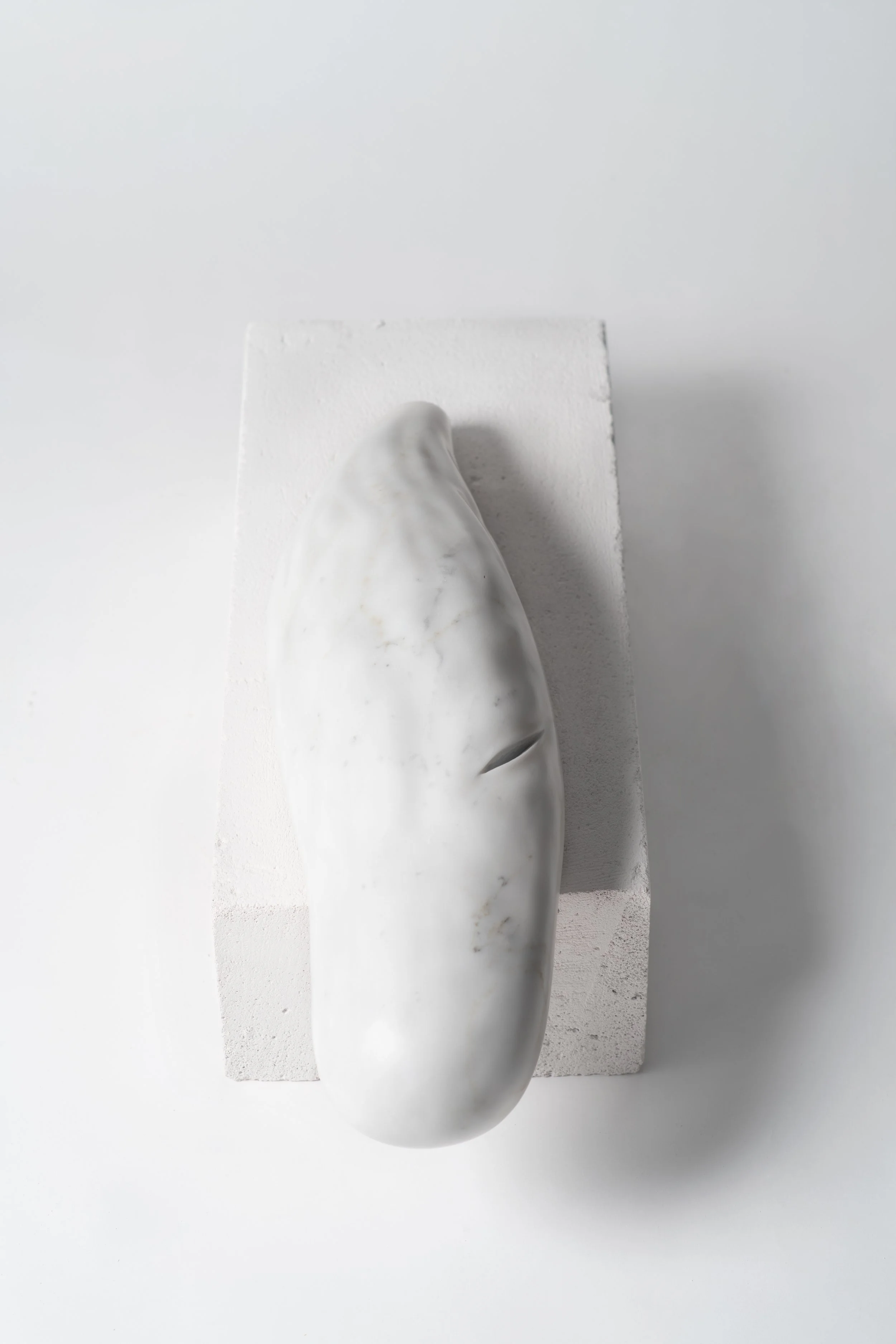
The piece I’m most proud of is Memento, which was also my first sculpture in marble. It was an important step for me because marble can seem quite challenging when you first approach it. I was surprised by how satisfying it was to work with. Its hardness makes you take your time and think carefully about every detail and every curve.
Memento marked the beginning of a new series of organic, abstract and strange forms. It takes the form of a stranded beluga, without obvious details, lying flat on the ground with an incision along its side, like a wound. The form is deliberately ambiguous, somewhere between an injured animal and the wounds of Christ.
I remember hesitating a lot over the shape and the incision. I was afraid of making something too strange, or simply ugly. I’ve tried since then to create similar incisions in other marble forms, but I’ve never quite managed to reach the same balance. Memento remains particularly important to me for that reason.
DM
What’s next for Denis Macrez?
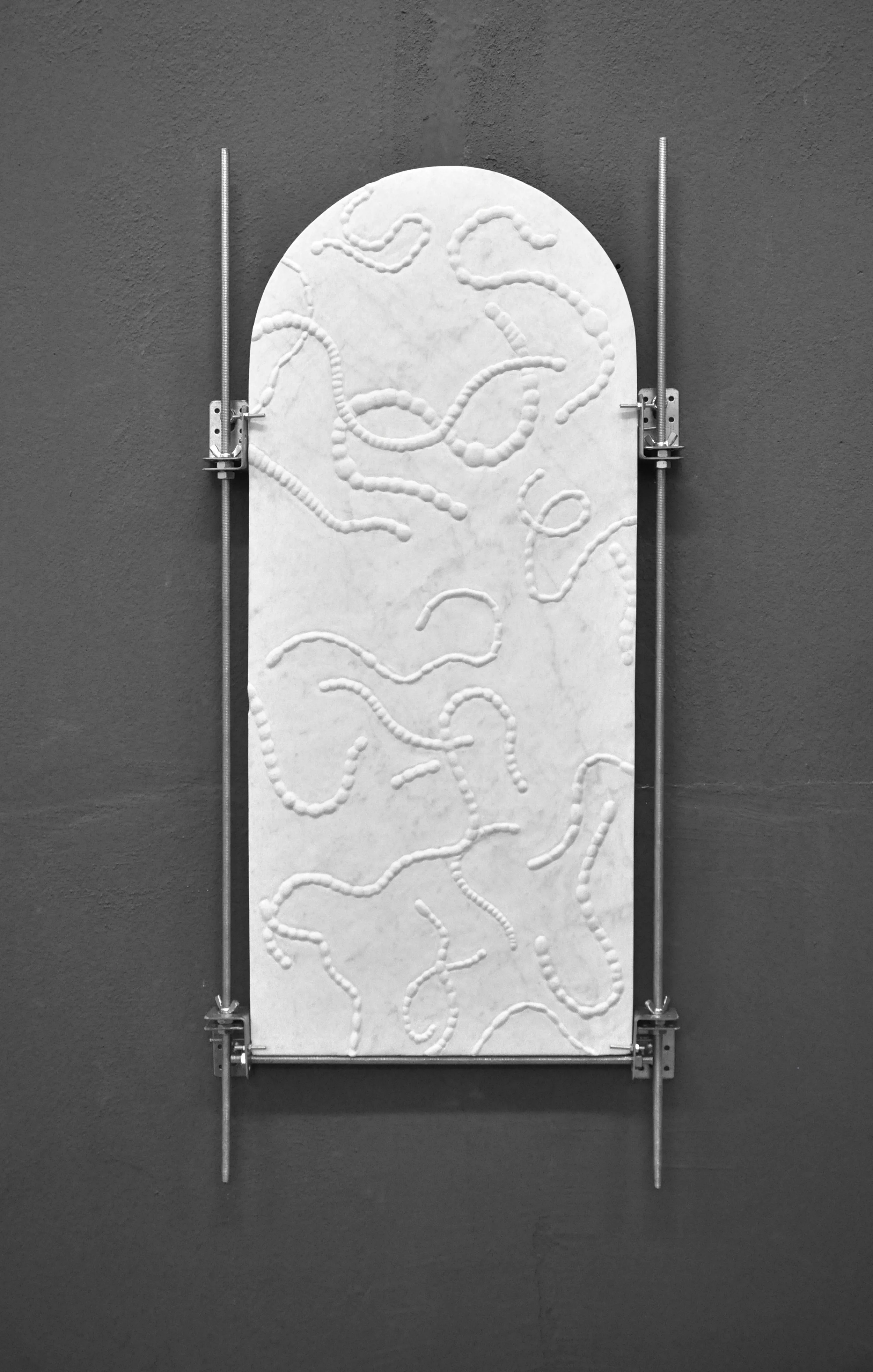
I will continue developing metal structures and mounting systems designed specifically for my sculptures and bas-reliefs. I’m interested in how these structures can enhance the work and offer new ways of presenting marble.
This year, I’ll be presenting my latest pieces at the Salon de Montrouge, an important event for the emerging French art scene. Some of these works will incorporate the new metal mounting systems I’ve been developing.
I’m also preparing a more personal project that brings together art and fashion. I’ve been invited by a fashion designer to create the artistic direction of a space in central Paris, bringing together fashion pieces and some of my sculptures.
DM